
Decoding Cyberbullying: A Taxonomy of Machine Learning Defenses
A Survey About the Cyberbullying Problem on Social Media by Using Machine Learning Approaches
This paper provides a comprehensive survey of Machine Learning (ML) approaches for tackling the cyberbullying crisis on social media. It categorizes existing literature into four critical tasks: Binary Classification, Role Identification, Severity Score Computation, and Incident Prediction, highlighting the transition from simple text analysis to multi-modal and psychological profiling.
TL;DR
This survey systematically maps the landscape of cyberbullying detection, moving beyond simple profanity filters to complex AI systems. It categorizes the field into four primary tasks—Classification, Role Identification, Severity Rating, and Prediction—while emphasizing the shift toward multi-modal analysis (text + images) and the psychological profiling of users.
Motivation: The Evolution of Digital Aggression
Cyberbullying is no longer just "mean comments." It has evolved into a viral, anonymous, and persistent threat that follows victims 24/7. The authors identify a critical gap in current research: while textual analysis is mature, the heterogeneity of content (emojis, stickers, hidden meanings in images) and the scarcity of labeled data remain massive hurdles.
Methodology: The Four Pillars of Detection
The paper organizes the technological response into four functional tasks:
- Binary Classification: Is this specific post aggressive? This is the most common task, utilizing everything from n-grams to deep learning (CNNs and LSTMs).
- Role Identification: Who is the bully, the victim, or the bystander? This involves analyzing social network topologies and personality traits (using models like the Big Five or Dark Triad).
- Severity Score Computation: How dangerous is this session? This uses time-series analysis to predict if a conversation is escalating toward a crisis.
- Incident Prediction: Can we stop it before it happens? By analyzing temporal behavior and cross-platform activity, researchers aim to raise "red flags" early.
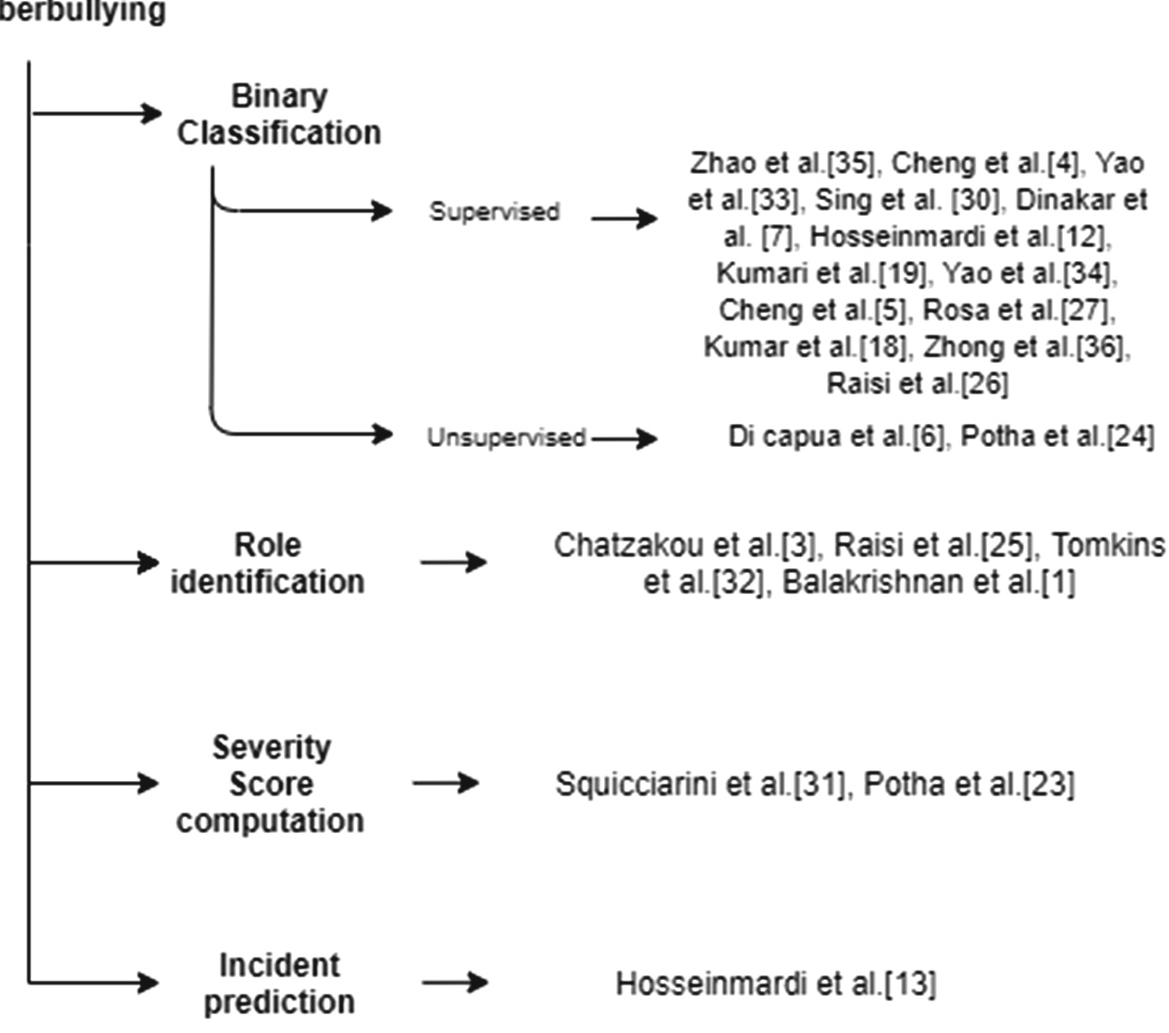 Figure 1: Taxonomy of features used in detection, ranging from textual statistics to semantic embeddings.
Deep Insight: Multi-Modal and Psychological Fusion
The most effective modern approaches (like the smSDA or XBully mentioned in the paper) don't just look at words. They look at "Semantics" and "Context." For instance, a harmless image captioned with a veiled threat requires the model to understand the interplay between visual and textual data.
The survey provides a detailed comparison of features used across various SOTA (State Of The Art) models:
- Textual: Deep learning-based embeddings (Word2Vec, GloVe).
- Social: Network centrality—analyzing how a user’s position in a social graph affects their likelihood of being targeted.
- User/Psychological: Extracting "personality traits" from writing styles to identify predators.
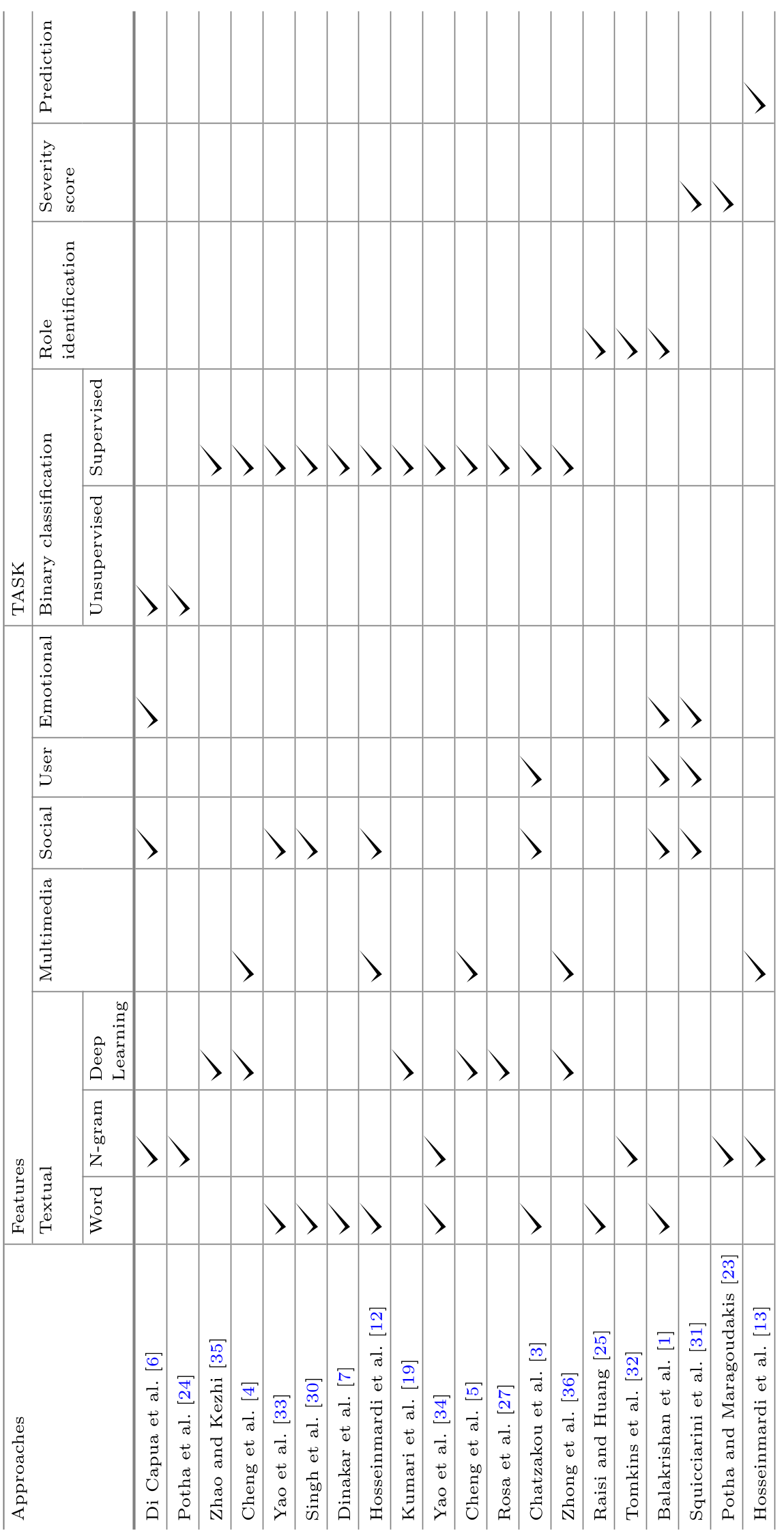 Table 1: Matrix of features vs. tasks for various research works.
Critical Analysis: The Road Ahead
Despite the progress, the survey points out two "Elephants in the Room":
- Temporal Variability: Slang and bullying tactics change weekly. A model trained on 2020 data might be useless by 2026.
- Dataset Bottlenecks: We are heavily reliant on manually labeled sets like Formspring or Instagram. The paper suggests that semi-supervised or unsupervised learning is the only way to scale with the sheer volume of social media traffic.
Conclusion
The transition from "reactive" filtering to "proactive" prediction is the next frontier. By combining multi-modal content analysis with social network dynamics, AI has the potential to move from simply flagging abuse to actively safeguarding digital environments.
Takeaway for Researchers: Focus on unlabeled data and heterogeneous content fusion. The future isn't just knowing what was said, but why and by whom.