
MSN Evolution: From Centralized Feeds to Opportunistic Social Ecosystems
A survey on mobile social networks: Applications, platforms, system architectures, and future research directions
This paper provides a comprehensive survey of Mobile Social Networks (MSNs), defining their unique characteristics beyond traditional social networks. It proposes a transition from conventional client-server architectures to hybrid designs that integrate opportunistic networking and explores the emergence of Vehicular Social Networks (VSNs) as a critical specialized domain.
TL;DR
Mobile Social Networks (MSNs) are evolving from simple mobile versions of websites into complex, hybrid systems. This survey explores how MSNs utilize physical proximity, sensing modules, and opportunistic networking to support communication in scenarios where the Internet fails. By bridging social computing with mobile distributed systems, the paper outlines a roadmap for the next generation of "always-on" social connectivity.
The Core Challenge: The Fragility of Centralization
Most current social giants like Facebook and Twitter operate on a rigid Client-Server model. While efficient, this model has three fatal flaws in the mobile era:
- Infrastructure Dependency: No Internet means no social interaction, even if your friend is standing five meters away.
- Energy and Bandwidth Exhaustion: Constant syncing with central servers drains mobile batteries and clogs 4G/5G lanes.
- Context Ignorance: Traditional servers struggle to react to the high-speed, dynamic neighborhood changes typical of vehicular or urban environments.
Methodology: Redefining the MSN Architecture
The authors break down the MSN system into three crucial views to provide a holistic analysis:
1. The Conventional View (Client-Server)
Current systems focus on ubiquitous access via 4G/LTE and centralized processing. The "Sensing" capability is used primarily for Location-Based Services (LBS), such as Foursquare check-ins.
2. The Future View (The Hybrid Paradigm)
The paper introduces a hybrid architecture that integrates the traditional Internet with Opportunistic Networks.
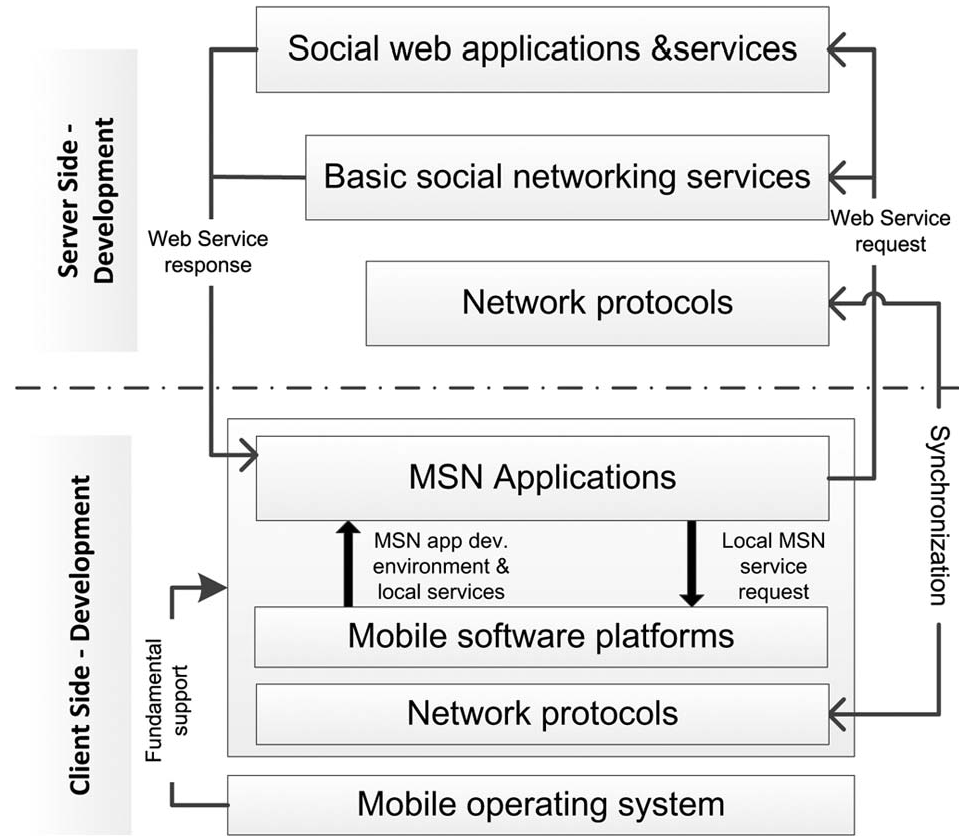 Fig 1. Conventional development view vs. the multi-layered requirements of future MSNs.
In this future state, mobile devices act not just as terminals but as routers and gateways. Using technologies like WiFi Direct and Bluetooth, devices can exchange messages in an ad-hoc manner (Store-Carry-Forward). This creates a "Mobile Opportunistic Computing" environment where data propagates through social encounters.
Key Technologies: Socially-Aware Routing
Why does knowing social relationships help mobile networking? The paper summarizes several routing strategies:
- Epidemic Routing: Flooding everyone with data (high cost, high delivery).
- Bubble Rap: Using social hierarchies to pass data. If you want to send a message to someone in another "community," you pass it to a more "popular" person in your community until it jumps to the next one.
- Simulation: Using SLAW (Self-Similar Least-Action Walk) or human-activity models to predict where nodes will be.
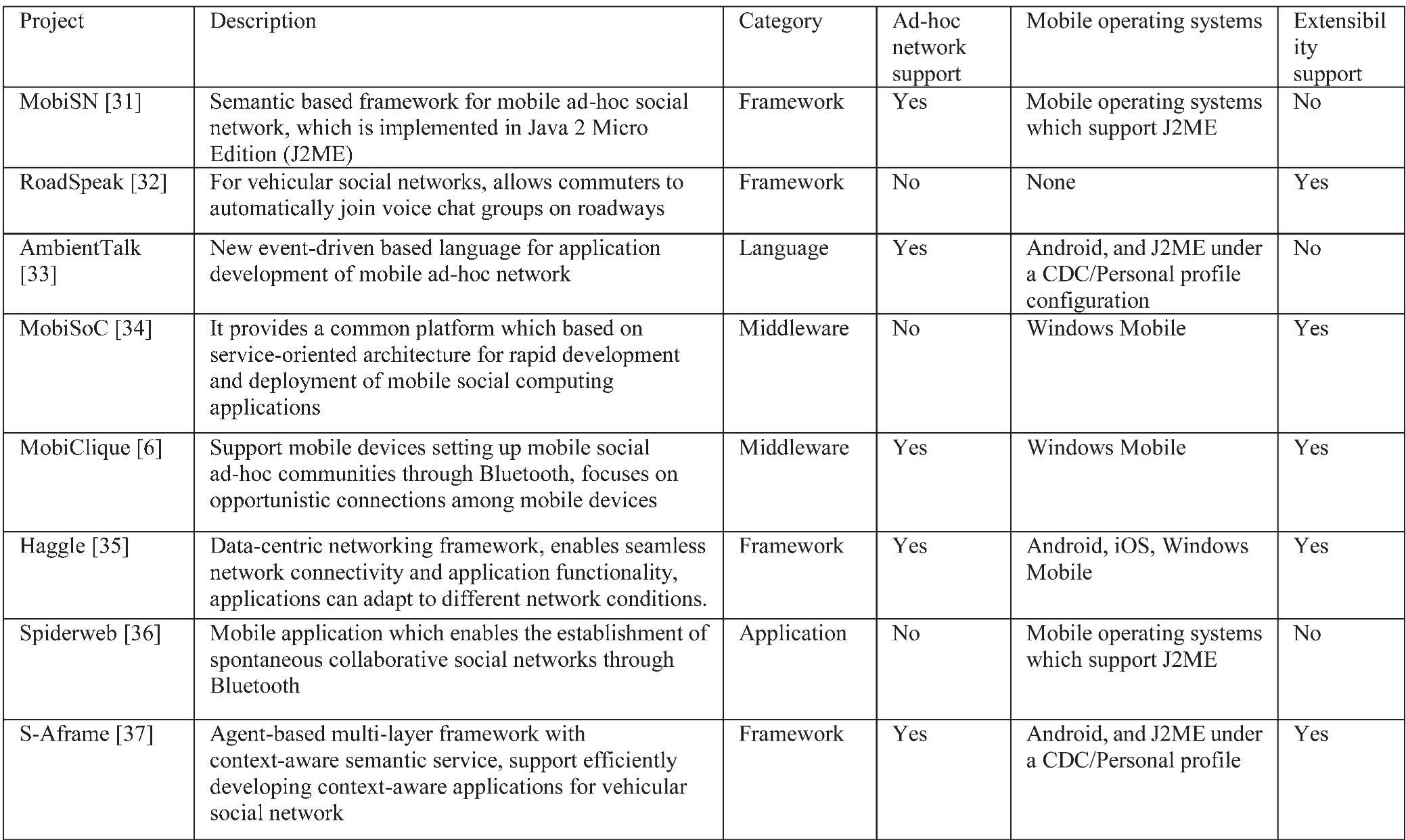 Table 1. Survey of experimental MSN frameworks like Haggle and MobiSoC.
Case Study: Vehicular Social Networks (VSNs)
The paper highlights VSNs as the most promising application of future MSNs. Unlike human networks, VSNs have unique constraints:
- High Dynamics: Wireless links last only seconds as cars pass at 100 km/h.
- Machine-to-Machine (M2M): It's not just "Driver to Driver," but also "Car to Roadside Infrastructure."
- Safety Over Entertainment: Real-time requirements are much stricter than social scrolling.
Critical Insights & Future Directions
The senior editorial take on this survey highlights several unresolved "Frontiers":
- The Privacy Paradox: Sharing social IDs via Bluetooth for opportunistic contact makes users highly vulnerable to tracking. The paper suggests "Privacy-Preserving Profile Matching" as a necessity.
- Energy Constraints: The "always scanning" nature of neighbor discovery is a battery killer. Innovations like WiTricity (Wireless Power Transfer) are mentioned as potential game-changers.
- Mobile Crowdsourcing: MSNs are the perfect platform for "Collective Intelligence," where the crowd completes tasks (like real-time traffic mapping) that no single algorithm can solve.
Conclusion
This paper serves as a fundamental taxonomy for anyone building decentralized social software. The move from infrastructure-heavy deployments to social-heavy opportunistic exchange represents a major shift toward the Mobile Internet of Things (IoT), where every device is a node in a living, breathing social fabric.