
Suśruta: Revolutionizing Anemia Diagnosis via Smartphone AI in Resource-Constrained Environments
Suśruta: Artificial Intelligence and Bayesian Knowledge Network in Health Care – Smartphone Apps for Diagnosis and Differentiation of Anemias with Higher Accuracy at Resource Constrained Point-of-Care Settings
This paper introduces "Suśruta," an AI-driven smartphone application designed for the early diagnosis and differentiation of Iron Deficiency Anemia (IDA) and Beta-Thalassemia Trait (b-TT) in resource-constrained settings. Integrating ANN-based blood data analysis and computer vision for non-invasive conjunctiva screening, the system achieves a carrier screening accuracy of 72.05%, significantly outperforming the clinical standard Mentzer Index.
Executive Summary
TL;DR: Suśruta is a comprehensive mobile health platform that leverages Artificial Neural Networks (ANN), Computer Vision, and Bayesian networks to diagnose Anemia and Thalassemia. By analyzing standard blood counts and eye images, it achieves a screening accuracy for Thalassemia that is double the traditional clinical benchmarks, all while functioning offline in rural settings.
Background: Positioned as a "Point-of-Care" breakthrough, this work transforms the smartphone into a diagnostic laboratory. It addresses a critical gap in the Indian healthcare system where 51% of women suffer from anemia and specialist shortages make traditional screening (HPLC) nearly impossible in underserved regions.
The Diagnostic Paradox in Rural Healthcare
In primary care, diagnostic accuracy often falters due to a lack of specialized tools. For Thalassemia, the "Gold Standard" is High-Performance Liquid Chromatography (HPLC), which is expensive and requires sophisticated infrastructure. Physicians often fall back on the Mentzer Index (MCV/RBC ratio), but as this paper reveals, this index often results in a massive number of false negatives, missing nearly 66% of carriers in large-scale screenings.
Methodology: A Multi-Modal AI Approach
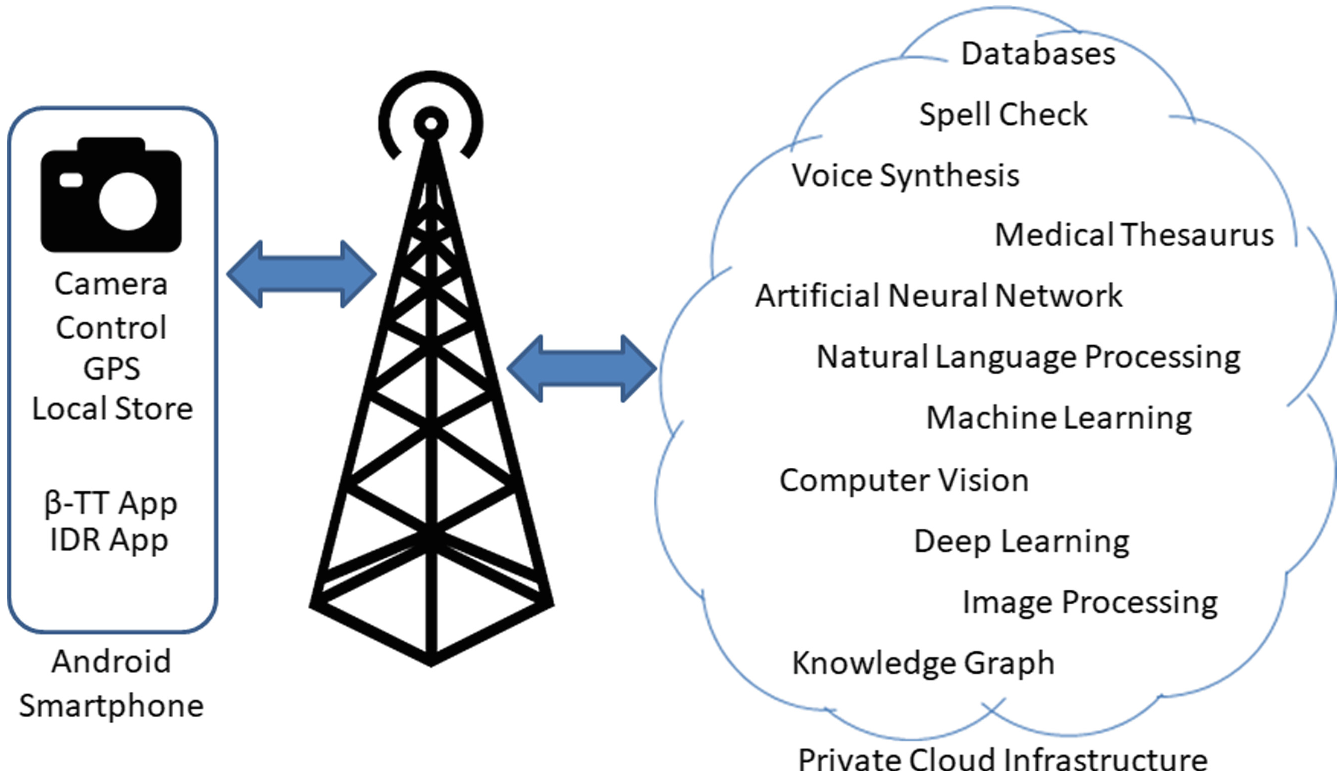
The brilliance of Suśruta lies in its multi-layered AI architecture:
- Deep Learning for Blood Analysis: Using a massive dataset of over 60,000 records from NRS Medical College, the authors trained a Keras-based ANN. Unlike the Mentzer Index which uses only two variables, this model looks at the non-linear relationships between RBC, HB, MCV, MCH, and RDW.
- Computer Vision for Non-Invasive Screening: For Iron Deficiency Anemia (IDA), the app uses the smartphone camera to capture the conjunctiva. It calculates the Erythema Index (EI): This allows for instantaneous hemoglobin estimation without a single needle prick.
- Bayesian Knowledge Network (BKN): The system isn't just a black-box classifier. It integrates a Neo4j Graph Database containing 2.3 million nodes from the SNOMED-CT medical ontology. This provides a "reasoning" layer for evidence-based medicine.
Empirical Results: Doubling the Accuracy
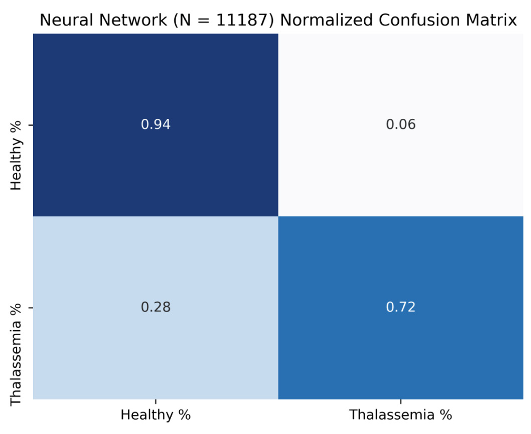
The experimental results are striking when comparing the ANN model against the established Mentzer Index.
- Mentzer Index Performance: In a test set of over 11,000 samples, it correctly identified only 739 carriers (33.47% accuracy).
- Suśruta ANN Performance: On the same dataset, the AI correctly identified 1,591 carriers (72.05% accuracy).
By utilizing a broader feature set and deep learning, the researchers achieved a 2x improvement in screening efficacy. This is particularly vital for preventing b-Thalassemia Major births through better premarital screening.
Critical Insight & Future Outlook
While the Thalassemia module is production-ready, the image-based IDA module is currently in the "calibration" phase. The primary challenge remains environmental: ensuring consistent lighting for conjunctiva images in varied rural settings.
Takeaway: Suśruta proves that "Big Data" in healthcare doesn't always need "Big Hardware." By shifting the computational load to the cloud when available—and maintaining a robust offline ANN on the edge—high-tier diagnostic capabilities can finally reach the last mile of global health.
Conclusion
This work represents a shift from "Electronic Health Records" as mere storage to "Active Diagnostic Agents." By combining standard CBC metrics with computer vision and semantic knowledge graphs, Suśruta provides a blueprint for the future of decentralized, AI-empowered healthcare.