
The Quantity Surveyor as Sustainability Catalyst: Bridging the Green Gap in Nigeria
Enhancing the use of sustainable construction materials in southwest Nigeria: exploring the roles of quantity surveyors
This study investigates the pivotal roles of Quantity Surveyors (QS) in promoting Sustainable Construction (SC) materials in Southwest Nigeria. Using a mixed-methods approach (82 surveys, 12 interviews), the research identifies a significant "knowledge-action gap" where high practitioner awareness of green materials fails to translate into actual project adoption.
Executive Summary
TL;DR: While Nigerian Quantity Surveyors (QS) are highly knowledgeable about sustainable materials—such as green concrete and agro-waste insulation—their actual implementation of these materials is remarkably low. This study argues that the QS is the "missing link" in the sustainability chain, possessing the financial tools (like Life Cycle Costing) necessary to convince skeptical clients and policymakers to move beyond traditional, resource-heavy construction.
Academic Positioning: This research acts as a critical institutional analysis within the "Sustainable Construction" (SC) domain. It moves the conversation from what materials are sustainable to who has the professional agency to ensure they are actually used in developing economies.
The "Knowledge-Practice" Paradox
The construction industry is notoriously resource-intensive, consuming one-third of global raw materials. In Nigeria, despite a decade of academic clamor for "Green Building," the reality on the ground remains traditional and unsustainable.
The core insight of Olatunde et al. (2025) is the identification of a stark paradox: Quantity Surveyors in Southwest Nigeria know their materials, but they aren't using them. This suggests that "lack of awareness" is no longer the primary bottleneck—rather, the bottleneck is the professional application of that knowledge within a cost-sensitive market.
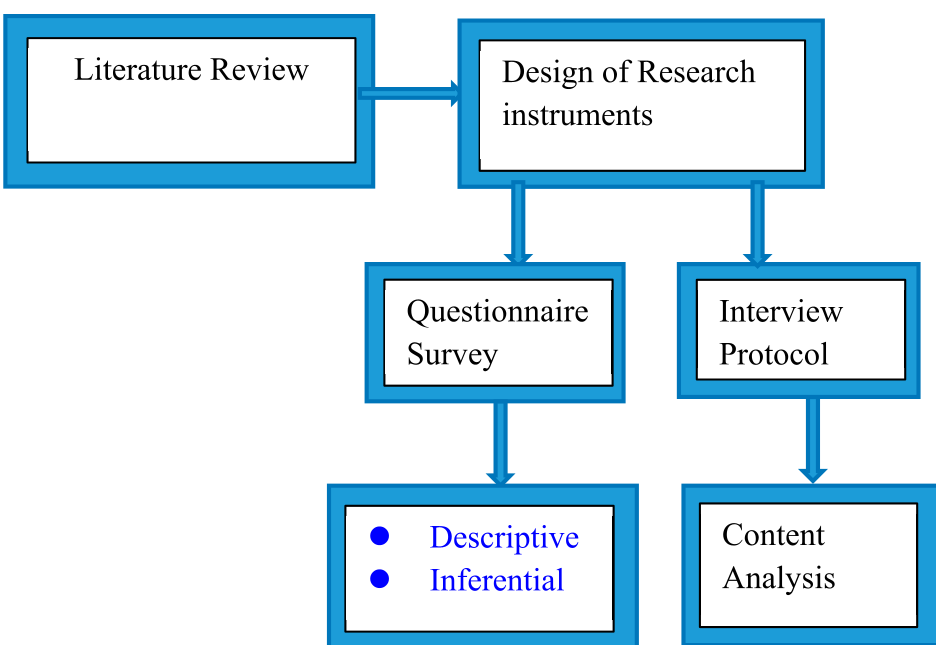
Methodology: A Dual-Lens Approach
The researchers employed a mixed-methods strategy to capture both the "what" (quantitative) and the "why" (qualitative).
- Survey (N=82): Focused on registered QS professionals in Ekiti and Osun States.
- Structured Interviews (N=12): Targeted experts to extract the "intricate roles" that numbers alone couldn't define.
Core Findings: The Adoption Vacuum
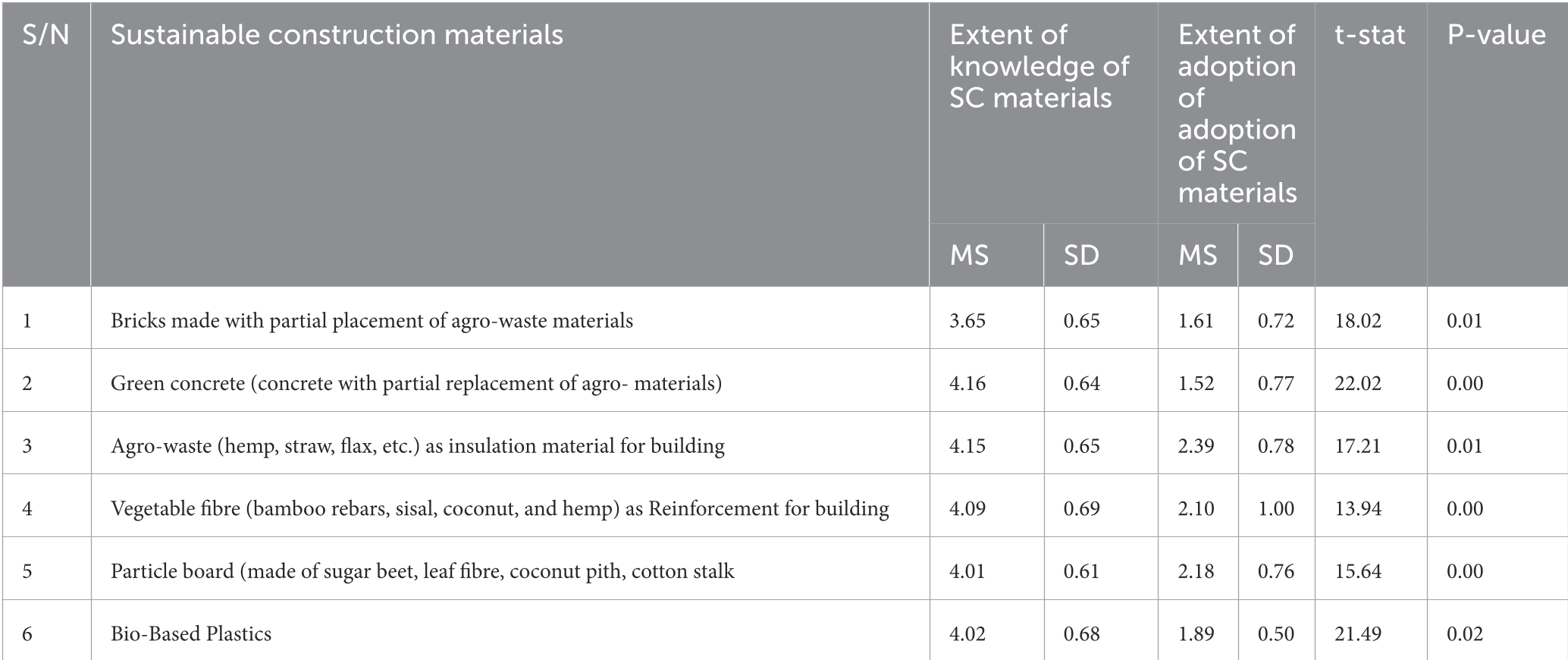
The statistical evidence highlights a troubling discrepancy. While materials like Green Concrete and Agro-waste insulation scored above 4.0 in knowledge metrics, their adoption levels hovered between 1.5 and 2.4.
Why the disconnect? The study points to the "Fear of Initial Cost." Project stakeholders often see the upfront price tag of sustainable materials and retreat to traditional methods. However, the study identifies that this is precisely where the Quantity Surveyor's expertise is underutilized.
Strategic Roles: How QS Can Drive Change
The qualitative analysis yielded six transformative roles for the modern Quantity Surveyor:
- The LCC Evangelist: Instead of focusing on procurement costs, QS must use Life Cycle Costing (LCC) to show long-term savings in energy and maintenance.
- The Material Advisor: Actively suggesting bio-based plastics or vegetable fiber reinforcements (bamboo, sisal) as viable, high-performance alternatives.
- The Policy Architect: Guiding local and federal governments in creating building codes that mandate or incentivize sustainable material use.
- The Feasibility Specialist: Moving beyond "educated guesses" to provide data-driven viability appraisals for green projects.
Critical Insight & Future Outlook
The value of this paper lies in its call to professional activism. It concludes that sustainability in the built environment of developing nations won't happen through better engineering alone; it requires better cost management advocacy.
Limitations: The study is geographically focused on Southwest Nigeria. However, the "economic civil servant" demographic of Ekiti and Osun provides a unique microcosm for how budgetary constraints dictate (and often stifle) innovation—a scenario applicable to many developing nations.
Conclusion
The Quantity Surveyor must transition from a "passive calculator" of traditional costs to an "active agent" of sustainable change. By leveraging their unique position at the intersection of finance and construction, they can bridge the gap between Nigeria's high academic knowledge and its low industrial adoption of green materials.