
RA-PSC: Using Swarm Intelligence to Decode the Cognitive Depth of Educational Questions
Swarm intelligence-based approach for educational data classification
This paper introduces a specialized Particle Swarm Classification (PSC) framework for Educational Data Mining (EDM), specifically targeting the classification of classroom questions into the six cognitive levels of Bloom's Taxonomy. The core contribution is a novel initialization mechanism based on the Rocchio Algorithm (RA) to overcome the performance degradation typically caused by the curse of dimensionality in high-dimensional feature spaces.
TL;DR
Classifying educational questions into Bloom’s Taxonomy (Knowledge to Evaluation) is vital for intelligent tutoring systems but suffers from the "curse of dimensionality" when using text-based features. This paper proposes a Rocchio Algorithm (RA)-based Particle Swarm Classification (PSC) model. By replacing random initialization with a class-centroid starting point, the authors boosted classification performance from a failing 0.243 F1-score to a highly competitive 0.663+, outperforming Support Vector Machines (SVM) and Naïve Bayes.
The Problem: Why Swarms Fail in High Dimensions
In the realm of Educational Data Mining (EDM), we want to know if a teacher's question asks for simple recall (Knowledge) or deep critique (Evaluation). When we convert questions into vectors, we end up with hundreds of dimensions (terms).
Conventional Particle Swarm Optimization (PSO) suffers in these spaces because:
- Sparse Search Space: Distances become meaningless when data is scattered in too many dimensions.
- Uniformity Loss: Randomly scattered particles rarely land near a "promising" solution in a huge vacuum.
- Premature Convergence: Particles get trapped in poor local optima almost immediately.
Methodology: The Rocchio Insight
The author’s "Aha!" moment was realizing that in classification, we know where the "middle" of a class is. The Rocchio Algorithm, a classic IR technique, calculates the "center of mass" for each category.
1. RA-Based Initialization
Instead of dropping particles randomly, each particle is initialized near the RA-centroid of a Bloom level: Where is the average vector of class , and is a small random nudge. This places the swarm in the "promising region" from Step 1.
2. The Learning Process
The PSC treats classification as a distance minimization problem. Each particle represents a candidate "optimal centroid" for a class. As the particles "fly," they adjust to find the position that minimizes the distance to same-class instances and maximizes distance to others.
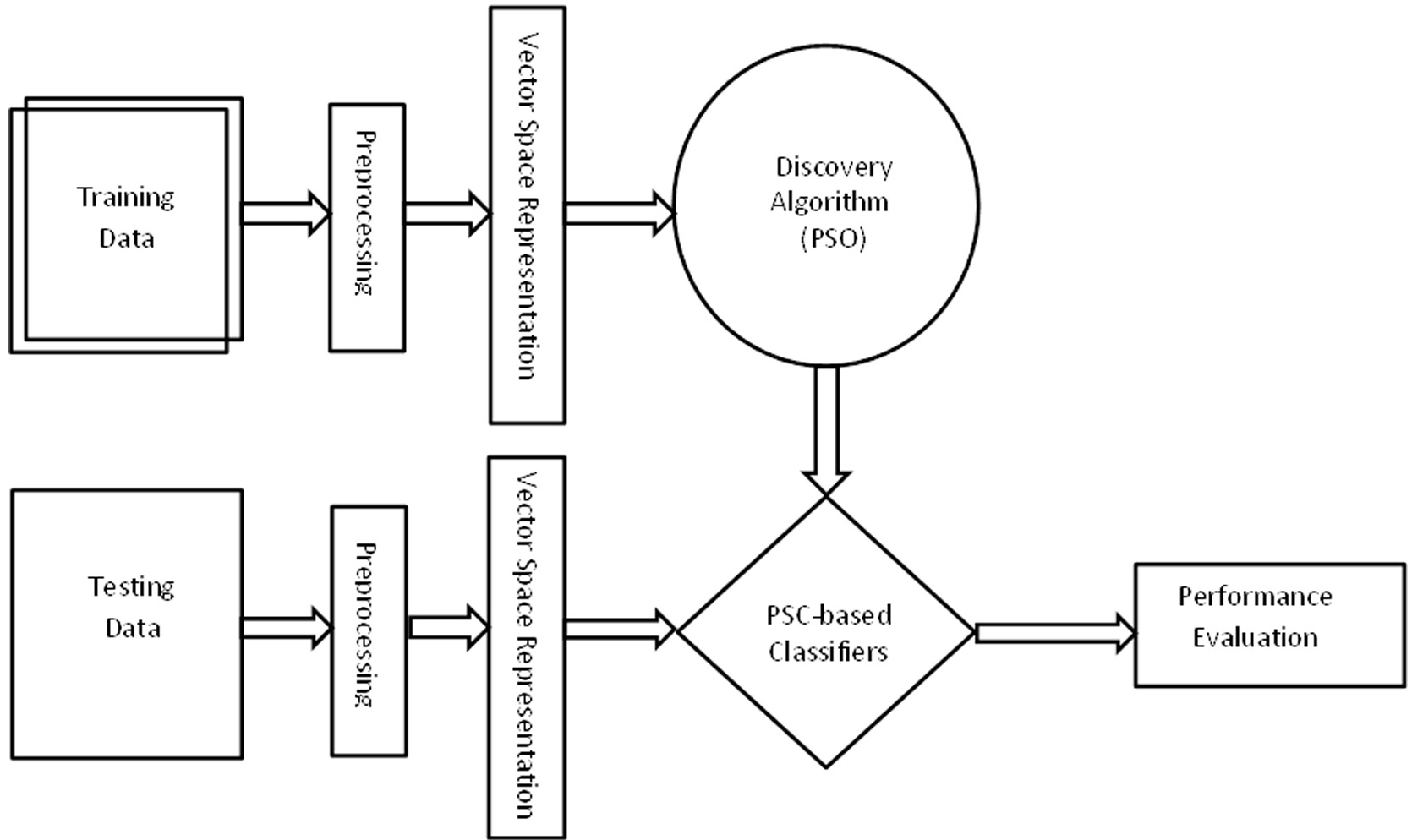 Figure 1: The generic framework for the RA-based PSC system, showing the transition from raw questions to optimized centroids.
Experiments & Key Findings
The researchers tested this on a real-world dataset of computer science classroom questions, annotated manually by experts.
- The Initialization Miracle: Standard PSC scored an average F1 of 0.243. With RA-initialization, it jumped to 0.663.
- Feature Selection Matters: Using Information Gain (IG) or Chi-Square () as filters before the swarm process further refined the results, with IG leading to a more stable performance even with fewer terms.
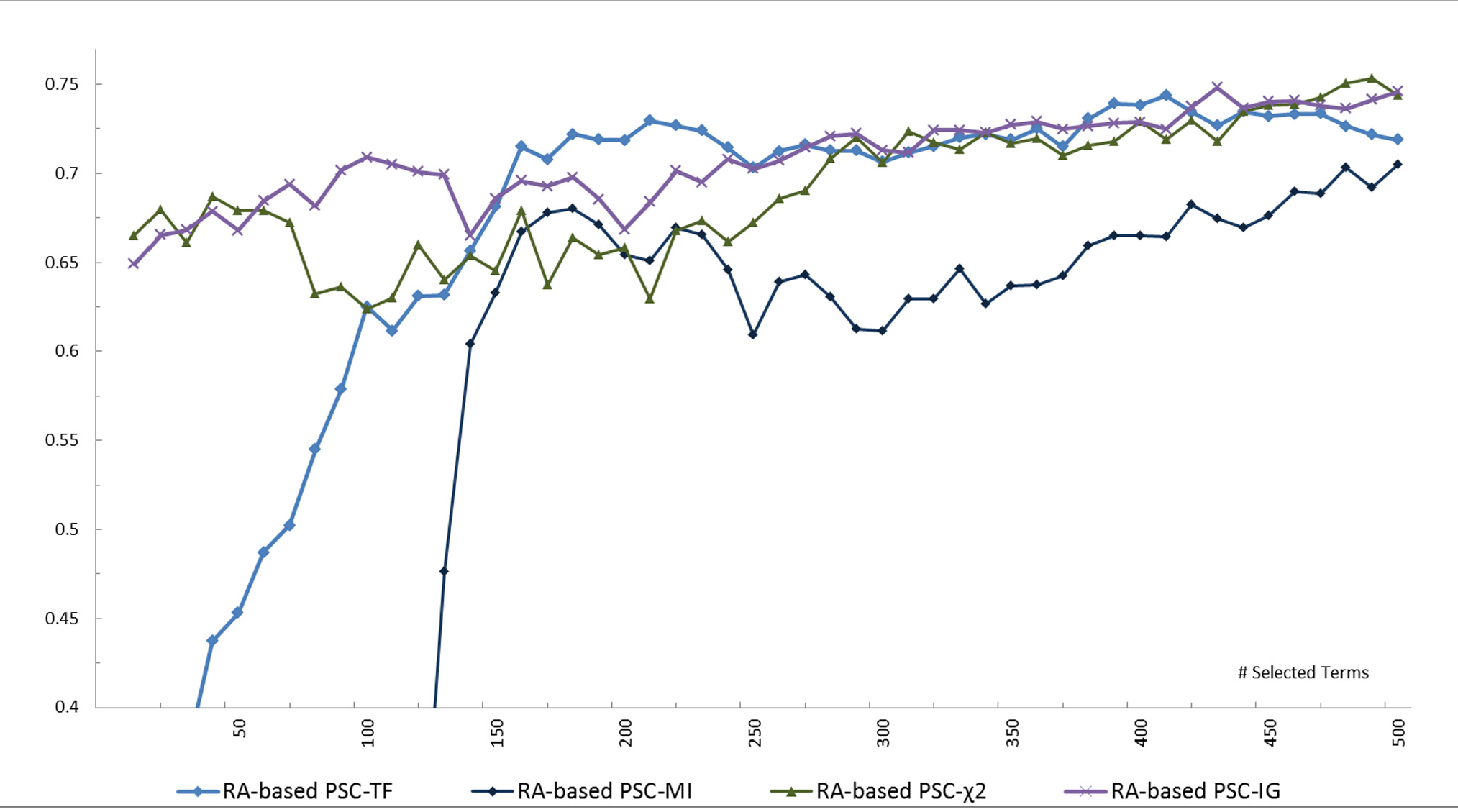 Figure 2: Performance of the RA-Based PSC Variants across different term counts.
Comparison with SOTA
The RA-PSC wasn't just better than old PSO; it beat modern ML:
- RA-PSC: 0.663 (Avg F1)
- SVM: 0.628
- kNN: 0.594
- AdaBoost: 0.233 (Poor performance in high-dim data)
Deep Insight: Context is King
The author points out a fascinating pedagogical nuance: Context-independent keywords (like "describe" or "compare") are not enough. Standard "Bloom verbs" only yielded an F1 of 0.544. The RA-PSC model succeeds because it discovers domain-specific discriminative terms (e.g., specific CS terminology) that signal cognitive depth within that field.
Critical Analysis & Future Work
Limitations:
- Learning Time: The RA-PSC is computationally heavy. While a kNN might train in 0.14s, the swarm takes 283s—a ~2000x difference.
- Interpretability: It is a "black box" compared to decision trees. It’s hard to tell why the swarm moved to a specific centroid.
Conclusion: This work proves that "dumb" swarms can become "smart" when given a mathematical nudge toward the center of the problem. For developers of E-learning platforms, this offers a robust way to analyze teaching quality and student engagement automatically.