
Detecting the Digital Mask: A Linguistic Approach to Social Media Authenticity
A system for analysis and comparison of social network profiles
The paper proposes a system for user profiling and authenticity verification across social networks like Facebook and Twitter. By integrating Linguistic Inquiry and Word Count (LIWC) with a custom sentiment classifier, the system detects similarities in topics, sentiments, and writing styles to distinguish between real and fake profiles.
TL;DR
This paper introduces a system designed to verify the authenticity of social media profiles by analyzing "what" users say (topics), "how" they say it (sentiment), and their unique "fingerprint" (writing style). By converting social media posts into vector representations using the LIWC (Linguistic Inquiry and Word Count) dictionary and calculating Cosine Similarity, the authors provide a framework to distinguish between official public figures and their satirical or malicious counterparts.
The Motivation: Why Graphs Aren't Enough
Most early social network research focused on the structure of connections—who follows whom. However, as fake news and impersonation accounts become more sophisticated, structural analysis is no longer sufficient. The authors argue that the true essence of a user's identity lies in their linguistic behavior. The challenge is that social media text is notoriously noisy, filled with slang, emoticons, and non-standard syntax, making traditional NLP tools struggle.
Methodology: The Profiling Engine
The system operates through a specialized pipeline designed to bridge different social platforms:
- SocialCrawler: Custom modules for Facebook (using Graph API/FQL) and Twitter (using Twitter4J) to bypass standard extraction limits.
- Category Identification (LIWC): Matches words against a dictionary of 82 categories across three macro-areas: Topics, Sentiments, and Writing Styles.
- Polarity Calculation: A specialized classifier that uses a "distant supervision" technique (learning from emoticons) to score posts as positive, negative, or neutral.
- Profile Matching Score: This is the "brain" of the system. It creates a vector for "Profile A" and "Profile B" and measures the angle between them using Cosine Similarity. A score of 1 indicates a perfect match (likely authentic), while scores closer to 0 suggest a fake.
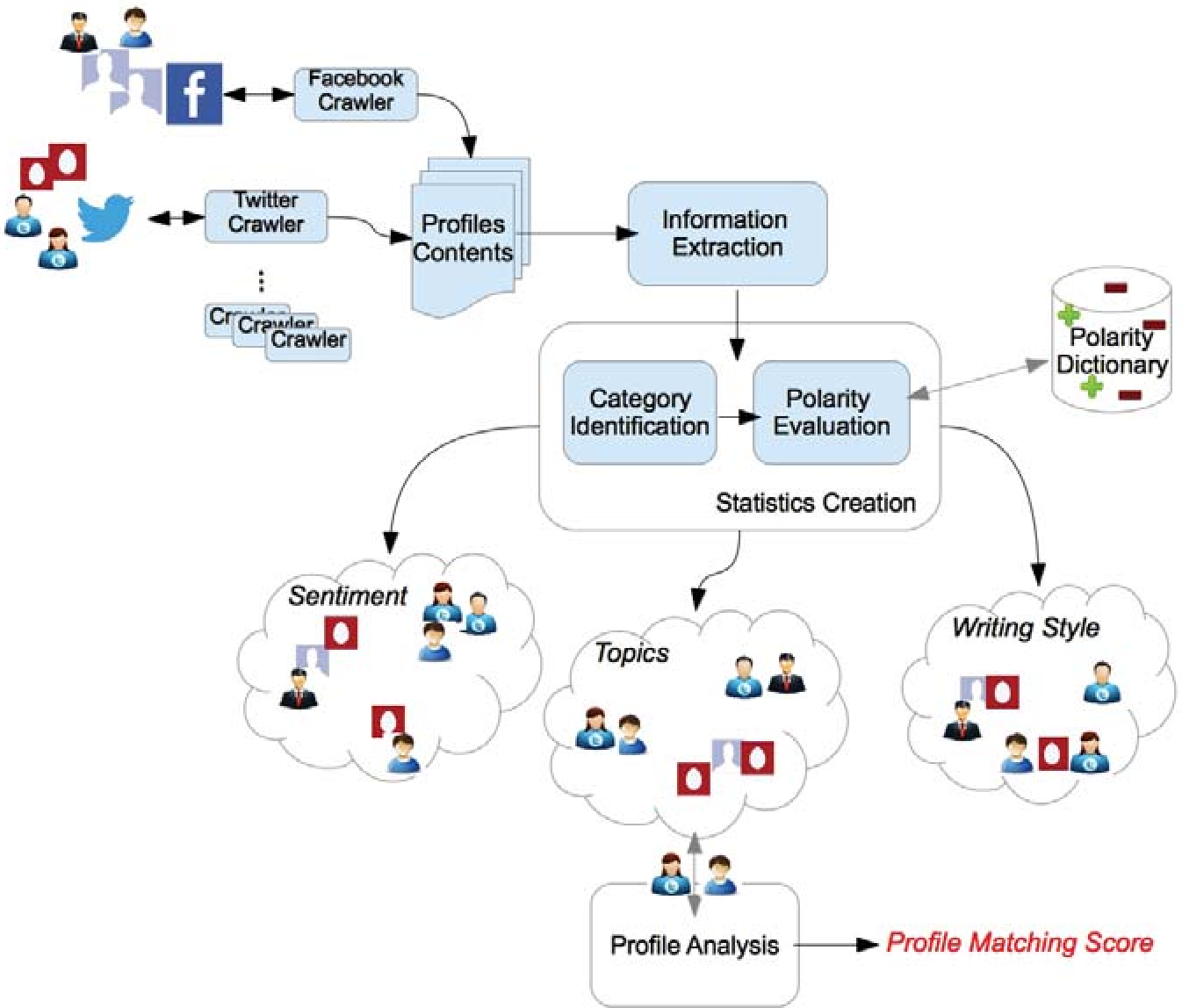 Figure 1: The multi-modular architecture for cross-platform profile analysis.
Experimental Results: The Matteo Renzi Case Study
The authors tested their system on the profiles of the Italian Prime Minister, Matteo Renzi. They compared two official accounts (Twitter and Facebook) against two fake accounts (one satirical, one supportive but unofficial).
Key Findings:
- The "Authentic Signature": The similarity between Renzi’s official Twitter and Facebook accounts was significantly higher than the similarity to fake accounts, particularly in the "Neutral" sentiment and specific writing style categories.
- The Satire Trap: The system noted a surprising similarity between the real Twitter account and the satirical "MatteoRenzieOfficial" account. This highlights a limitation: satirical accounts often intentionally mimic the style and brevity of the original user to enhance their irony.
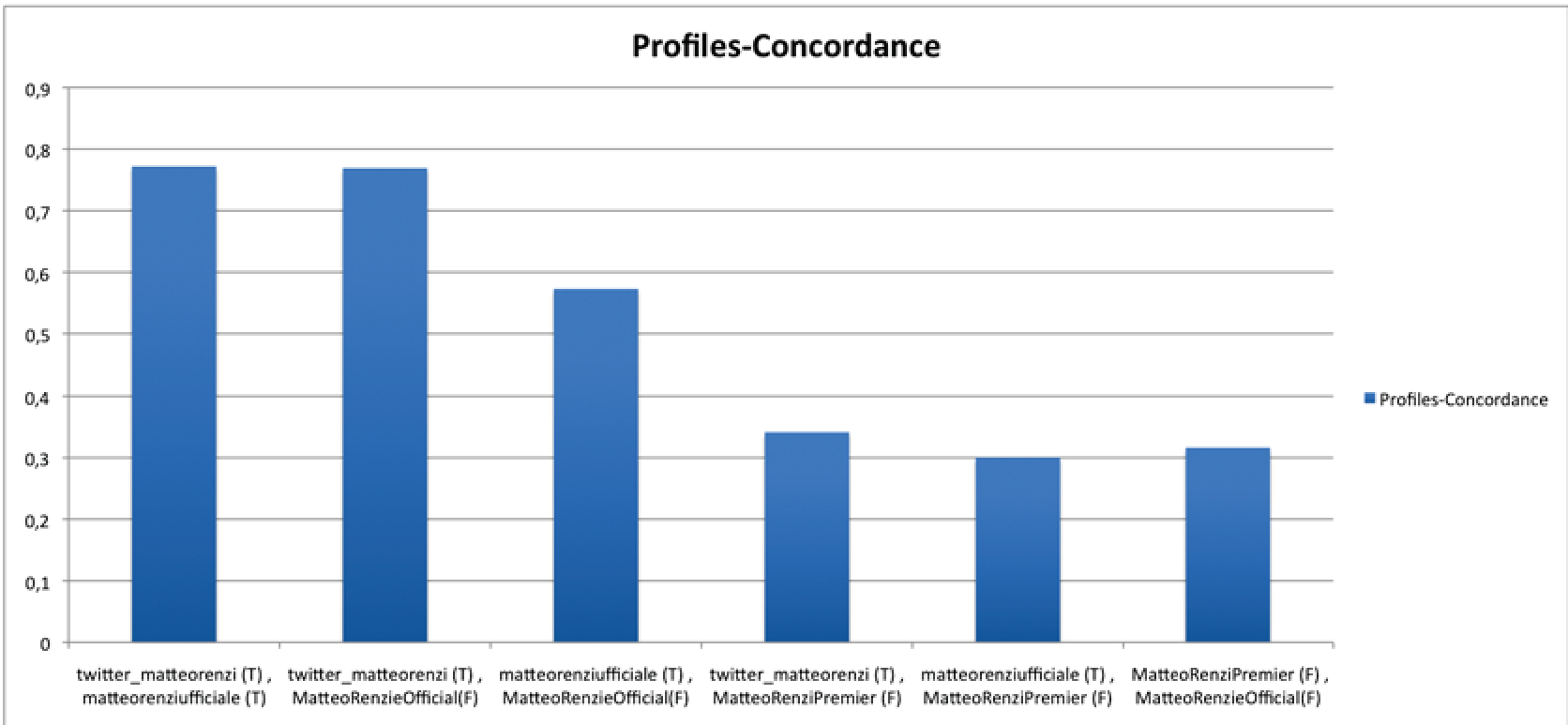 Figure 2: Cosine similarity scores across 82 LIWC categories, demonstrating the measurable gap between real and fake profiles.
Critical Analysis & Conclusion
The system proves that linguistic consistency exists across platforms. Even if a user moves from the short-form constraints of Twitter to the longer posts of Facebook, their underlying "genotype" (word choice and emotional polarity) remains detectable.
Limitations & Future Directions:
- Irony Detection: As seen in the Renzi case, the system can be "fooled" by high-quality satire that mimics stylistic markers. Future work needs to integrate irony detection modules.
- Scalability: The reliance on LIWC dictionaries means the system is language-dependent. Moving toward Unsupervised Representation Learning (like word embeddings) could make the system more robust globally.
By treating a user's writing style as a fingerprint, this research opens the door for more reliable, content-based security measures in the era of social media misinformation.