
Modeling the Pulse of Digital Trade: A System Dynamics Approach to E-commerce in China's Ethnic Regions
System Dynamics-Based Simulation of E-commerce Industry of Ethnic Regions in China
This paper presents a System Dynamics (SD) model to simulate the e-commerce industry in China's ethnic regions. By integrating four sub-systems—technological progress, market demand, economic development, and industrial environment—the study utilizes MATLAB to predict industry trends through 2020, identifying government guidance as the most critical driver for growth.
TL;DR
This research decodes the complex machinery of the e-commerce industry in China’s ethnic regions using System Dynamics (SD). By simulating the interplay between technology, market demand, and policy via MATLAB, the study reveals that government guidance and logistics infrastructure are the ultimate catalysts for growth, forecasting a massive surge in both transaction volume and employment by the end of the decade.
Problem & Motivation: Why Static Analysis Fails
E-commerce is not a linear industry; it is a "complex ecosystem" involving a feedback loop of social, governmental, and technological factors. In China's ethnic regions, unique challenges—such as irregular market orders and lagging logistics—make traditional economic forecasting inaccurate.
The author argues that to truly understand the "Internet+" strategy, we must look at the causal mechanisms. Why does an increase in R&D lead to more GDP? How does government procurement stimulate market demand? Static models describe what is happening, but System Dynamics explains how the system evolves over time.
Methodology: The Four Pillars of the E-commerce Sub-system
The paper breaks the industrial system into four interconnected sub-systems:
- Technological Progress: Focuses on electronic payment and R&D loops.
- Market Demand: Driven by resident income and "information literacy."
- Economic Development: Measures the contribution coefficient to the national GDP.
- Industrial Environment: Includes the regulatory framework and financial support.
The Causal Architecture
The core logic resides in feedback loops. For instance, Loop 1 in the technological subsystem posits:
Technological Progress → ↑GDP → ↑Strategic Position → ↑Government Support → ↑R&D → ↑Technological Progress.
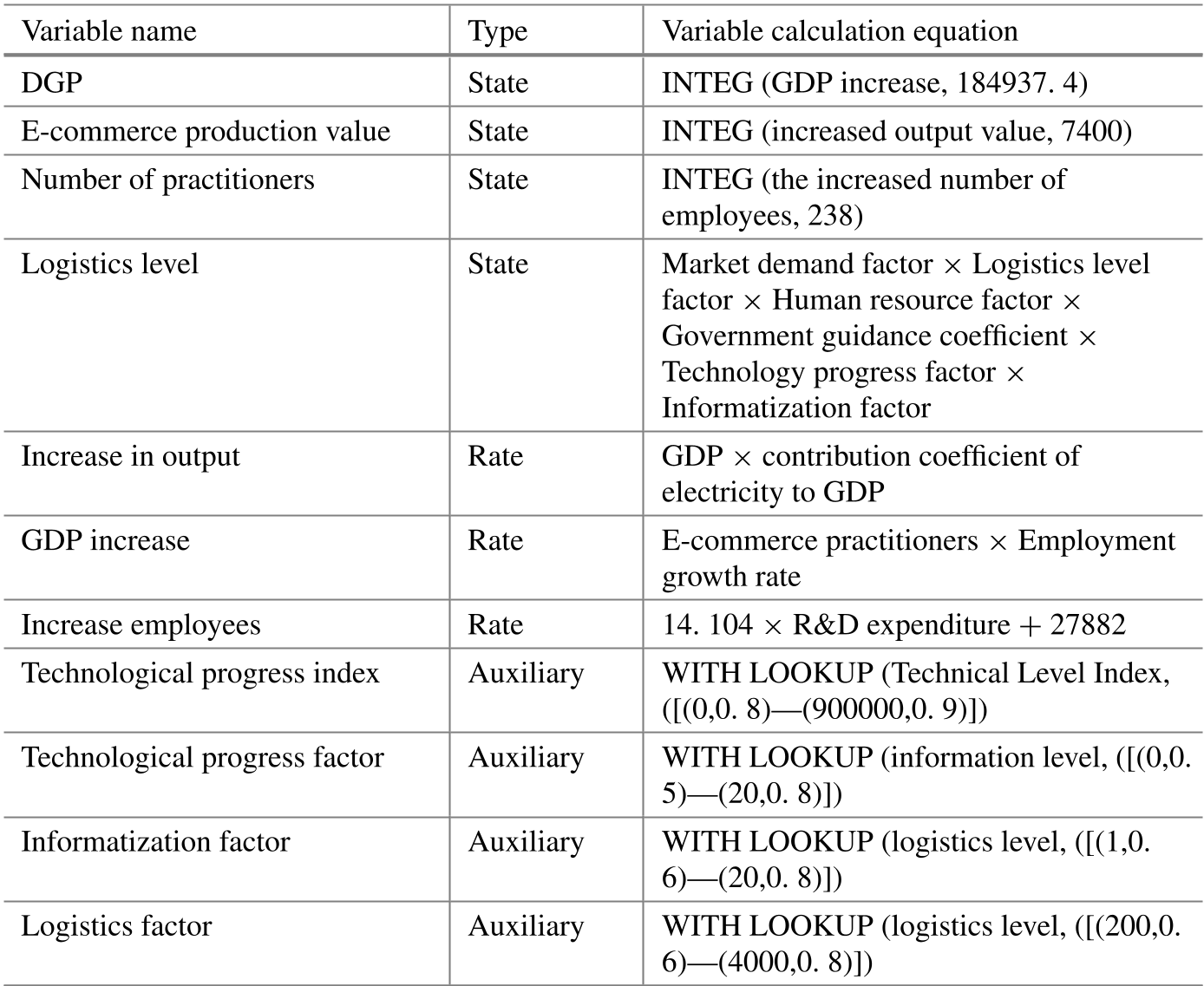 Table 1: The mathematical backbone of the SD model, defining the state and rate variables used in the MATLAB simulation.
Experiments & Results: Predicting the 2020 Boom
The model was validated against historical data from 2005–2014. With a minimum relative error of 0.02% and a mean error well under 5%, the simulation proved highly robust.
Key Projections:
- Transaction Volume: Predicted to skyrocket from 18 trillion Yuan in 2015 to over 40 trillion Yuan by 2020.
- Workforce: The demand for practitioners was estimated to exceed 30 million by 2020.
- Sensitivity Analysis: The study found that the "Government Guidance Coefficient" is the most sensitive variable, meaning policy changes have a disproportionately large impact on industry success compared to other factors.
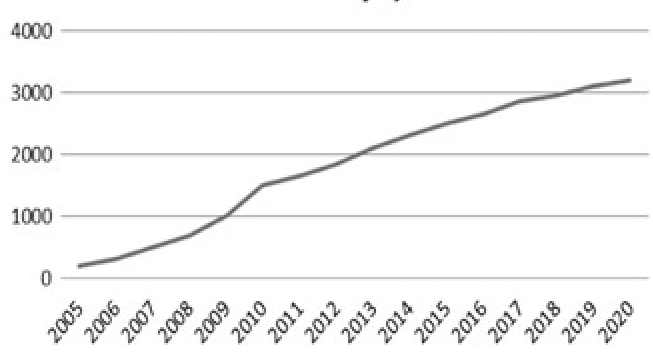 Fig 1: Simulation results showing the steady upward trajectory of GDP, E-commerce output, and logistics service levels.
Critical Analysis & Conclusion
Takeaway
The development of e-commerce in ethnic regions is not just about "going online"; it is about an optimized policy environment. The author concludes that logistics sensitivity is higher than technological sensitivity, suggesting that for these regions, building roads and delivery networks is more urgent than developing cutting-edge software.
Limitations & Future Work
While the model is robust, it relies on "Lookup" functions (as seen in Table 1) for qualitative factors like "Informatization" and "Logistics factors." These are estimates. Future research could benefit from integrating Real-time Big Data into the SD model to replace static lookup tables, allowing for a more reactive simulation of market shocks (like the post-2020 shifts in global trade).
The study serves as a vital blueprint for regional planners: stop looking at e-commerce in isolation and start managing the feedback loops that drive it.