
Deciphering Complexity: A Masterclass in System Dynamics for Socio-Ecological Modelling
An overview of the system dynamics process for integrated modelling of socio-ecological systems: Lessons on good modelling practice from five case studies
This paper provides a comprehensive review and methodological framework for using System Dynamics (SD) in the integrated modelling of socio-ecological systems (SES). By analyzing five diverse case studies (Berlin urban development, Gnangara and Texas groundwater, MedAction, and ACT water management), it establishes a "good modelling practice" guide that bridges the gap between qualitative systems thinking and quantitative simulation for decision support.
TL;DR
Managing socio-ecological systems (SES) is notoriously difficult due to the "wicked" nature of feedback loops between human behavior and biophysical processes. This paper synthesizes lessons from five global case studies to provide a roadmap for System Dynamics (SD) modeling. It moves beyond technical "how-to" to explore the "why" of model structure, the necessity of hybrid architectures (SD + GIS/MODFLOW), and the art of stakeholder-driven conceptualization.
The Motivation: Why System Dynamics?
The central challenge in environmental policy is that actions often have counterintuitive outcomes. Improving irrigation efficiency might lead to more water use (Jevons Paradox), or short-term fixes might lead to long-term "overshoot and collapse."
The authors argue that standard models often miss these feedback loops. SD, rooted in control theory, uses Stocks (accumulations) and Flows (rates of change) to map the causal "physics" of a problem. However, the process of building these models is often a "black box" in literature. This paper opens that box.
Methodology: From Mental Models to Numerical Simulation
The modeling lifecycle is broken down into four critical phases.
1. Conceptualization & the Dynamic Hypothesis
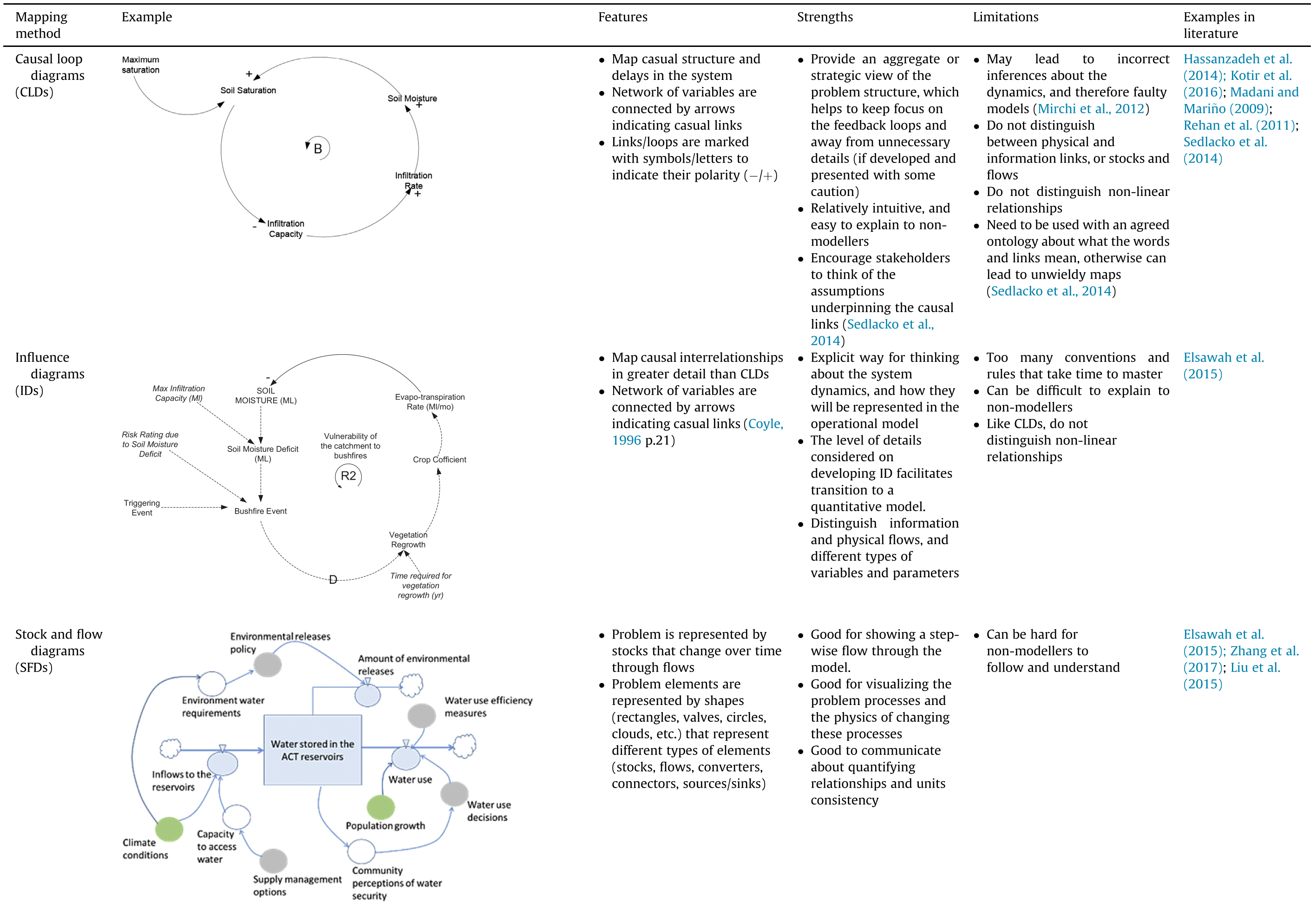
The "Dynamic Hypothesis" is the modeller's "bet" on what drives system behavior. The paper evaluates various mapping techniques:
- Causal Loop Diagrams (CLDs): Excellent for stakeholder engagement but prone to "faulty logic" if not rigorously checked.
- Stock and Flow Diagrams (SFDs): The bridge to math. Essential for representing the actual "plumbing" of the system.
2. The Complexity Trap (Formulation)
A recurring theme is Parsimony. Modellers are often tempted by "drag-and-drop" software to add more variables. However, the authors emphasize that a model should be "as simple as possible, but as complicated as necessary." In the Texas and ACT cases, extra details were added not for scientific accuracy, but for User Realism—ensuring stakeholders saw their specific concerns (like drought trigger points) represented.
3. Hybridization: Overcoming the Spatial Gap
The "Achilles heel" of SD is its lack of spatial granularity. To solve this, the cases demonstrate Model Coupling:
- Loose Coupling: SD generates data that is later mapped in GIS.
- Tight/Hybrid Coupling: Syncing SD with a spatially explicit numerical model like MODFLOW.
- The Emulation Strategy: Creating a simplified SD "meta-model" of a complex 3D groundwater model to allow for real-time "What If" sessions with stakeholders.
Evaluation: Beyond Goodness-of-Fit
How do you validate a model of a complex, data-poor social system? The authors advocate for Multiple Lines of Evidence:
- Structural Testing: Does the model logic match expert knowledge?
- Behavioral Testing: Can it replicate "Reference Modes" (historic patterns of change) even if it can't predict exact values?
- Boundary Adequacy: Are the right variables inside the model, or are the drivers purely external?
Critical Analysis & Takeaways
The paper’s greatest value is its transparency. It admits that modeling is an "inherently social process" (Nabavi et al., 2017).
Key Lessons for Practitioners:
- Iteration is Mandatory: The first model is always wrong. Use it as a "Boundary Object" to provoke stakeholder feedback.
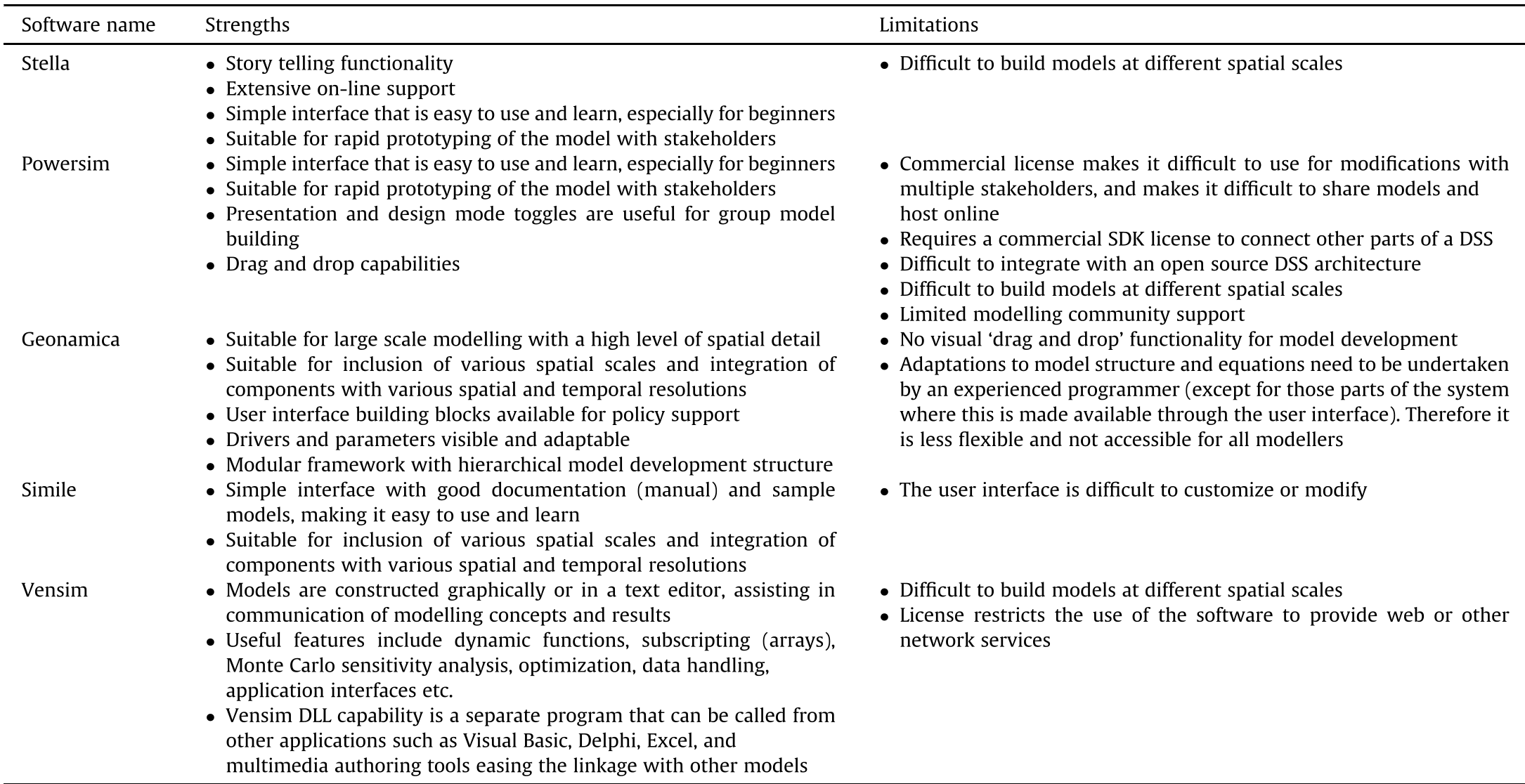
- Software Matters: Tools like Powersim or Vensim are great for prototypes, but custom environments like Geonamica are needed for large-scale spatial integration.
- The "Vee" Model: Adopt formal software engineering testing (individual module testing -> pair testing -> system testing) to prevent uncertainty from spiraling.
Conclusion: The Future of IAM
The transition from technical reporting to "reflexive practice" is vital. As we face global challenges like the Water-Energy-Food nexus, the ability to build models that stakeholders trust and understand is more important than the precision of the underlying differential equations.
Future Work: The authors suggest exploring the potential of coupling SD with Agent-Based Modelling (ABM) to better represent individual human decision-making within the broader systemic framework.