Unifying the Healthcare Ecosystem: A Systematic Deep Dive into HIoT (2015-2020)
A systematic review of IoT in healthcare: Applications, techniques, and trends
This systematic review provides a comprehensive taxonomy and technical analysis of 146 articles on Healthcare Internet of Things (HIoT) published between 2015 and 2020. It categorizes existing research into five dimensions—sensor, resource, communication, application, and security—while identifying key trends like Blockchain and Fog Computing that define the SOTA in modern personalized healthcare.
TL;DR
The "Internet of Things" is no longer just a buzzword; in healthcare (HIoT), it is a life-saving infrastructure. This systematic review analyzes 146 peer-reviewed works to map the landscape of HIoT. It reveals a shift toward Fog Computing for low latency and Security-First architectures, providing a blueprint for the next generation of personalized, remote medical monitoring.
Background: The Shift to Personalized Care
The global healthcare landscape is under immense pressure from aging populations and chronic diseases (e.g., COVID-19, diabetes). Moving from "clinic-centric" to "patient-centric" care requires a seamless blend of hardware and intelligence. The core of this transformation is the Internet of Medical Things (IoMT).
The Four-Layer Architecture of HIoT
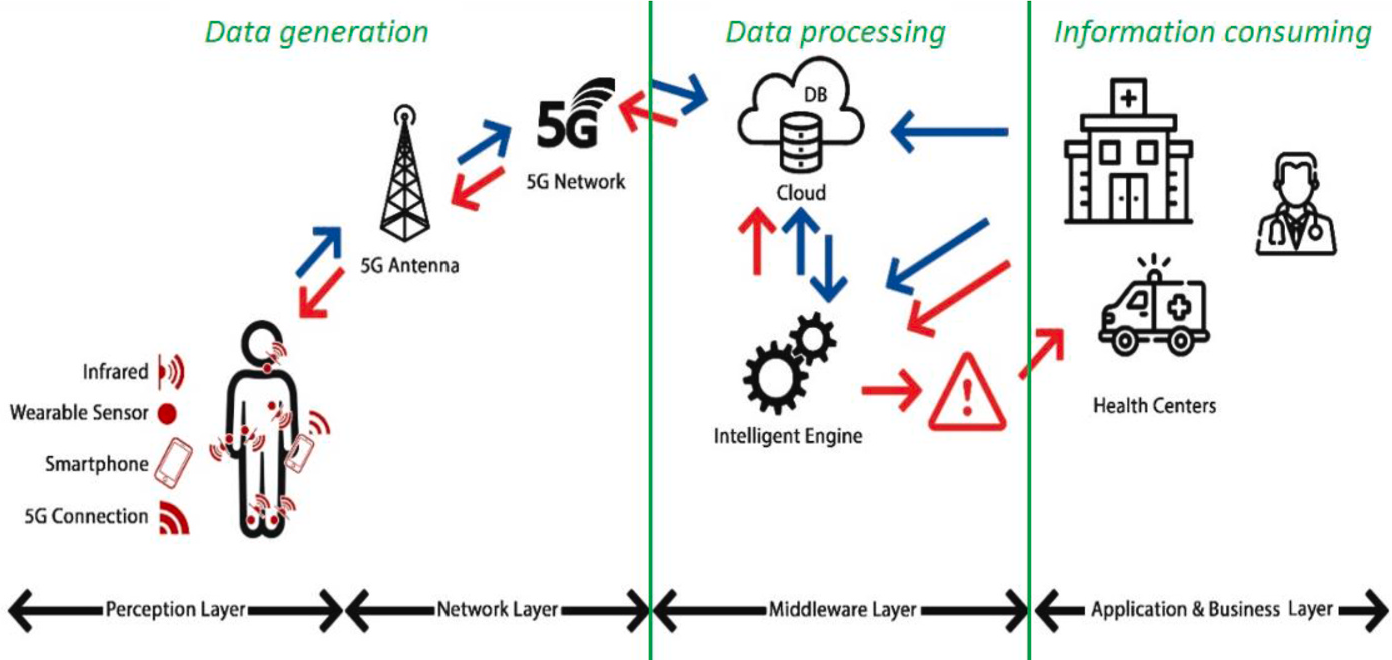
To understand how a heartbeat sensor on a wrist becomes a clinical decision, the authors propose a classic four-tier model:
- Perception Layer: The "senses"—wearable sensors (ECG, PPG) and environmental sensors.
- Network Layer: The "nervous system"—transferring data via Zigbee, Bluetooth, or 5G.
- Middleware Layer: The "translator"—storing and pre-processing data, often using Fog nodes to avoid cloud latency.
- Application Layer: The "brain"—where AI makes sense of the data for diagnosis and alerts.
Key Methodological Insights
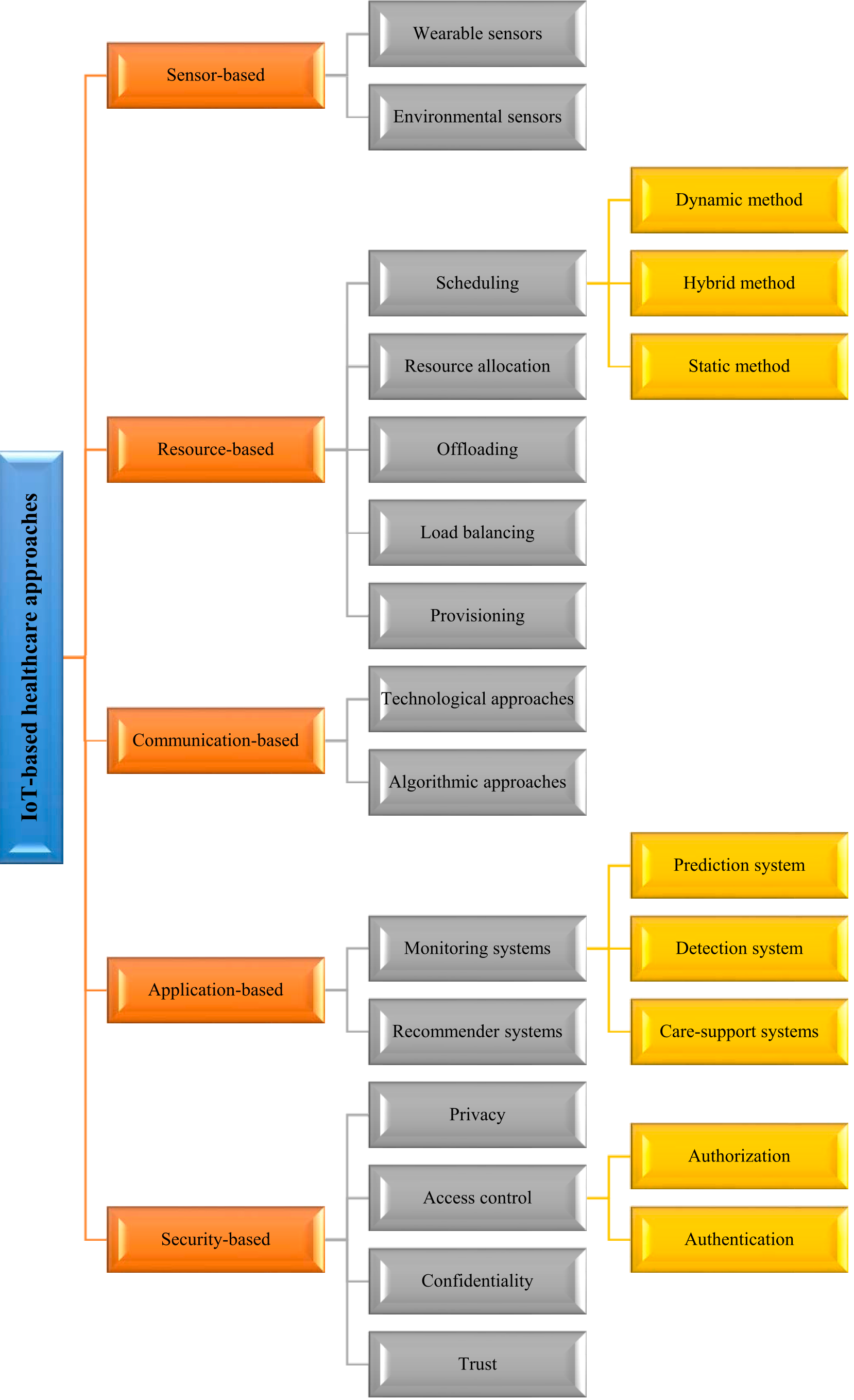
The review categorizes the research universe into five technical pillars:
- Sensor-based: Focuses on energy-harvesting (e.g., solar-powered) wearables and signal accuracy.
- Resource-based: Tackles the "NP-hard" problem of task scheduling and VM allocation in the cloud/fog.
- Communication-based: Explores LoRa, RFID, and algorithmic routing to ensure the signal always reaches the doctor.
- Application-based: The most visible part, including Prediction Systems for heart attacks and Recommender Systems for diet/medication.
- Security-based: The largest research segment (37%), focusing heavily on Authentication and Privacy-Preserving Data Aggregation.
Critical Results: Metrics that Matter
What defines "Success" in HIoT? The review identifies Performance (22%) and Security (21%) as the most cited metrics. However, there is a clear trade-off: high-security encryption often increases Time (Latency), which can be fatal in emergency detection.
Future Outlook: The "Foggy" and "Chained" Future
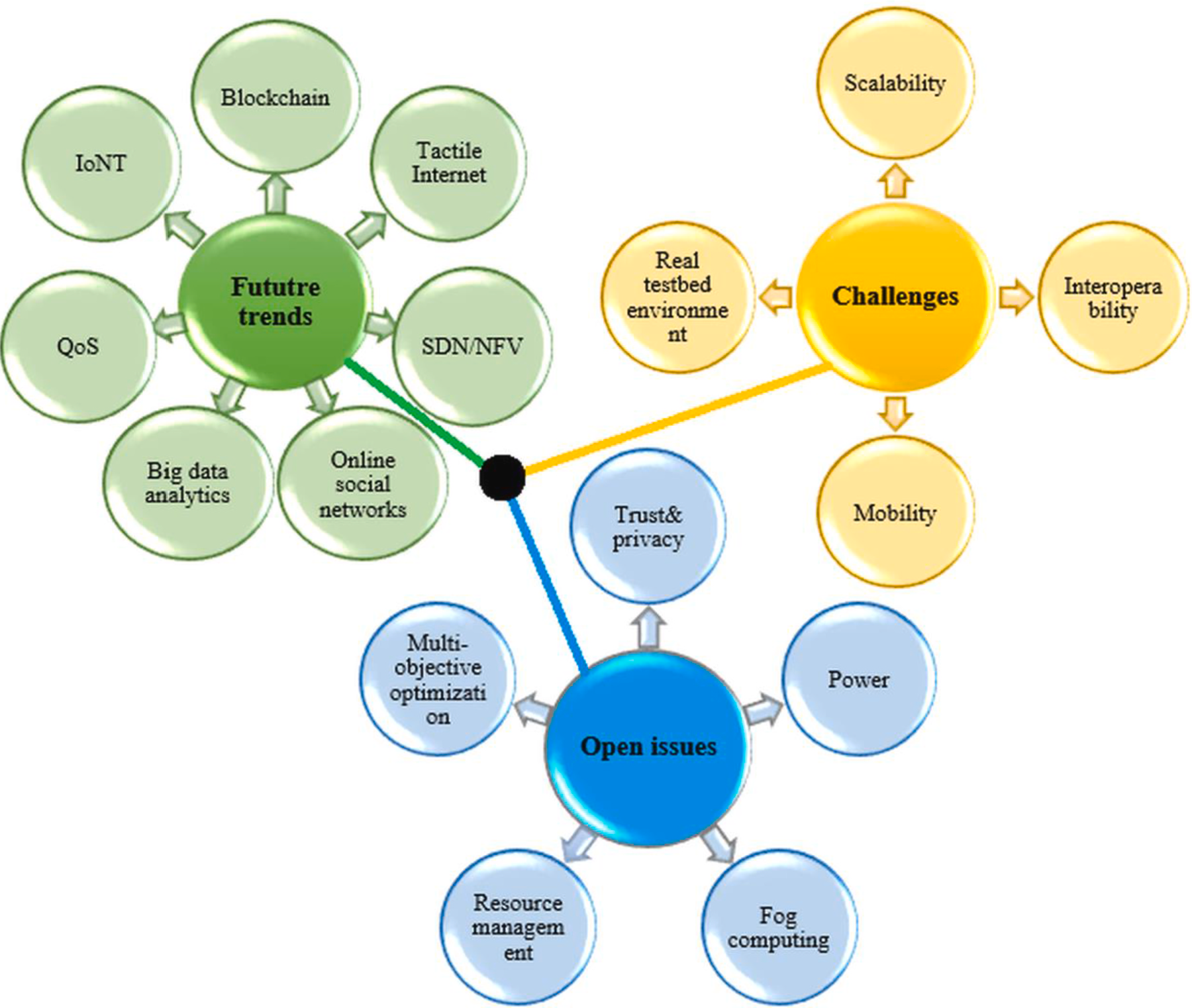
The authors conclude that four "Open Issues" will dominate the next decade:
- Fog Computing: Moving intelligence closer to the user to reduce latencies to milliseconds.
- Blockchain: Using immutable ledgers to ensure medical records cannot be tampered with.
- Tactile Internet: Enabling remote surgeries where a doctor in London can operate on a patient in Tehran with real-time haptic feedback.
- Power Management: Developing zero-power sensors that run on body heat or ambient light.
Conclusion
The biggest roadblocks remain Interoperability (making different brands of devices talk to each other) and Mobility. As we move past 2021, the integration of SDN (Software Defined Networking) and Big Data Analytics will be the final step in making HIoT systems truly autonomous.