
The Social Substrate: Re-Engineering Systems through the Lens of Social Networks
Systems Applications of Social Networks CHANGTAO ZHONG, King's College London NISHANTH SASTRY, King's College London
This survey synthesizes the integration of social network properties into system design, proposing a unifying framework of "Personalised User Selection" and "Group Delimitation." It evaluates SOTA applications in recommendation systems, P2P content sharing, and security infrastructures (anti-spam/anti-sybil), demonstrating how social topology enhances efficiency and trust.
TL;DR
Social networks are no longer just "web services"—they are a powerful technical primitive for system designers. This survey by Zhong and Sastry provides a rigorous taxonomy for applying social properties like Homophily, Transitivity, and Fast-mixing to solve classical engineering challenges in recommendation, content delivery, and system security.
Problem & Motivation: The "Context" Gap
Standard system design often suffers from a lack of "human context." For instance, P2P systems struggle with content discovery because they treat every node as a stranger. Similarly, anti-spam filters often fail because they lack a measure of the sender's underlying legitimacy.
The authors argue that the "Social Graph" offers a shortcut. By viewing users through their connections, we can infer Homophily (those who connect likely share interests) and Trust (reciprocal links imply legitimacy). However, the pitfall lies in the "unearned trust" of declared links—many users accept friend requests from strangers, creating "attack edges" that malicious actors exploit.
Methodology: The User Selection vs. Group Delimitation Framework
The core contribution of this work is the taxonomical split between how we use social data.
1. Personalised User Selection
This is source-node centric. If Node A wants a recommendation, the system looks at its immediate "Social Neighbourhood."
- Local Properties: Tie strength, common interests, and direct link semantics.
- Application: Recommender systems (items/friends) and Delay Tolerant Networks (DTNs).
2. Group Delimitation
This is global and categorical. The goal is to filter a set of users based on their social topology rather than their relation to a specific source.
- Topological Properties: Clustering coefficients, community structures, and the fast-mixing property.
- Application: Detecting Sybil clusters or identifying spammers who lack "triadic closure" (they talk to many people who don't talk to each other).
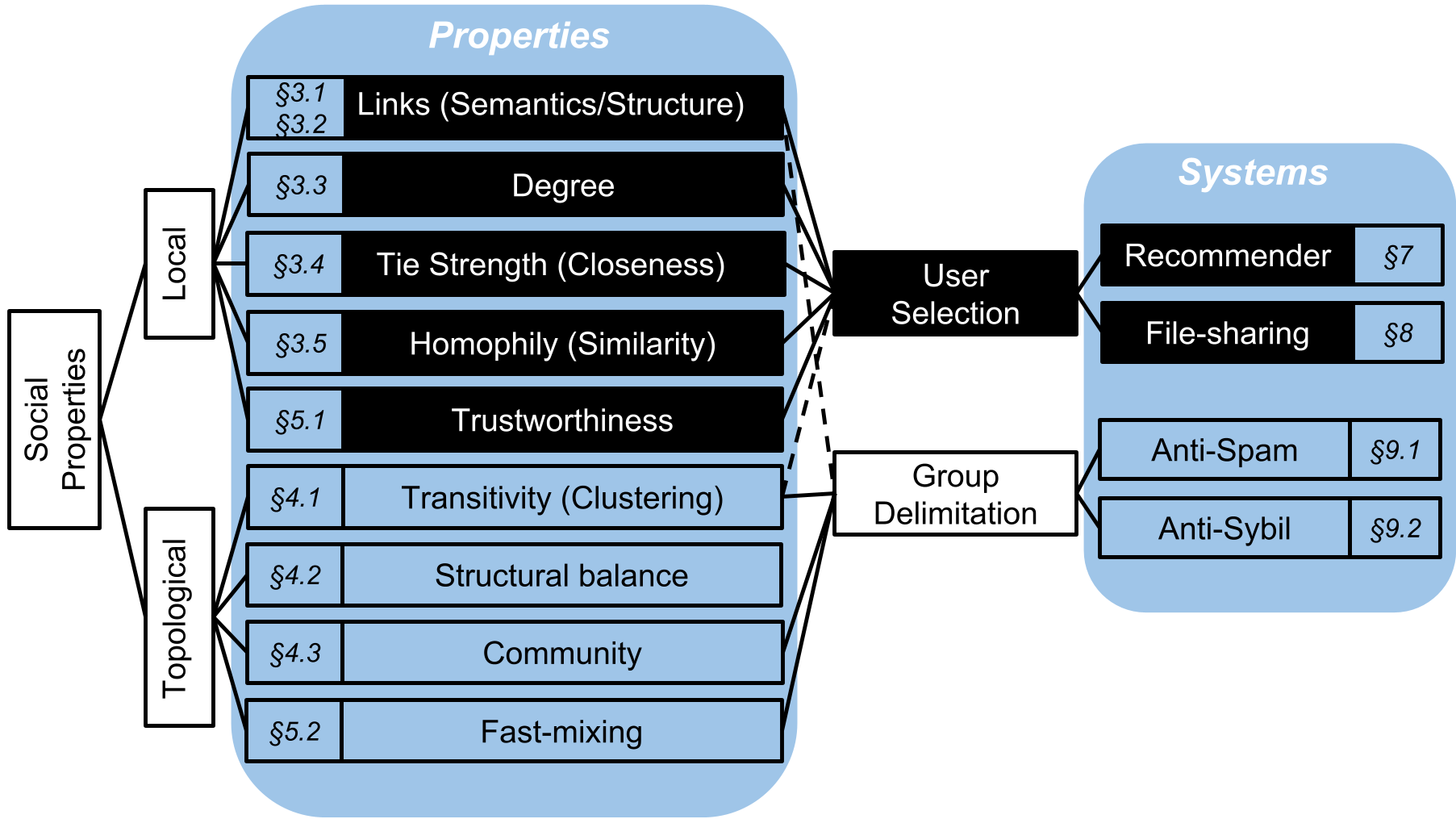 Figure 1: The dual framework of social properties mapped to system applications.
Methodology Deep Dive: Local vs. Topological
- Local Level: Systems focus on Node Degree Centrality and Tie Strength. For example, in P2P file sharing, "Interest-based Shortcuts" are essentially inferred social links that reduce hop counts significantly.
- Topological Level: The Structural Balance theory (stable vs. unstable triads) and Community Structures are used to partition data or detect anomalies. If a triad has two positive and one negative link, it's psychologically "unstable"—a nuance that can help in signed social networks (Friend/Foe systems).
The "Security Trap": Fast-Mixing and Trust
One of the most insightful parts of this survey is the critical analysis of the Fast-Mixing property. Many Sybil-defense systems (like SybilGuard) assume a random walk on a social graph will converge in steps.
The reality? Real-world graphs mix much more slowly due to "tight" communities and low-degree nodes. Designers must be wary: if a walk is too long, the verifier might "escape" into a region controlled by an attacker, nullifying the security guarantee.
Key Performance Benchmarks
The efficacy of these methods is quantified through several SOTA system comparisons:
| System Category | Core Social Property | Quantifiable Impact |
|---|---|---|
| Anti-Spam (RE:) | Transitivity (FoF) | Whitelists 88% of false-positive spams |
| P2P (Twitter-enabled) | Inferred Links | Re-encounter probability +600% |
| Sybil Defense | Fast-Mixing / Random Walks | Bounds Sybil identities to |
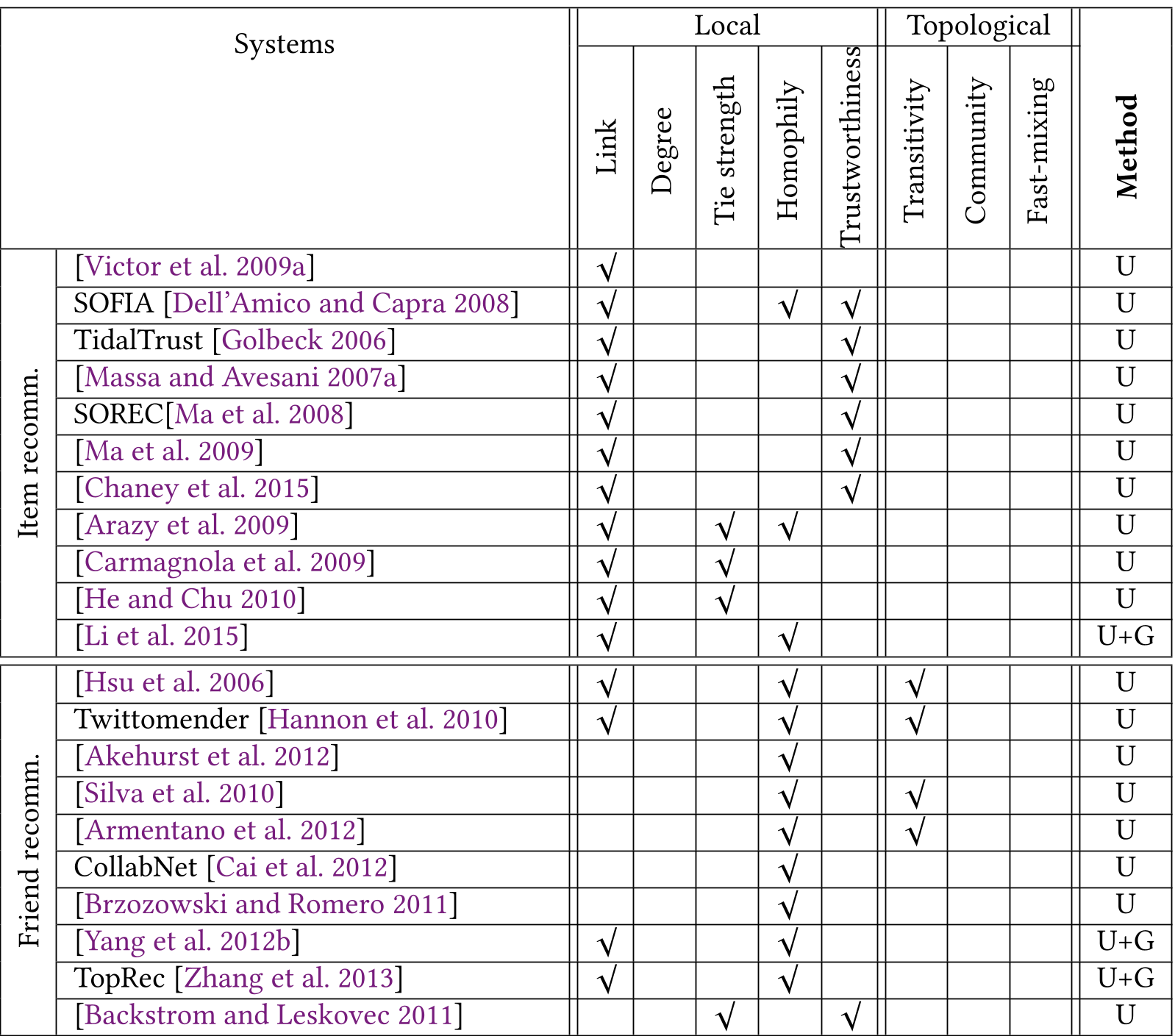 Figure 2: Performance analysis of various social-enhanced recommendation algorithms.
Critical Analysis & Conclusion
This survey serves as a reality check for the "Social-everything" trend. While social metadata can drastically reduce search space in content networks, it introduces a new attack vector: Social Engineering. If an attacker can trick an honest user into a single bidirectional link, many social-based security guarantees (like those in SybilLimit) may degrade.
Takeaway for the Architect:
- Don't trust declared links: Use "Activity Networks" (interaction frequency) to verify ties.
- Leverage Heterogeneity: Combine data from multiple platforms (e.g., using Facebook to "bootstrap" trust for a new P2P network).
- Mind the Mixing Time: If your random walk-based security protocol is slow to converge, your system remains vulnerable.
The future of system design lies in Heterogeneous Social Graphs—systems that don't just see "friends," but distinguish between professional colleagues, close kin, and casual interest-based acquaintances to make precise, trust-aware decisions.