
The Tactile Internet: Turning 5G into the Nervous System for Future Telesurgery
Tactile-Internet-Based Telesurgery System for Healthcare 4.0: An Architecture, Research Challenges, and Future Directions
This paper proposes a 5G-enabled Tactile Internet (TI) architecture for telesurgery within the Healthcare 4.0 framework. It leverages 5G's Ultra-Reliable Low-Latency Communication (URLLC) to overcome the connectivity barriers of traditional networks, providing a roadmap for sub-millisecond remote surgical procedures.
TL;DR
Telesurgery has long been a "holy grail" of medicine, but network lag has historically made it too risky for mainstream adoption. This paper outlines a revolutionary architectural shift from traditional Internet to 5G-enabled Tactile Internet (TI). By achieving <1ms latency and 99.999% reliability, this system allows surgeons to not just see, but feel the patient’s tissues from thousands of miles away, ushering in the era of Healthcare 4.0.
Background: Why Today's Telemedicine Isn't Enough
Current telemedicine is largely "offline" or high-latency "online" (teleradiology, patient monitoring). While robots like da Vinci are phenomenal in a local operating room, their performance in remote settings has been hampered by 4G and LTE networks.
The fundamental problem is Human-to-Machine (H2M) interaction. Unlike standard Video-on-Demand, surgical feedback requires an "action-reaction" cycle that matches the human nervous system's perception speed. When latency exceeds 1-10ms, the surgeon experiences a "sensory mismatch," which can lead to catastrophic errors.
The Evolution of Surgical Robotics
The paper provides a fascinating timeline of surgical robotics, from the ARTHROBOT (1983) to the Corpath GRX 200 used in recent heart surgeries.
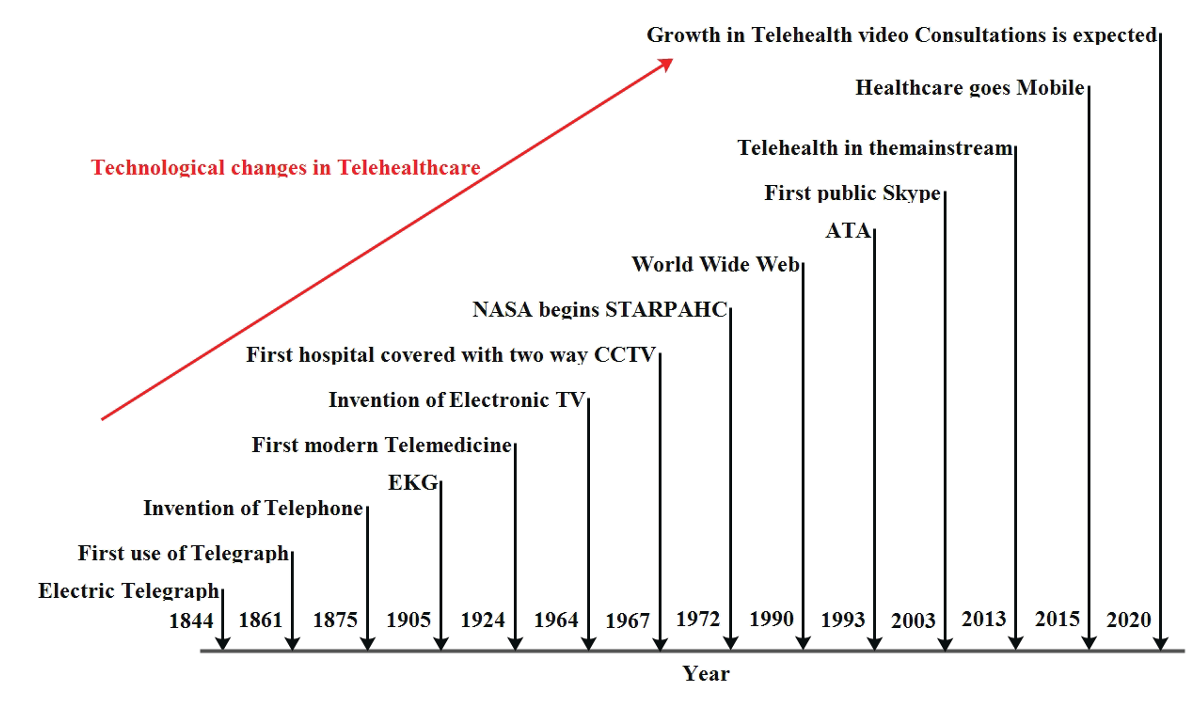
As shown in the historical data, early robots (like PUMA 560 or PROBOT) were limited by their closed platforms. The evolution toward 5G TI is not just about faster speeds; it's about the reliability of the link and the ability to transmit haptic data (touch and force).
Methodology: The 5G TI Architecture
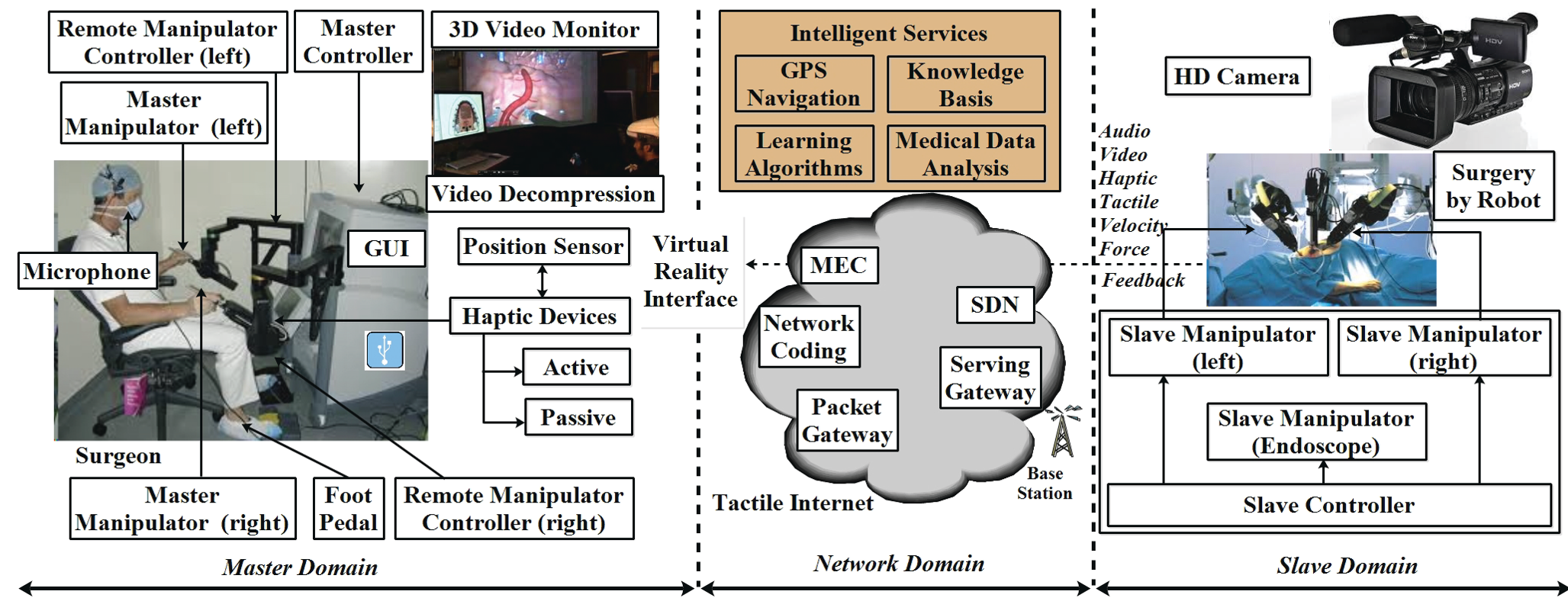
The proposed architecture moves beyond simple data transmission by introducing three critical domains:
- Master Domain: An advanced Human-System Interface (HSI) equipped with haptic devices that convert surgical movements into tactile code.
- Network Domain (The Soul of the System): This utilizes Mobile Edge Computing (MEC) and Software Defined Networking (SDN). By processing data at the "edge" (close to the surgeon and patient), the system bypasses the delays of the traditional cloud.
- Slave Domain: The surgical robot at the patient's site, which uses 3D HD cameras and tactile sensors to feed data back through the 5G URLLC pipe.
Why URLLC Matters
5G URLLC (Ultra-Reliable Low-Latency Communication) is the "SOTA" standard that makes this possible. It ensures that the "Round Trip Time" (RTT) is short enough that the surgeon feels the mechanical resistance of a suture or an artery in real-time, effectively eliminating the distance between the scalpel and the hand.
Case Study: World’s First Telestenting Heart Surgery
The paper highlights a landmark 2018 case in Gujarat, India, where a team performed heart surgery from 30 km away.
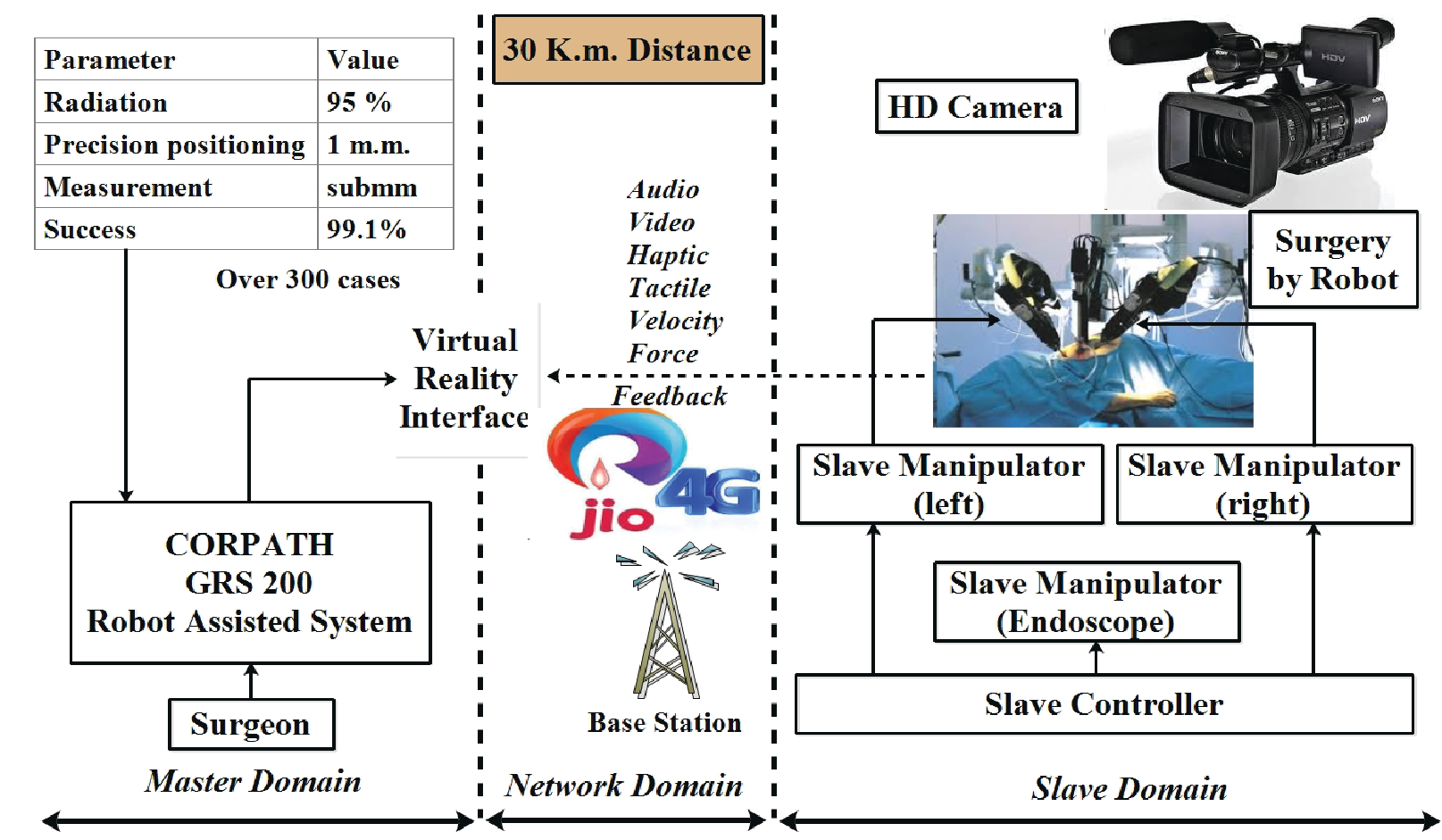
While successful using high-speed broadband, the authors argue that moving this to a 5G-TI backbone would have:
- Reduced latency from <10ms to <1ms.
- Increased reliability to 99.999% (only 3.17 seconds of potential outage per year).
- Allowed for Multi-user Haptic Communication, where specialists from three different continents could theoretically co-operate on a single patient.
Critical Insight & Challenges
Despite the promise, several "Ablation Studies" on the system's viability reveal hurdles:
- Security: Since the system is wireless, it is vulnerable to DoS attacks. The authors suggest Lightweight Physical Layer Coding as a solution that provides security without the computational "latency tax" of standard encryption.
- Cost: Setting up a dedicated 5G slice for every surgery remains expensive.
- Scalability: Maintaining sub-millisecond latency as the distance increases to thousands of kilometers (or into space for NASA applications) remains a physics-defying challenge regarding the speed of light in fiber vs. wireless.
Conclusion
This work frames the Tactile Internet not just as an "upgrade" to the web, but as a paradigm shift for Healthcare 4.0. By treating network latency as a clinical vital sign, we move closer to a world where a world-class surgeon's skill can be "teleported" to a battlefield or a remote village instantly.
Takeaway: The future of surgery isn't just robotic; it's distributed. 5G TI is the key that unlocks the door.