
Leveraging the Social Graph: A Strategic Framework for Facebook in Higher Education
Tapping the educational potential of Facebook: Guidelines for use in higher education
This paper explores the role of Facebook as a Computer Mediated Environment (CME) in Higher Education (HE) and proposes a set of 12 guidelines for its academic use. Combining theories of Social Capital and Knowledge Management, the study utilizes qualitative data from the University of Auckland and Manchester Metropolitan University to bridge the gap between social networking and formal learning.
TL;DR
Social networking isn't just for procrastination—it's a goldmine for Social Capital. This paper provides a roadmap for academics to transition from task-oriented VLEs to social-relational learning environments by using Facebook. It introduces 12 rigorous guidelines to balance academic rigor with student privacy.
Background: The Social-Academic Divide
Most University-sanctioned platforms (Virtual Learning Environments) are "functional and task-oriented," often ignoring the vital social context where true learning happens. Students flock to Facebook to build identities and "weak ties," yet educators remain hesitant to cross the digital threshold. The authors ask: How can we tap into this existing social infrastructure without making it awkward or illegal?
Methodology: The Social Capital Lens
The authors don't just look at "likes"; they apply Social Capital Theory (Bourdieu, Coleman, Putnam) to analyze Facebook's architecture. They break down the educational potential into three dimensions:
- Structural: The platform's ability to facilitate thousands of "weak ties."
- Cognitive: The shared language and "ambient awareness" created by status updates and wall posts.
- Relational: The trust and motivation that fuel knowledge sharing in informal groups.
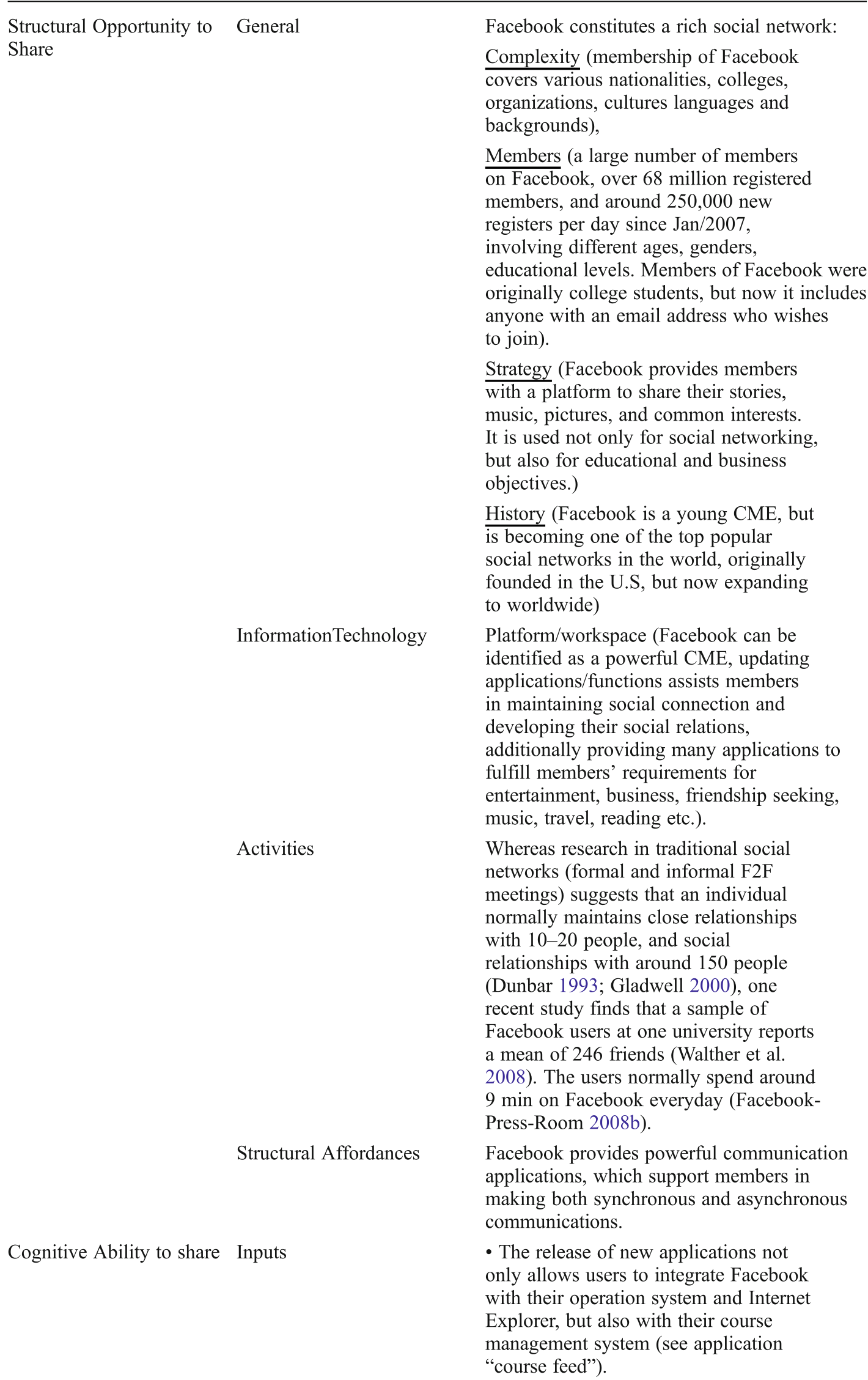 Table 1: Analysis of Facebook's structural and cognitive affordances for knowledge sharing.
Key Insights: From Teaching to Social Relational Learning
The research highlights a fundamental shift in pedagogy. The "Old Model" of cerebral transmission (Classroom-based) is being replaced by a "New Model" (Constructivist) where learning is an identity change driven by participation in a community.
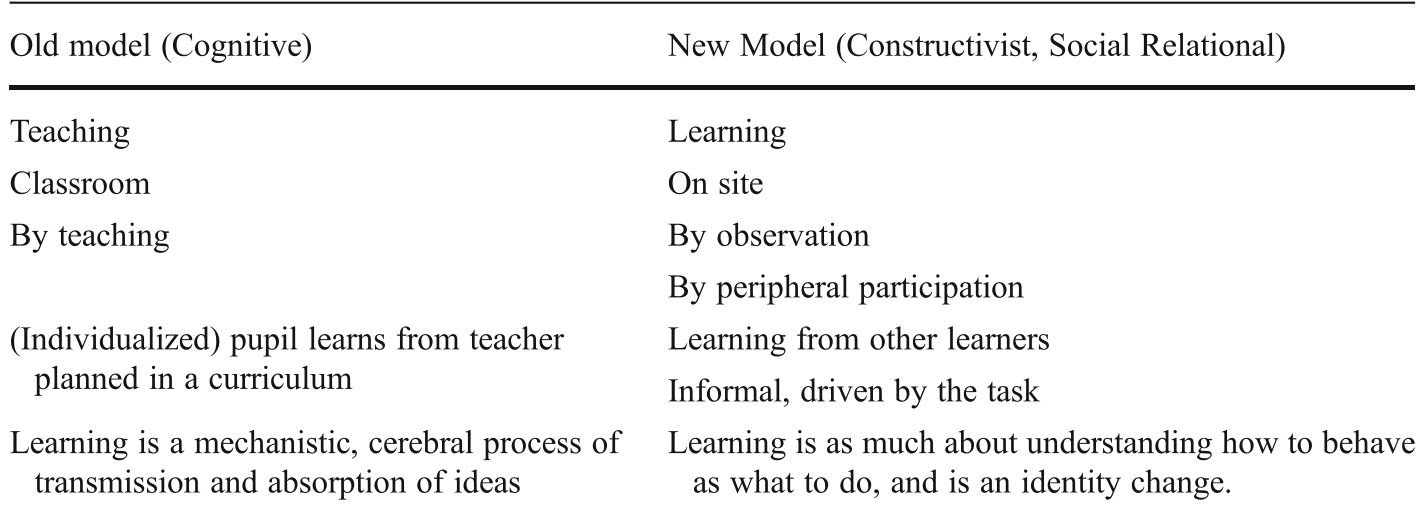 Table 2: Comparison of the Old Cognitive Model vs. the New Social Relational Model.
The "Friendship" Problem
One of the paper's most critical findings is the tension over the term "Friend." In a learning context, requiring a teacher-student "friend" connection is risky. It exposes personal data (photos, social life) that can lead to discomfort. The solution? Group-based interaction that bypasses the need for individual friendship.
The 12 Guidelines for Academics
The paper concludes with actionable guidelines categorized by Purpose and Process. Notable highlights include:
- Guideline 1: Establish a Clear Purpose: Don't use Facebook just because it's trendy; define if it's for administrative notices or "hard" collaborative work.
- Guideline 6: Avoid "Friendly" Connections: Use the "Group" feature to maintain professional distance while enabling peer-to-peer interaction.
- Guideline 12: Privacy Awareness: Explicitly teach students how to manage their digital footprint within the academic context.
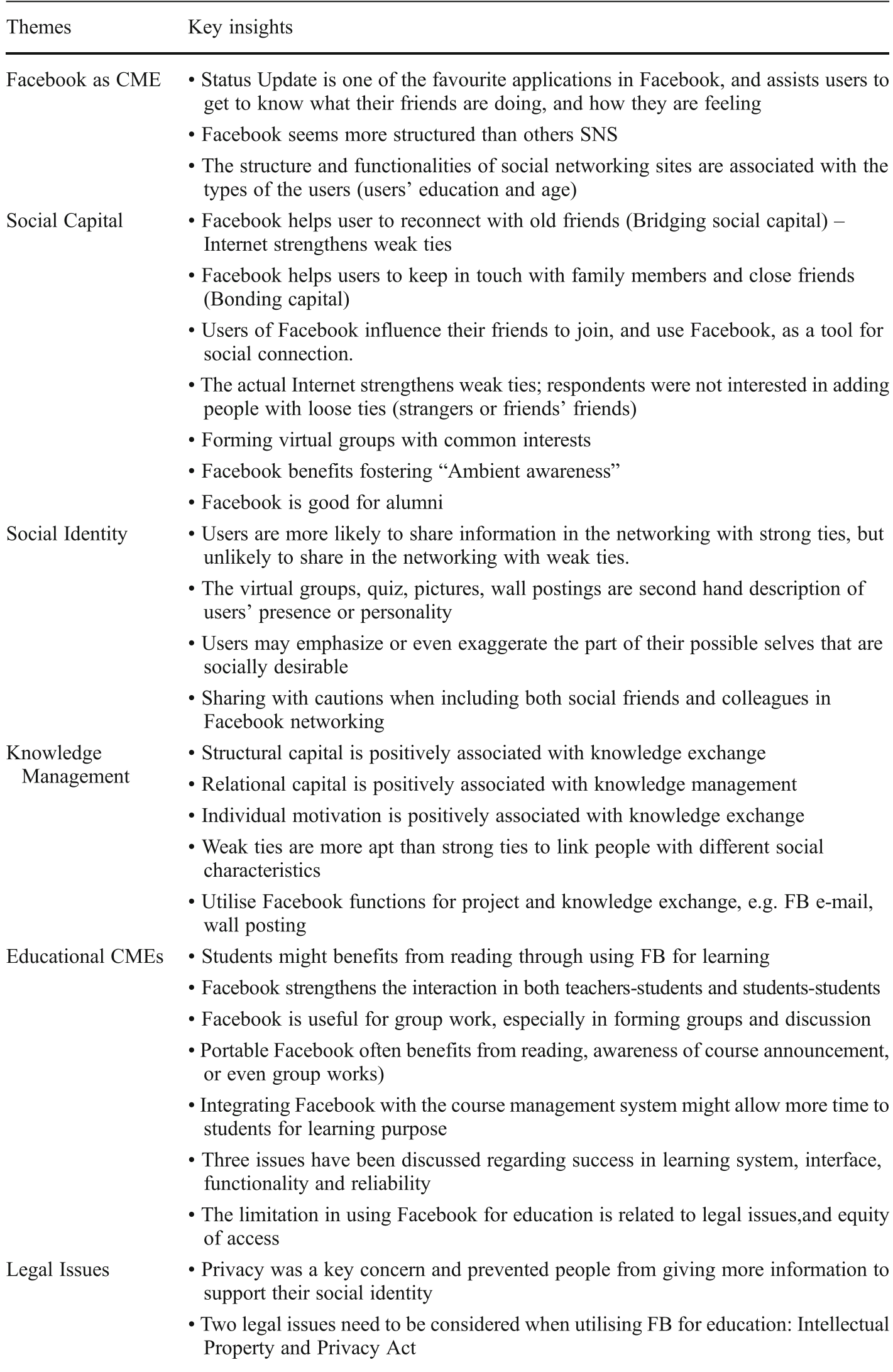 Table 3: Key insights on Social Capital, Social Identity, and Knowledge Management on Facebook.
Critical Analysis & Conclusion
While written in 2012, the core logic remains highly relevant for today's fragmented social media landscape.
- Takeaway: The value of social media in education isn't the content—it's the Social Capital (the networks and trust) it generates.
- Limitations: The study was conducted before the mass migration of younger cohorts to TikTok/Discord and before major privacy scandals (e.g., Cambridge Analytica), which might increase current student resistance.
- Future Outlook: Educators should look beyond specific platforms and focus on the guidelines of interaction that can be applied to any emerging "Computer Mediated Environment."
By treating Facebook as a "place-based" virtual community, universities can foster a sense of belonging that traditional classrooms often fail to provide.