
TUAPM: Precision Strike Influence Maximization in Social Networks
Target users' activation probability maximization with different seed set constraints in social networks
The paper introduces the Target Users' Activation Probability Maximization (TUAPM) problem, distinguishing it from traditional Influence Maximization by focusing on activating a specific set of high-value target users. It proposes the Influence Decay Model (IDM) to account for time-based influence reduction and provides approximation algorithms—Double Greedy (DGA), Basic Greedy (BGA), and a Scalable Algorithm (SA)—to solve the problem across different budget constraints.
TL;DR
In the world of social marketing, broad-spectrum "Influence Maximization" is often a waste of budget. This paper shifts the focus to Target Users’ Activation Probability Maximization (TUAPM). By introducing an Influence Decay Model (IDM) that accounts for the diminishing impact of news over time, the authors provide a framework for picking the perfect "seed" users to activate a specific high-value group.
Background Positioning
While classical Influence Maximization (pioneered by Kempe et al.) aims to "set the whole forest on fire," TUAPM is a sniper-like approach aiming for specific "trees." It treats the social network as a dynamic landscape where influence dissipates, making it a critical study for targeted advertising and recommendation systems.
Problem & Motivation: Why Global Influencers Often Fail
Most algorithms pick seeds like celebrities because they have high degrees (connections). However, if your goal is to market professional makeup tools, a celebrity might be too "distant" in the social graph from the actual makeup artists you want to reach.
The authors identify two fatal flaws in prior work:
- Targeting Blindness: Traditional IM maximizes the count of nodes, not the probability of reaching a specific set .
- Static Probability: Most models ignore time. In reality, a recommendation about the World Cup is powerful during the event but worthless weeks later.
Methodology: The Core Mechanics
1. Influence Decay Model (IDM)
The probability of influence is no longer constant. It is defined as: This logarithmic decay ensures that as "hops" or time steps increase, the chance of a seed successfully activating a distant target drops, mirroring the real-world "stale news" effect.
2. Algorithmic Breakdown
Depending on the budget, the paper proposes three paths:
- TUAPM-WOC (Unconstrained): Uses a Double Greedy Algorithm (DGA). It maintains two sets (one empty, one full) and iteratively decides whether to include or exclude a node based on marginal gains, ensuring a 1/3-approximation.
- TUAPM-WC (Constrained): Uses a Basic Greedy Algorithm (BGA). It picks nodes with the highest marginal activation probability for the target set , achieving the gold-standard approximation ratio.
- Scalable Algorithm (SA): To avoid the #P-hard complexity of calculating exact probabilities, it uses Maximum Activation Probability Trees (MAPT). This prunes paths with probabilities below a threshold , focusing only on the most likely infection routes.
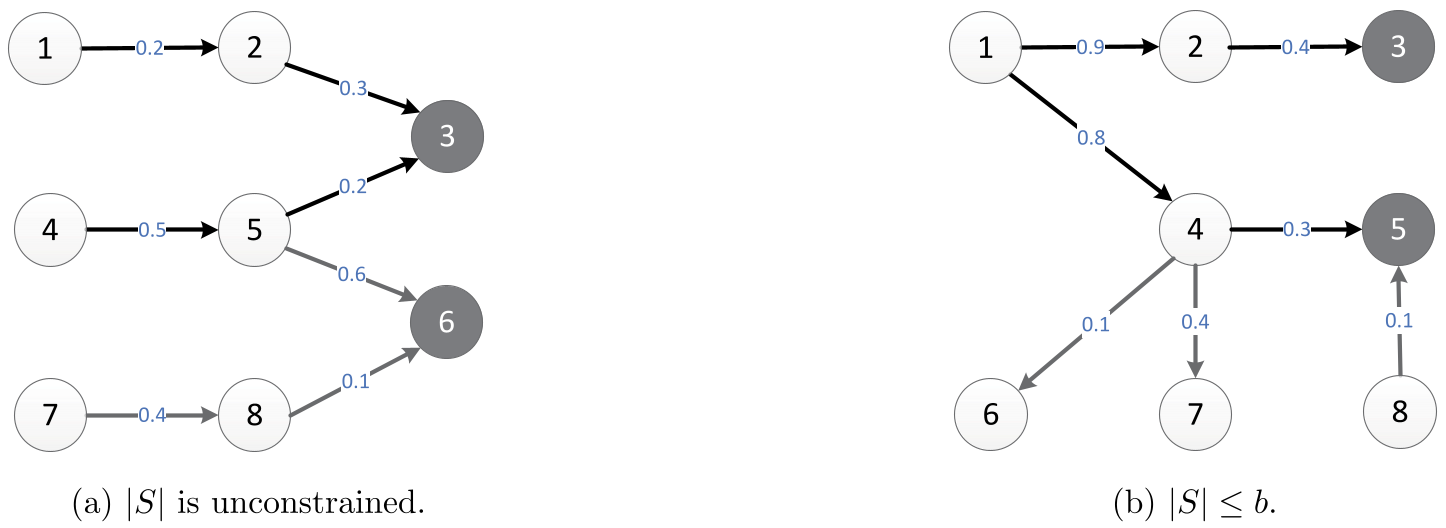 Figure 1: Comparison between constrained and unconstrained seed selection for specific targets.
Experiments & Results
The authors tested their approach on datasets ranging from citation networks (Cora) to massive social graphs (Facebook/com-DBLP).
Key Findings:
- BGA > Heuristics: Methods like PageRank or Degree Discount failed to focus influence on the targets efficiently. BGA required fewer seeds to achieve the same target activation probability.
- Decay Matters: The Total Activation Probability was significantly lower under IDM than the standard Independent Cascade Model, proving that static models vastly over-estimate marketing success.
- Scalability: The SA method achieved nearly the same results as BGA but at a fraction of the time, making it the only viable choice for networks with millions of edges.
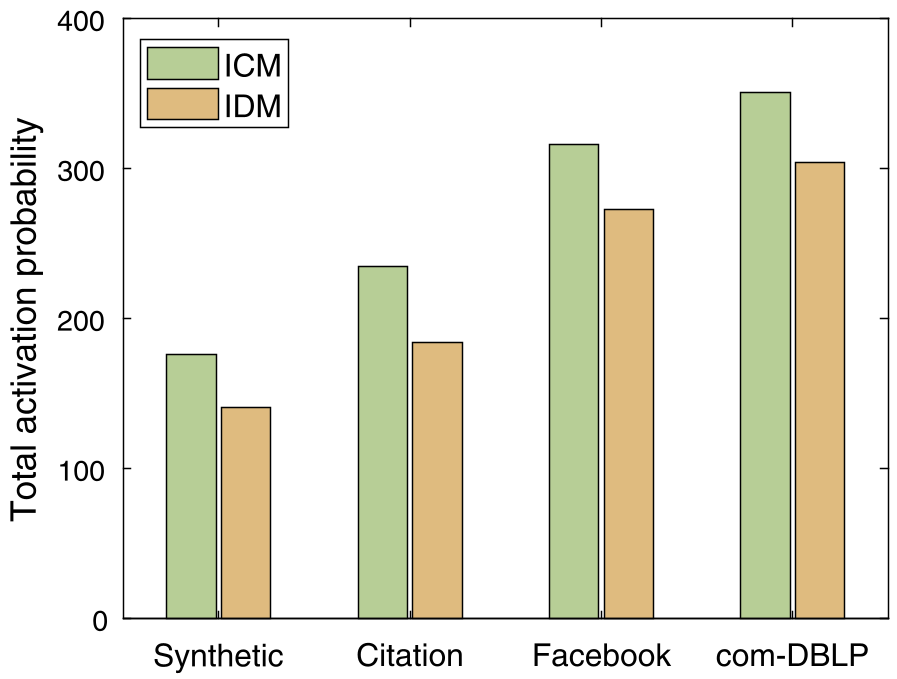 Figure 2: Performance comparison of BGA vs. SA and the impact of the Decay Model.
Critical Analysis & Conclusion
Takeaway
If you are a marketer, the "influential" nodes in your network are not the ones with the most followers, but the ones with the highest cumulative path probability to your specific targets, adjusted for time.
Limitations
The model assumes we know the target set perfectly. In many real-world scenarios, the "target set" is fuzzy or evolving. Furthermore, the logarithmic decay factor is a heuristic; different types of information (e.g., financial news vs. fashion trends) might decay at vastly different rates.
Future Prospect
Integrating this logic into Reinforcement Learning agents that can adaptively select seeds as they observe the network's reaction in real-time could be the next frontier for this research.