
Decoding the "Collective Range": Why the Crowd Isn't Always Smarter
The role of task difficulty in the effectiveness of collective intelligence
This paper explores the impact of task difficulty on the effectiveness of Collective Intelligence (CI). By introducing the "Collective Range" framework, it demonstrates that while crowds often outperform individuals, this superiority is contingent on medium-level task difficulty, achieving a Collective Intelligence Quality (CIQ) of over 817x in specific scenarios.
TL;DR
The "Wisdom of Crowds" isn't a silver bullet. This research identifies a critical "Collective Range"—a sweet spot of medium task difficulty where collective judgment dramatically outperforms individuals. Outside this range, collectives either offer marginal gains (easy tasks) or collapse into random guessing (complex tasks).
Background: The Myth of Universal Crowd Wisdom
From guessing jellybeans in a jar to predicting election outcomes, Collective Intelligence (CI) has been hailed as a superior alternative to expert judgment. However, as Wagner and Suh point out, we wouldn't trust a crowd to pilot a passenger plane. The missing variable in CI research has long been Task Difficulty. This paper positions CI not just as a statistical phenomenon, but as a "digital ecosystem" that requires specific conditions to survive and thrive.
The "Collective Range" Hypothesis
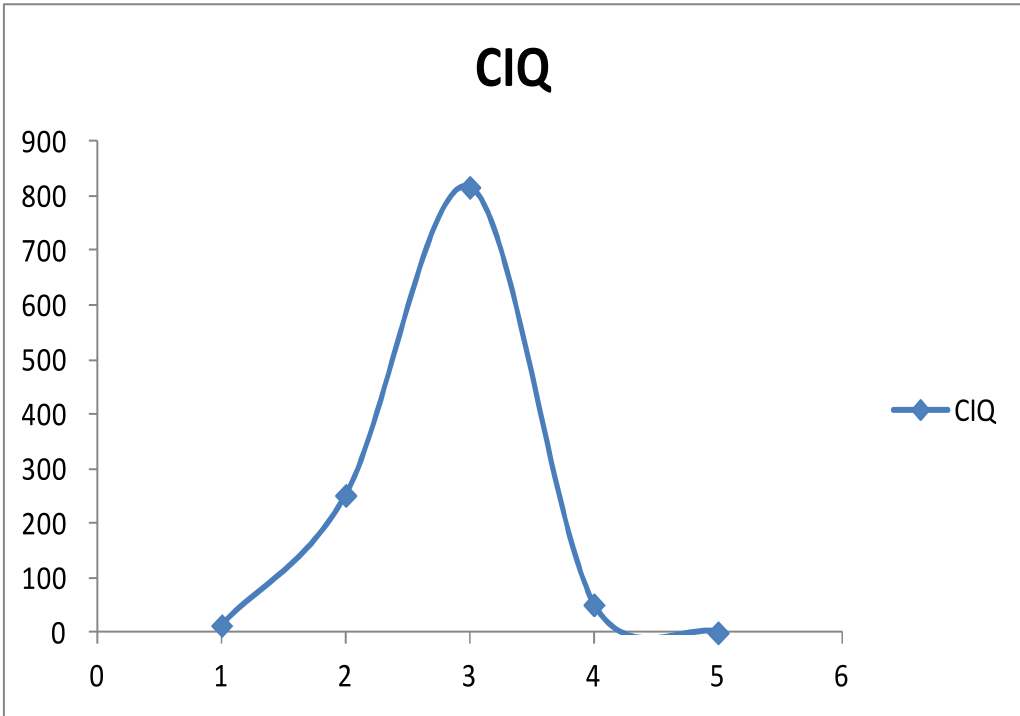
The authors argue that CI effectiveness follows an inverted U-curve relative to task difficulty:
- Low Difficulty: Tasks are elementary; the average individual performs well, leaving little "error" for the crowd to correct.
- High Difficulty: Tasks are so complex (subjectively or objectively) that individuals resort to random guessing. Aggregating noise only results in more noise.
- Medium Difficulty (The Collective Range): Individuals possess some information but are prone to systematic biases. Here, the aggregation of diverse heuristics cancels out individual errors, revealing the "true" signal.
Methodology: Measuring the "Smartness" of the Many
The study uses 500 participants and 8 tasks ranging from local temperature predictions (Seoul) to abstract estimations (Global Poverty). To quantify performance, they use the Collective Intelligence Quality (CIQ):
Where is the average of squared individual deviations and is the squared deviation of the crowd's average. A higher CIQ indicates a stronger collective advantage.
Key Findings: The Peak and the Plunge
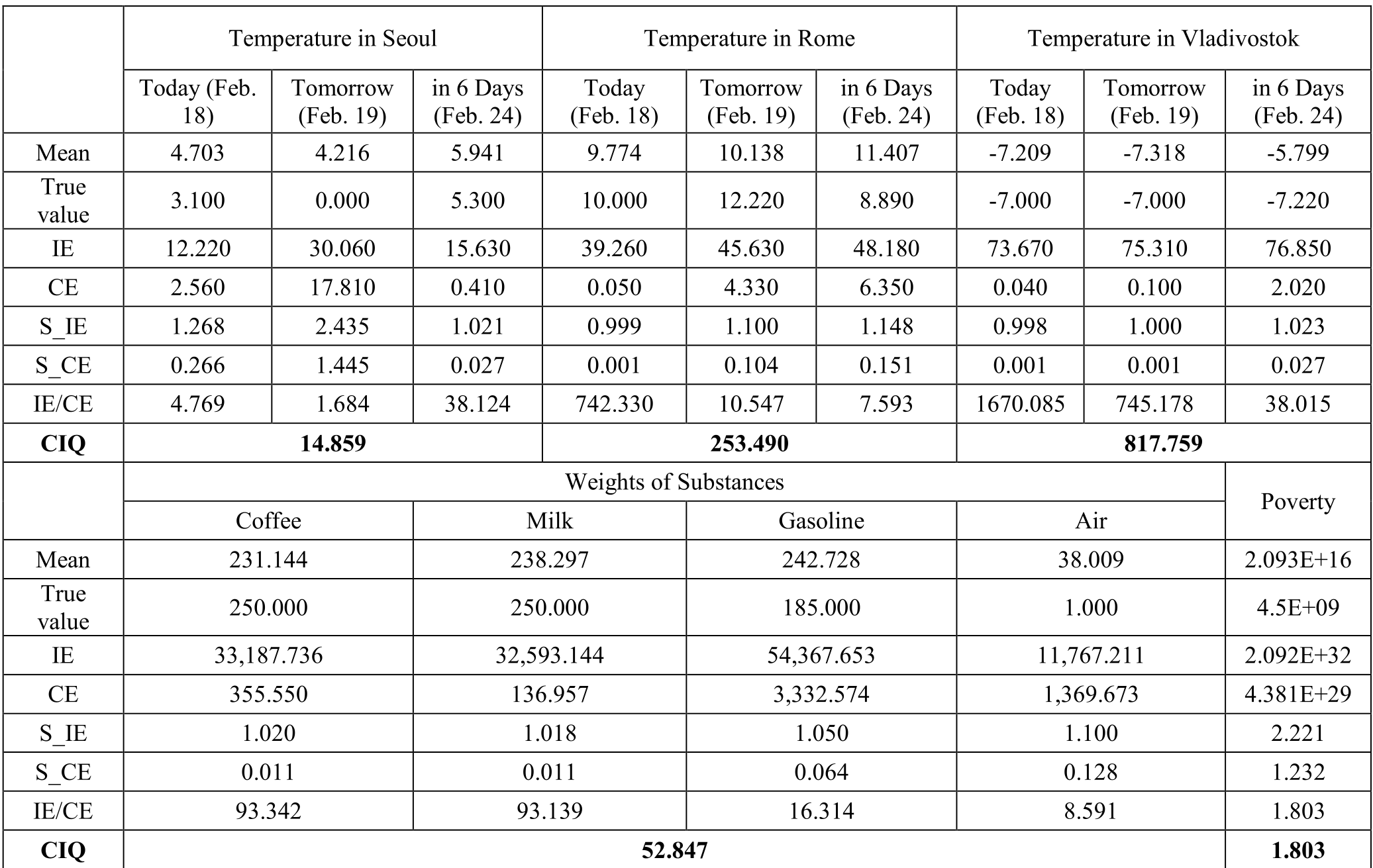
The data confirms the existence of the "Collective Range." As seen in the results:
- The Peak: In tasks like predicting the temperature in Vladivostok (a medium-difficulty task for the Korean sample), the CIQ reached a staggering 817.7, meaning the crowd was orders of magnitude more accurate than the average individual.
- The Collapse: For the "Poverty" task (estimating sustainable income from $1 from every poor person), the CIQ dropped to 1.803. The task was so difficult that the collective was barely better than a single person.
- The Efficiency of Diversity: Education and domain knowledge improved performance on easy tasks, but the unique "algorithm" of the crowd—aggregating different heuristics—was the primary driver of success in the medium-difficulty range.
Deep Insight: Implications for Digital Ecosystems
This research shifts the focus from who is in the crowd to what the crowd is doing.
- Task Engineering: If a problem is too hard for a crowd, it shouldn't be discarded. Instead, it should be decomposed. By breaking a high-difficulty problem into moderate sub-tasks, we can drag the problem back into the "Collective Range."
- Sustainability: In digital ecosystems (like prediction markets or idea platforms), CI provides "survival strength." Reducing systematic bias through aggregation leads to better resource allocation and long-term sustainability.
Critical Analysis & Conclusion
While the paper provides a robust framework, it acknowledges limitations in how "Efficiency" is measured (relative vs. absolute terms). Future work needs to explore how interactive communication between crowd members might shift the boundaries of the Collective Range—potentially allowing crowds to tackle even harder problems through collaborative refinement.
Takeaway: Don't just "ask the crowd." First, verify if your problem sits within the Collective Range. If it’s too hard, simplify; if it’s too easy, an individual expert will suffice.