
Teaching HCI for Social Good: Beyond Pixels and Code
Teaching Human-Computer Interaction for Social Good
This paper explores the evolving role of Human-Computer Interaction (HCI) within undergraduate computing curricula, specifically focusing on its potential to teach social responsibility and ethics. Using the ACM/IEEE CC2020 guidelines as a benchmark, it proposes a transition from technology-centered to human-centered pedagogy through project-based learning.
TL;DR
In a world increasingly governed by algorithms, Nikolaos Avouris argues that Human-Computer Interaction (HCI) is no longer just about "making things look good." Instead, it is the primary vehicle for teaching Social Good and Professional Ethics in computing. By shifting from a technology-centered to a human-centered curriculum, educators can motivate students to solve real-world problems—like accessibility for stroke patients or the transparency of public services.
The Background: A Shift in the Academic Coordinates
The importance of the human element in computing is not just a philosophical trend; it is now a formal academic standard. Comparing the ACM/IEEE CC2013 and CC2020 curricula reveals a massive shift:
- CC2013: HCI was one of 18 knowledge areas, occupying only about 2.6% of core hours.
- CC2020: User Experience (UX) and Social Issues have moved to the "Users and Organizations" category. The focus has shifted from "Knowledge" to "Competency"—the ability to apply education in professional service to society.
The Motivation: Why HCI?
Technical subjects like Algorithms or Operating Systems can feel abstract and detached. HCI, however, is inherently multidisciplinary. It bridges the gap between formal engineering and the messy, unpredictable reality of human life. The author identifies a critical "ethics gap" in computing education and argues that HCI is the natural home for filling it because it forces students to answer the question: Who are we building this for, and who might it harm?
Methodology: The Framework for Social Impact
The core of the author’s proposal is Project-Based Learning (PBL) focused on "Capital 'S' Socially interesting projects."
1. The Strategy of Negotiation
The educator’s role is to guide students from "little s" interests (like making a fun game) to "capital S" social relevance (like making a game about refugee awareness).
2. Strategic Inspiration: The UN SDGs
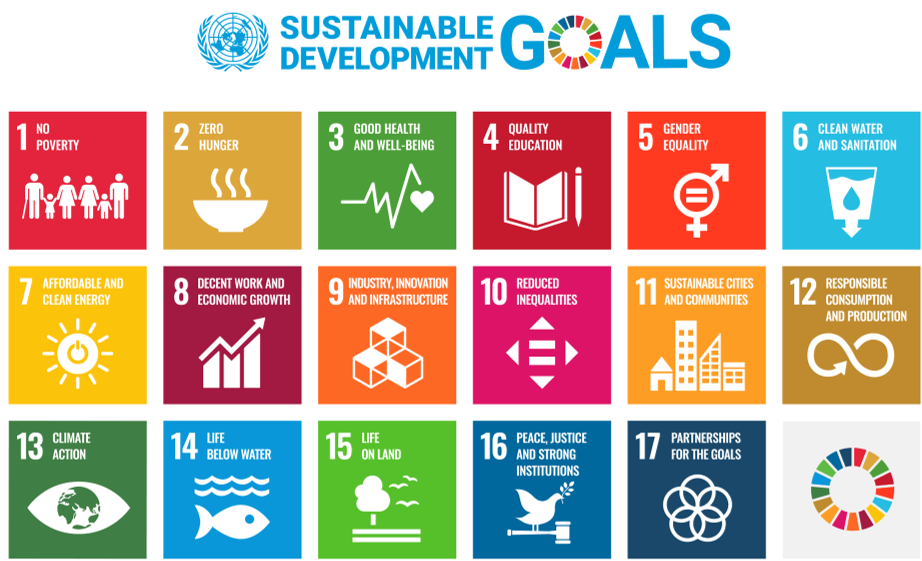
The paper suggests using the United Nations 17 Sustainable Development Goals as a blueprint for student projects.
3. Integrated Pedagogy: The Catalyst Role
The author argues that HCI shouldn't be an island. It must infuse a human-centered perspective into three specific technical silos:
- Software Engineering: Moving from rigid formal models to "Agile Human-Centered Software Engineering."
- Artificial Intelligence: Pushing for Human-Centered AI—where the goal is augmenting human intellect rather than purely emulating it.
- Security: Promoting "Usable Security" to resolve the tension between strict protocols and user needs.
Deep Dive: Human Control vs. Automation
One of the most striking insights in the paper is the visualization of Human Control vs. Computer Automation. Using the example of a wheelchair, the author illustrates that "High Automation" does not have to mean "Low Human Control."
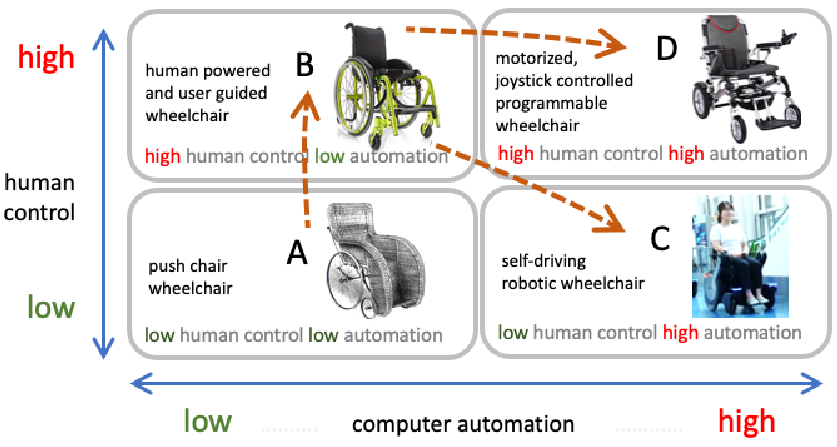
- Case C (Self-driving robot): High automation, low control.
- Case D (Motorized joystick-controlled): High automation, high control. This is the "Human-Centered" ideal.
Key Results and Case Studies
The paper cites a project evaluating and re-designing e-government services in Greece.

- Student Motivation: By presenting their usability findings to actual public service owners, students felt a sense of "ownership" and pride.
- Competency Validation: Students successfully applied technical evaluation methods (task analysis, heuristic evaluation) to identify systemic barriers in healthcare and financial web portals.
Critical Insight & Conclusion
Takeaway
The value of this work lies in its call to arms for HCI educators. They are no longer just teaching "buttons and menus"; they are teaching the conscience of computing. By situating code in a social context, we don't just create better developers; we create better citizens.
Limitations & Future Work
The author acknowledges that these examples are primarily situated within a Western computing curriculum (Greece). A major next step would be investigating how these "Social Good" interventions translate to other disciplines like Social Sciences or Information Communications, where the technical baseline varies significantly.
As AI continues to advance toward black-box complexity, the role of the HCI educator in advocating for Explainable AI (XAI) and Human-in-control systems will be the frontline of defense against unethical tech.