
Deciphering the Human Script: What Jazz Repository Communications Reveal About Team Behavior
What affects team behavior? Preliminary linguistic analysis of communications in the Jazz repository
This paper presents a preliminary linguistic analysis of software development team behaviors by mining the IBM Rational Jazz repository. Using the Linguistic Inquiry Word Count (LIWC) tool, the study examines practitioner communications across different project types—User Experience, Project Management, and Code—to determine how the project environment affects team interaction dynamics.
TL;DR
Is the way developers talk influenced by the type of code they write, or are team behaviors universal? By analyzing over 117,000 messages from the IBM Rational Jazz repository using linguistic tools, researchers Sherlock Licorish and Stephen MacDonell discovered that software team behaviors are surprisingly consistent. Regardless of whether a team is building UI or managing projects, their linguistic "fingerprint"—marked by high task-focus and low negative emotion—remains remarkably stable.
Background: Beyond Code and Tools
For decades, the software engineering industry has obsessed over "The Next Big Tool" or "The Perfect Methodology" to solve project failures. However, a growing school of thought suggests that the human element is the true bottleneck.
The authors of this study argue that to understand teams, we shouldn't just ask them how they feel (which is intrusive and biased); instead, we should look at what they leave behind: their communication artifacts.
Methodology: High-Throughput Linguistic Mining
The researchers leveraged the IBM Rational Jazz environment—a platform where project management and development happen in one place. They focused on three diverse project areas:
- P1 (User Experience): Design-focused tasks.
- P2 (Project Management): Coordination-heavy tasks.
- P3 (Code/Functionality): Core development and middleware tasks.
To analyze the data, they used LIWC (Linguistic Inquiry Word Count), a gold-standard psychometric tool that categorizes words into psychological dimensions like "Cognitive Processes," "Social Words," and "Affective Processes."
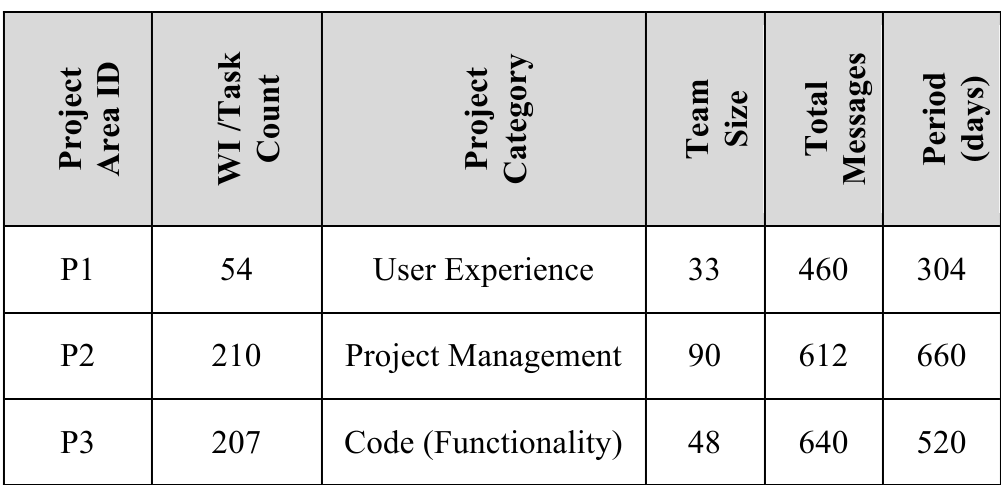 Table 1: The scale of the analyzed project areas within the Jazz repository.
Key Insights: Does Context Matter?
The central research question was: Does the project environment affect team behavior?
1. The "Stability" Surprises
The researchers initially expected that experts in a distributed, high-stakes environment like IBM would show high levels of "Collective" language (using "we" instead of "I"). Surprisingly, they found:
- Low Collective Language: Team members used more individualistic language than collective, likely because tasks like bug fixing are assigned to individuals.
- Universal Positivity: All teams maintained very low levels of negative emotion (under 5%), suggesting a professional, highly-controlled communication culture.
2. Cognitive vs. Social Traits
While developers are often viewed as "high-cognitive" individuals, the linguistic data showed that "Insight" and "Certainty" language terms were not as dominant as expected. Instead, Social and Work-Achievement language was much more prevalent, reflecting the high pressure to deliver.
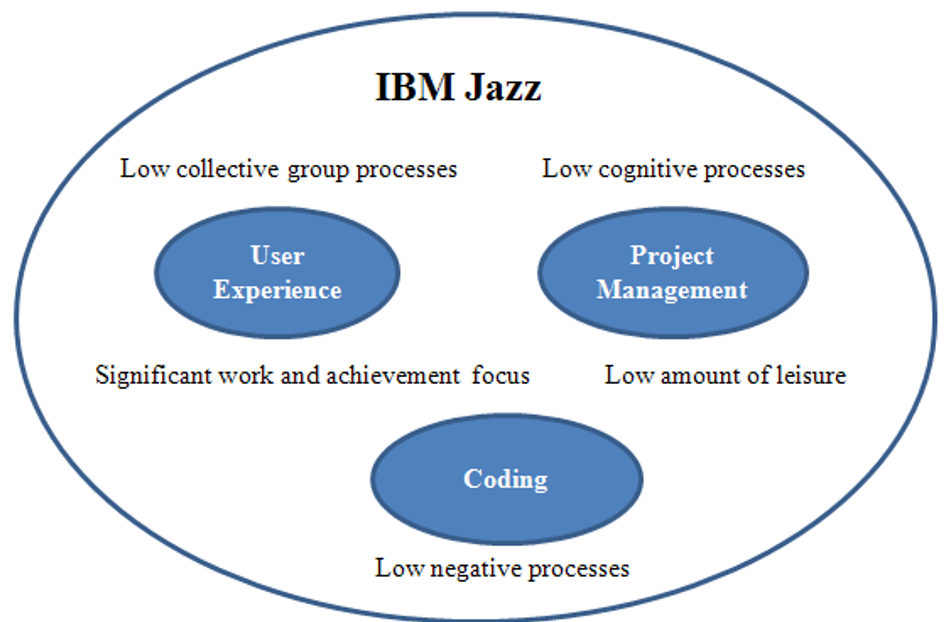 Figure 3: Proposed model illustrating the convergence of factors affecting Jazz team behaviors.
3. Chronological Evolution
By dividing the projects into four phases, the authors observed how teams "mature":
- Phase 1: High social language as members form relationships.
- Final Phases: A surge in "Work" and "Achievement" language as delivery deadlines approach.
- Maturation: Individualistic language ("I/me") consistently decreased as projects progressed, showing that teams naturally become more synchronized over time.
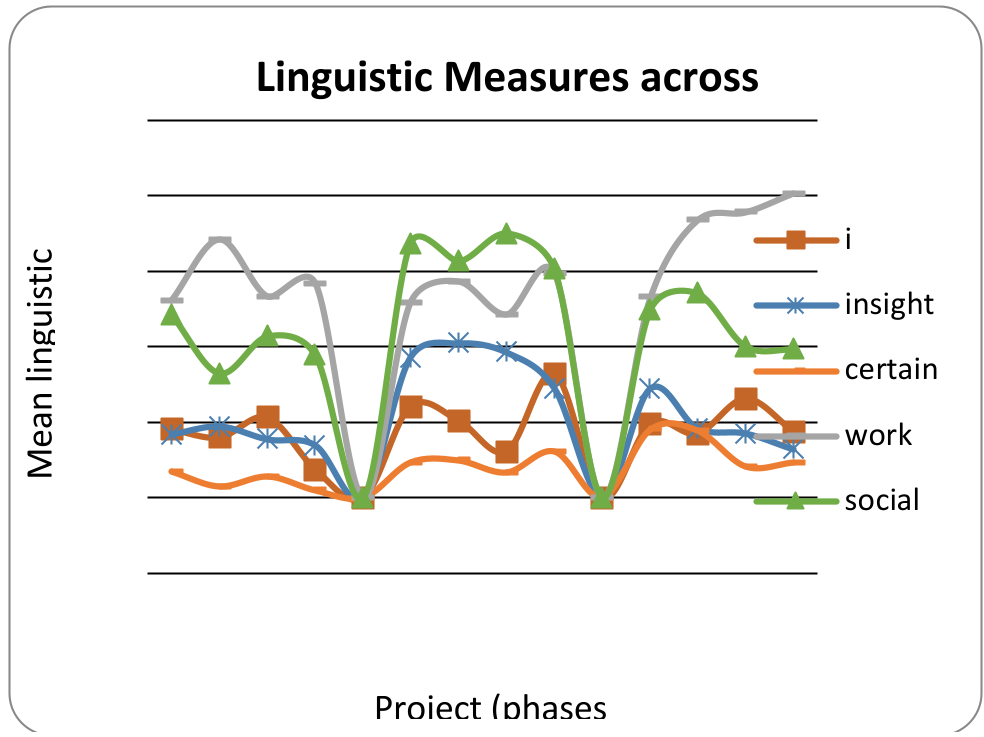 Figure 2: Tracking the pulse of teams—Work, Achievement, and Social language fluctuations over time.
Critical Analysis: The Professional Veneer
One fascinating takeaway is the discrepancy between project types. The User Experience (P1) team used significantly more "Positive Emotion" words. Is this because they are happier, or because their domain—design—naturally involves more subjective, "friendly" feedback like "This interface looks nice"?
Limitations:
- The "Jazz" Bubble: The results are specific to IBM Rational's professional culture. Open-source projects (like those on GitHub) might show far more polarized emotions.
- Tool Sensitivity: The LIWC tool might not capture specialized technical jargon (slang/code snippets) that developers use to express complex thoughts.
Final Takeaway for Managers
This research suggests that team behavior is an invariant. You cannot change the "social soul" of a team simply by switching them from a front-end project to a back-end project. Instead, project success depends on managing the universal evolution of a team from an individualistic starting point to a collective, achievement-oriented finish.
If you are leading a software team, don't just monitor the code; monitor the connotations of their discourse.