
Beyond the Hype: Integrating Social Media into the DNA of Innovation Adoption
Promoting Technological Innovations: Towards an Integration of Traditional and Social Media Communication Channels
This study examines the integration of social media with traditional marketing channels to facilitate the consumer adoption of technological innovations. By combining Innovation Diffusion Theory (IDT) and the Technology Acceptance Model (TAM/UTAUT2), the author identifies key determinants—such as perceived usefulness and social influence—that can be strategically managed through modern communication.
TL;DR
Technological superiority does not guarantee market success. This paper argues that the "Innovation Resistance" of consumers—driven by uncertainty and habit—can only be overcome by integrating traditional marketing with the decentralized power of social media. By mapping theories like TAM and IDT to social media behaviors, firms can turn "eWOM" into a catalyst for adoption.
The "Eager Seller, Stony Buyer" Paradox
Why do superior technologies fail? The author highlights a fundamental disconnect: firms overvalue their breakthroughs, while consumers are naturally skeptical, satisfaction-stable, and fearful of complexity. In the high-tech landscape, perception is reality.
The transition from Information Sovereignty (where companies controlled the narrative via mass media) to Information Democracy (social media) has made traditional "push" marketing obsolete for complex tech.
Methodology: Mapping Adoption Determinants
The core of this work lies in identifying factors that firms can influence through communication. The author synthesizes several decades of academic theory into a modern roadmap.
1. The Big Predictors: IDT, TAM, and UTAUT2
The paper breaks down adoption into several levers:
- Perceived Usefulness & Ease of Use: The "Value vs. Effort" calculation.
- Compatibility: How much does this disrupt my current life?
- Social & Informational Influence: What do my peers and experts say?
- Hedonic Motivation: Is it fun to use?
2. The Social Media Multiplier
Social media doesn't just "advertise"; it alters the physical mechanics of these determinants.
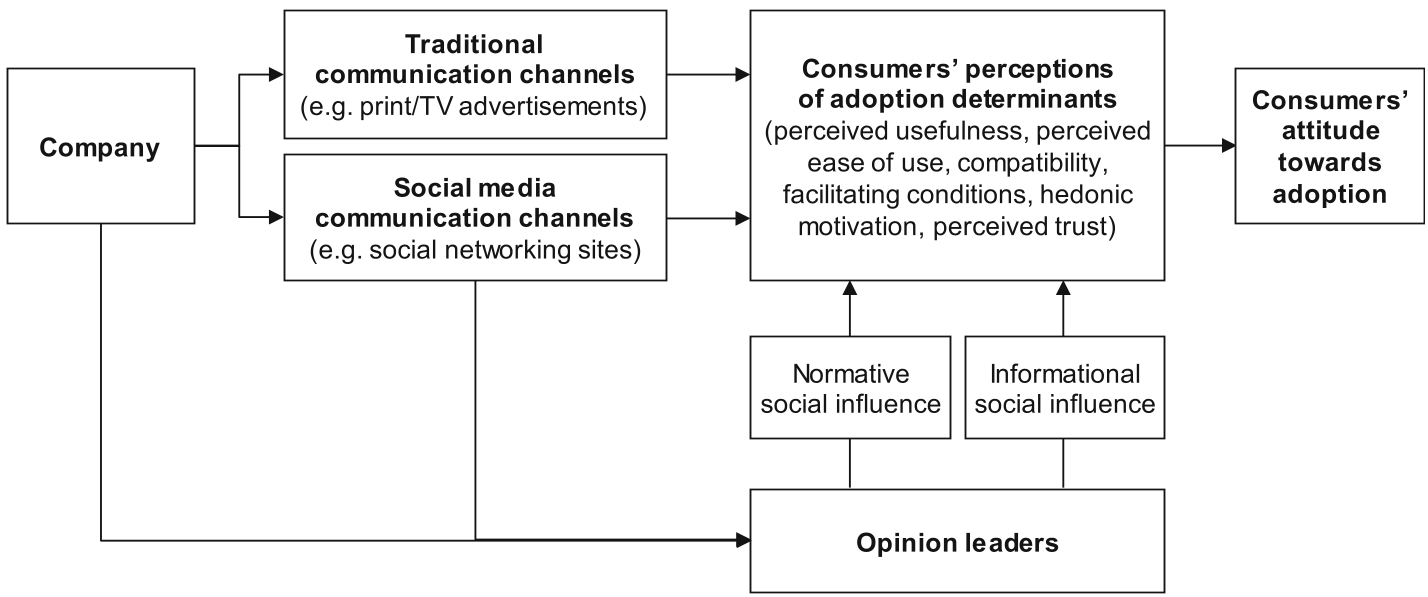 Figure 1: The synergy between traditional and social media channels.
How Social Media Solves the "Newness" Problem
The author details how specific platforms tackle various barriers:
- Perceived Ease of Use via "Unboxing": High-tech products often seem intimidating. User-generated content (UGC), like Marques Brownlee’s iPhone reviews, provides a "low-stakes" way for consumers to witness the product's ease of use, essentially providing Trialability and Observability by proxy.
- Facilitating Conditions via YouTube: Troubleshooting and tutorials (e.g., Microsoft Excel tips with millions of views) act as a safety net, reducing the perceived risk of a product being "too hard to fix."
- Trust through Humanization: Social media managers who engage in public dialogues "humanize" the firm, building a reservoir of trust that traditional print ads cannot replicate.
Key Quantitative Evidence
The study highlights the massive shift in capital:
- Global social network ad spending rose 56.2% in a single year (2013-2014).
- Third-party signals (non-firm generated content) are consistently rated as more credible than marketing-controlled signals.
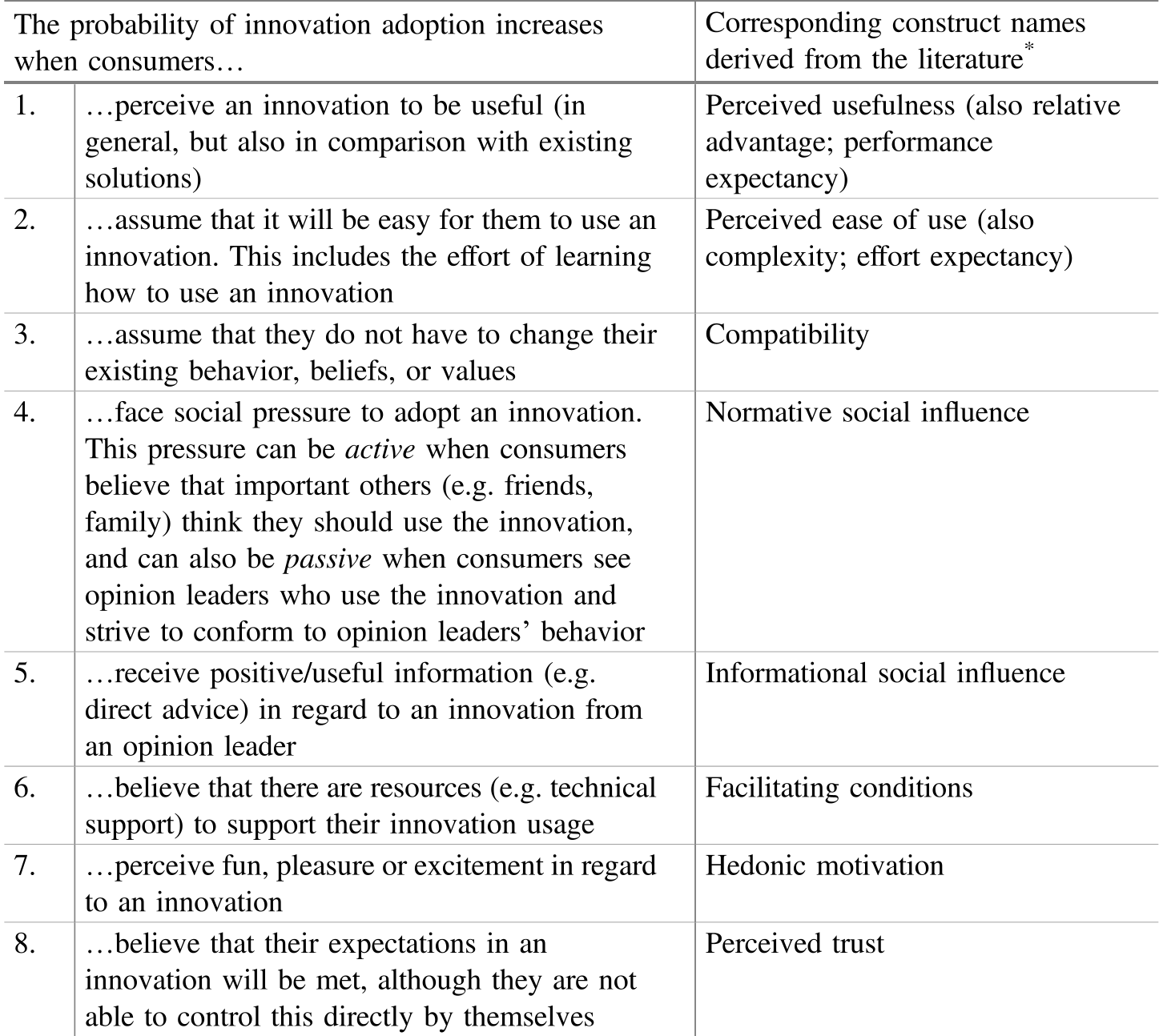 Table 1: Strategic levers for increasing the probability of innovation adoption.
Critical Insight: The "Firestorm" Risk
A significant contribution of the paper is the warning about Two-Way Information Flows. While social media offers "social listening" to understand consumer fears, it also exposes firms to "online firestorms"—the uncontrolled spread of negative eWOM. Firms can no longer hide product flaws; they must engage with dissatisfied users in real-time to prevent the "resistance" from becoming a contagion.
Conclusion & Future Outlook
This paper serves as an academic bridge between 20th-century diffusion theories and 21st-century digital behavior. The takeaway for tech leaders is clear: Stop selling specs; start managing perceptions through social ecosystems.
Future research must now grapple with the "Complexity of Message"—finding the exact threshold where technical detail in a social post helps adoption before it begins to overwhelm the consumer.