
LCRS: Bridging Social Networking and Collaborative Learning via Swarm Intelligence
Applying the Technology Acceptance Model to Evaluate the Learning Companion Recommendation System on Facebook
This paper presents a Learning Companion Recommendation System (LCRS) integrated with Facebook, utilizing the Artificial Bee Colony (ABC) algorithm to suggest study partners based on professional skills, interests, and location. It evaluates user acceptance through the Technology Acceptance Model (TAM) and Partial Least Squares (PLS) regression.
TL;DR
Collaborative learning is most effective when paired with the right companion, but finding that person is often a matter of luck. This paper introduces the Learning Companion Recommendation System (LCRS), a Facebook-integrated application that uses the Artificial Bee Colony (ABC) algorithm to match learners. By examining the system through the Technology Acceptance Model (TAM), the study proves that leveraging existing social data significantly boosts a student's intention to engage in peer-to-peer learning.
Background & Motivation: The "Peer Tutor" Advantage
Research has long suggested that one-on-one tutoring is significantly more effective than traditional classroom settings. However, the bottleneck has always been accessibility. While Facebook is a goldmine of social connections and expertise, it lack the structure to facilitate formal learning. The authors recognize that for an online platform to succeed, it must provide more than just technical tools; it must facilitate directed social interaction.
The core insight here is context-aware matching: a good learning companion isn't just someone who knows the subject, but someone who is socially connected to you and physically accessible (via check-in data).
Methodology: Swarm Intelligence Meets Social Media
The LCRS architecture is divided into three functional pillars:
- User Module: Harvests real-time Facebook data, including "Wall" posts and check-in locations.
- Database Module: Maintains a dynamic profile of professional abilities and interests.
- Recommendation Module: Powered by the ABC algorithm, which treats the search for a companion like bees foraging for the best nectar. It optimizes the match based on three variables: Professional ability, Interests, and Location.
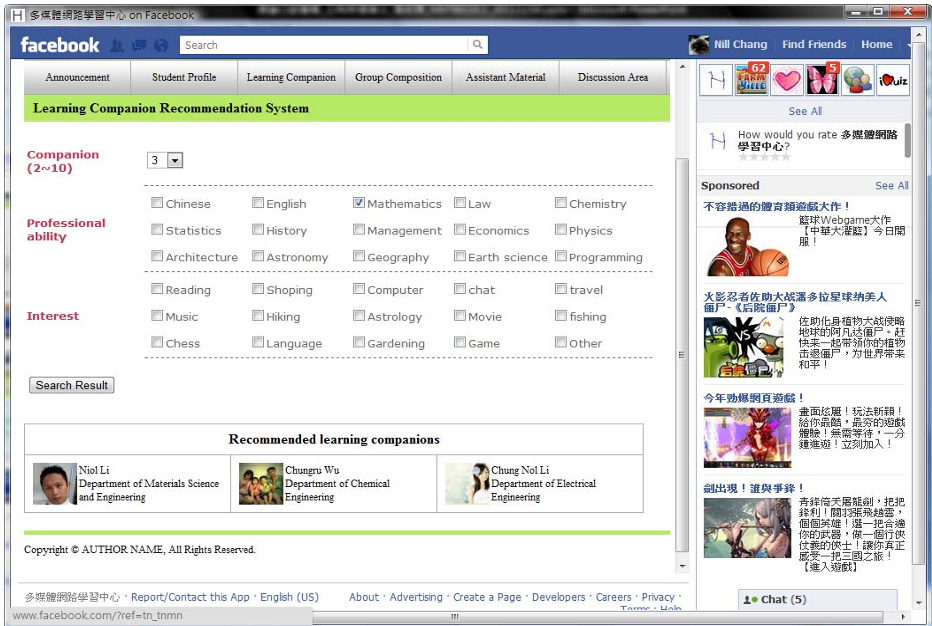 Figure 1: The LCRS System Architecture showing the interplay between Facebook data and the ABC algorithm.
Validating Acceptance: The TAM Approach
To ensure the system wasn't just technically sound but actually "usable," the authors employed a modified Technology Acceptance Model. They introduced System Design Characteristics (SDC) and Usage of Facebook (UF) as external anchors.
- H1-H2: Does the design make it easy to use? Does existing Facebook habituation make it feel useful?
- H3-H5: How do Ease of Use and Usefulness lead to a genuine intention to use the tool for actual studying?
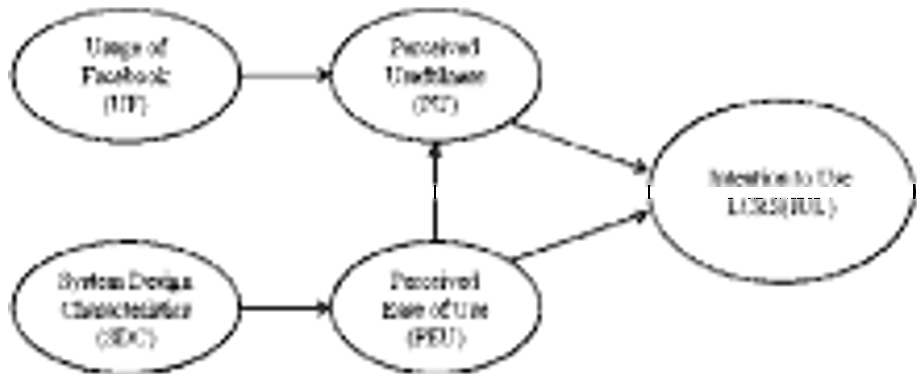 Figure 3: The proposed research model linking system characteristics to user intention.
Experimental Insights & Results
The study was conducted with university sophomores at National Cheng Kung University. Using Partial Least Squares (PLS) regression, the results were definitive:
- Intention to Use (IUL): The model explained 69% of the variance in intention.
- Perceived Usefulness (PU): Had a significant path coefficient of 0.56 toward Intention.
- Perceived Ease of Use (PEU): Heavily influenced by the UI design (path coefficient 0.82).
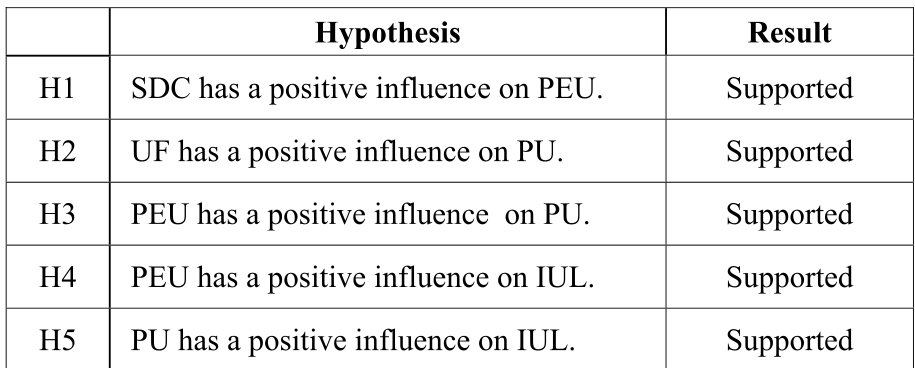 Table 1: All five hypotheses were supported, validating the ABC-based recommendation approach.
Critical Analysis & Takeaways
The brilliance of this work lies in its Inductive Bias: it assumes that the data required to find a mentor already exists in our daily social "exhaust" (posts, likes, check-ins). By wrapping a complex optimization algorithm (ABC) in a familiar Facebook interface, the authors minimized the "cognitive load" often associated with new educational technology.
Limitations: The study relies heavily on the Facebook ecosystem. As social media trends shift toward more fragmented or private platforms (like Discord or Slack), the "Wall post" scraping method might face privacy hurdles or data scarcity.
Future Outlook: This research paves the way for "Ubiquitous Collaborative Learning," where the system doesn't just wait for you to ask for help but suggests a nearby friend for a coffee-shop study session based on your current location and a shared difficult homework assignment.