
Beyond the Avatar: Why Teens Pay for Pixels in Virtual Worlds
Why do teens spend real money in virtual worlds? A consumption values and developmental psychology perspective on virtual consumption
2014-11-17
Summary
Problem
Method
Results
Takeaways
Abstract
This study investigates why teenagers spend real money in Social Virtual Worlds (SVWs) by analyzing data from 1,000 Habbo Hotel users. It integrates the Theory of Consumption Values (TCV) with developmental psychology to identify four primary drivers: premium membership benefits, decoration, fun, and status.
## TL;DR
Why would a teenager spend their limited allowance on a virtual hairstyle or a digital sofa? This study dives into **Habbo Hotel** to reveal that virtual consumption is less about "owning things" and more about the high-stakes social theater of adolescence. By combining **Consumer Value Theory** with **Developmental Psychology**, the authors explain how digital goods serve as critical tools for identity building, peer acceptance, and status signaling.
## The Problem: The Mystery of the Teenage "Digital Native"
Despite teenagers making up the vast majority of virtual world citizens, most research has focused on adult-centric platforms like *Second Life* or competitive games like *World of Warcraft*. Standard economic models struggle to explain why users pay for "decoratives" in non-violent environments where there are no "power-ups" or levels to gain.
The authors argue that we cannot understand virtual spending without looking at the **adolescent brain**—a phase defined by a biological surge in reward-seeking and a psychological desperate need for peer validation.
## Methodology: Mapping Value to the Developing Mind
The researchers analyzed 1,000 responses from Habbo Hotel users (ages 13-18). They categorized the data using a dual-lens:
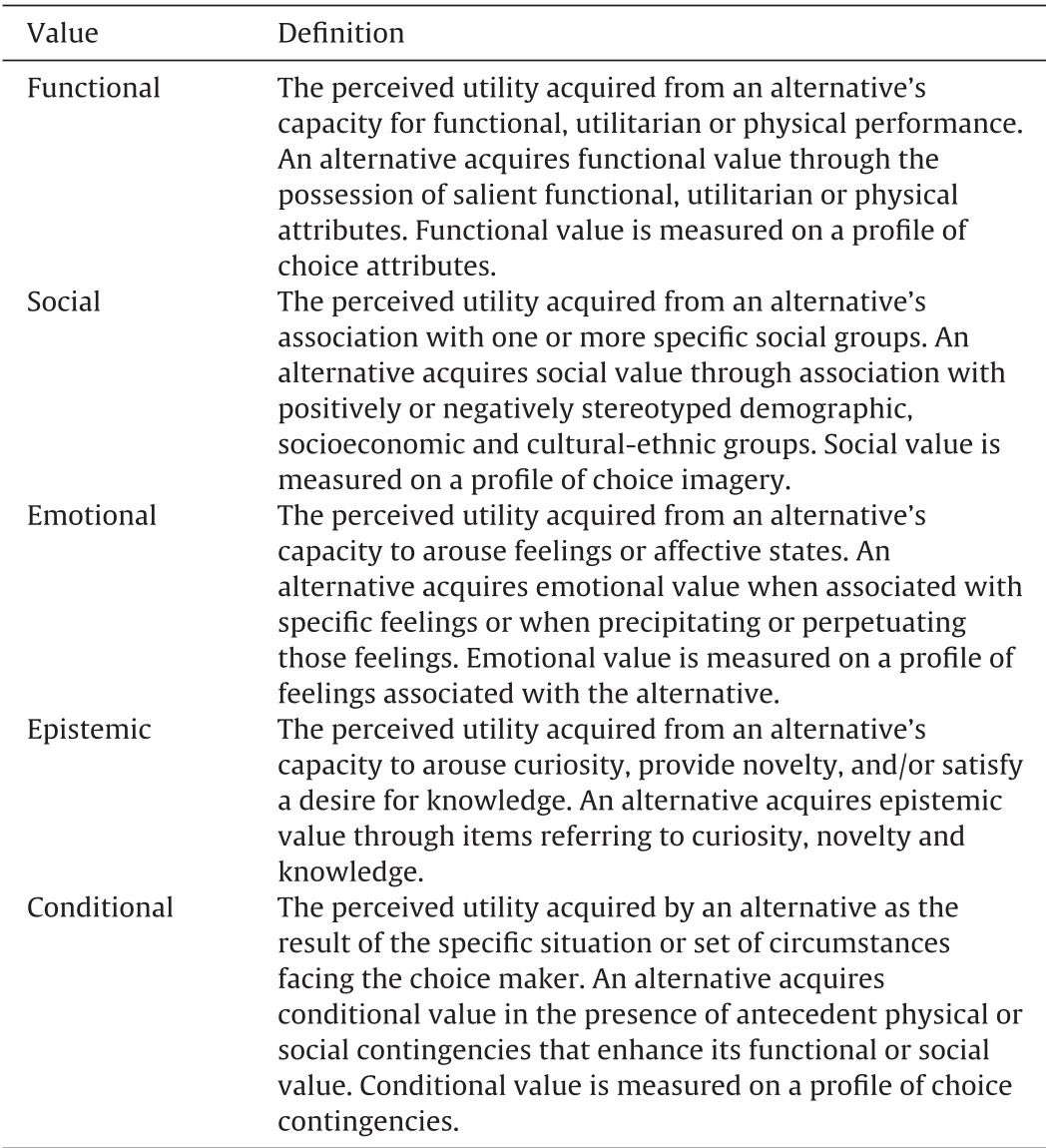
1. **Theory of Consumption Values (TCV)**: Functional, Social, Emotional, Epistemic, and Conditional values.
2. **Developmental Psychology**: Focus on identity exploration (Erikson) and social comparison (Festinger).
## The Core Mechanics of Virtual Value
The study identified four pillars of virtual consumption:
### 1. The Premium Bundle (Habbo Club)
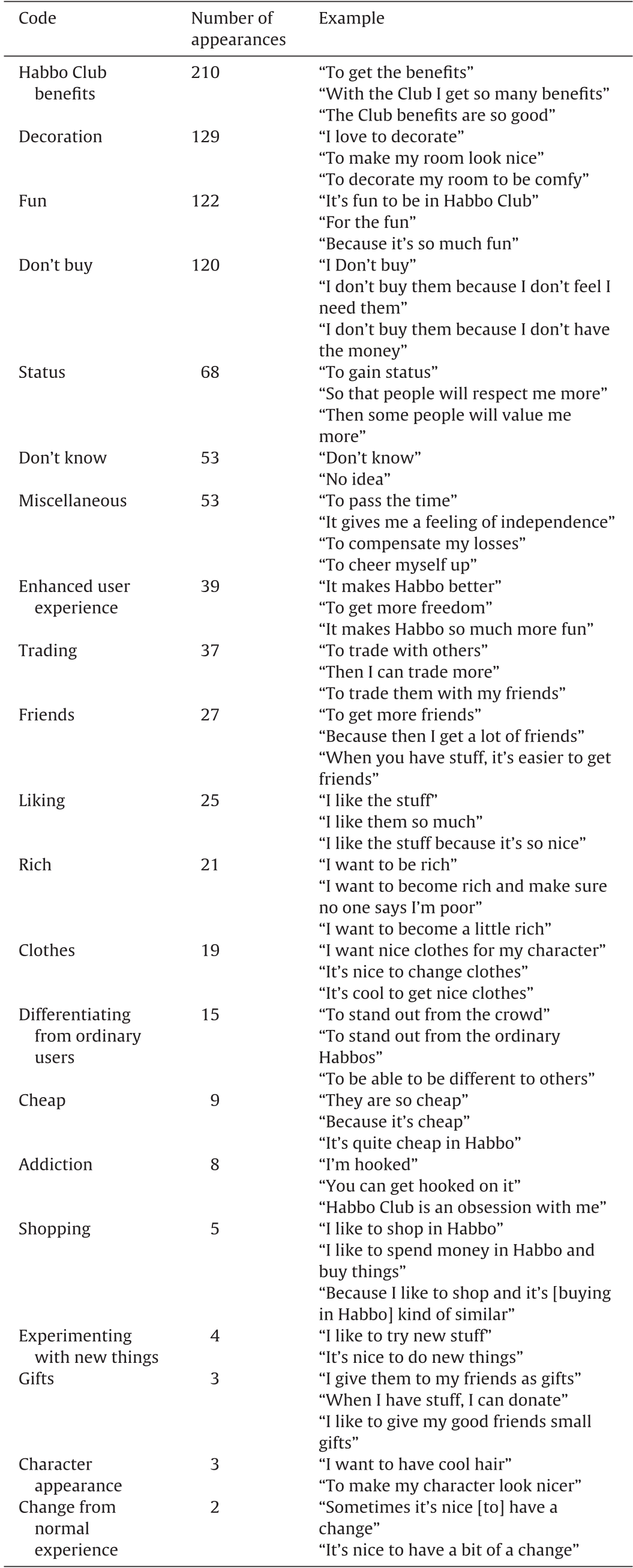
The most frequent reason for spending was "benefits." By bundling hairstyles, clothes, and "friend list" expansions, the platform creates a clear **Value for Money** proposition. For a teen, this represents an early exercise in "autonomous economic agency"—acting like an adult consumer.
### 2. Identity and "Possible Selves"
Decoration and clothes allow teens to experiment with different versions of themselves. In the physical world, changing your "look" is expensive and permanent; in an SVW, it’s a sandbox for the "possible self."
> *"You can better express yourself with clothing."*
### 3. The Social Hierarchy and Discrimination
Perhaps the most striking finding is the role of **Status**. The study revealed a harsh social structure where "ordinary" (non-paying) users are often discriminated against or excluded from elite social circles.
* **Upward Comparison**: Buying items to gain respect and "look rich."
* **Avoiding Stigma**: Buying a subscription simply to avoid being labeled "poor" or "basic."
## Strategic Insight: The Freemium Paradox
For business owners, the study offers a warning. While the **Freemium model** (offering a free base with paid upgrades) is highly effective at driving revenue, it risks destroying the "social atmosphere."
If the gap between "Haves" and "Have-Nots" becomes too wide, the resulting discrimination can lead to **negative network effects**. Non-paying users, who provide the "population" that makes the world feel alive, may leave if the social environment becomes toxic.
## Conclusion
Virtual items in SVWs are not mere pixels; they are **social currency**. They allow adolescents to navigate the "identity crisis" of their teens by providing a safe, moderated space to climb social ladders, decorate their private sanctuaries, and find where they belong.
**Takeaway for the Future**: As we move toward a "Metaverse" economy, success will depend on understanding the **symbolic value** of goods. A digital item’s worth is not in its "utility," but in its ability to facilitate a user’s social journey toward adulthood.
***
**Keywords**: SVW, Digital Natives, Freemium, Virtual Consumption, Identity Development.