
Beyond Utility: Why Social Connection is the "Killer App" for Virtual Reality Adoption
Telematics and informatics
2005-01-01
Summary
Problem
Method
Results
Takeaways
Abstract
This research presents an extended Technology Acceptance Model (TAM) specifically tailored for Virtual Reality (VR) devices, integrating social network characteristics. By surveying 350 consumers, the study identifies that perceived enjoyment, driven by social interaction and tie strength, is the primary predictor of VR adoption, surpassing traditional metrics like perceived usefulness.
## Executive Summary
**TL;DR**: This study revolutionizes our understanding of why people buy VR headsets. Moving beyond the "usefulness" of the device, the research proves that **social interaction** and the **strength of social ties** are the hidden engines driving **perceived enjoyment**, which is the single most important factor for consumer adoption.
In the landscape of emerging technologies, VR has long been stuck in the "early adopter" phase. While developers focus on resolution and latency, this paper argues that the industry's survival depends on its ability to foster human connection. It is not just a screen; it is a social space.
## The Motivation: Why Traditional Models Fail VR
For decades, the **Technology Acceptance Model (TAM)** has been the gold standard for predicting if a new tech will succeed. It typically relies on two pillars:
1. **Perceived Usefulness (PU)**: Does it help me work better?
2. **Perceived Ease of Use (PEOU)**: Is it easy to learn?
However, VR is inherently **hedonic** (pleasure-seeking). A consumer doesn't buy an Oculus or a Sony PSVR primarily to "increase productivity." They buy it for the experience. The authors realized that the missing link was the **social dimension**—how interacting with friends in a virtual space transforms a solitary gadget into a lifestyle necessity.
## Methodology: The Extended TAM
The authors surveyed 350 individuals in South Korea, a global hub for ICT adoption. They restructured the TAM to test the "Sense of Togetherness."
### The Core Hypothesis
They proposed that **Social Interaction** (the act of communicating) and **Strength of Social Ties** (the depth of relationships) serve as catalysts for **Perceived Enjoyment**. Unlike a spreadsheet, VR becomes "more fun" the more people you know are using it.
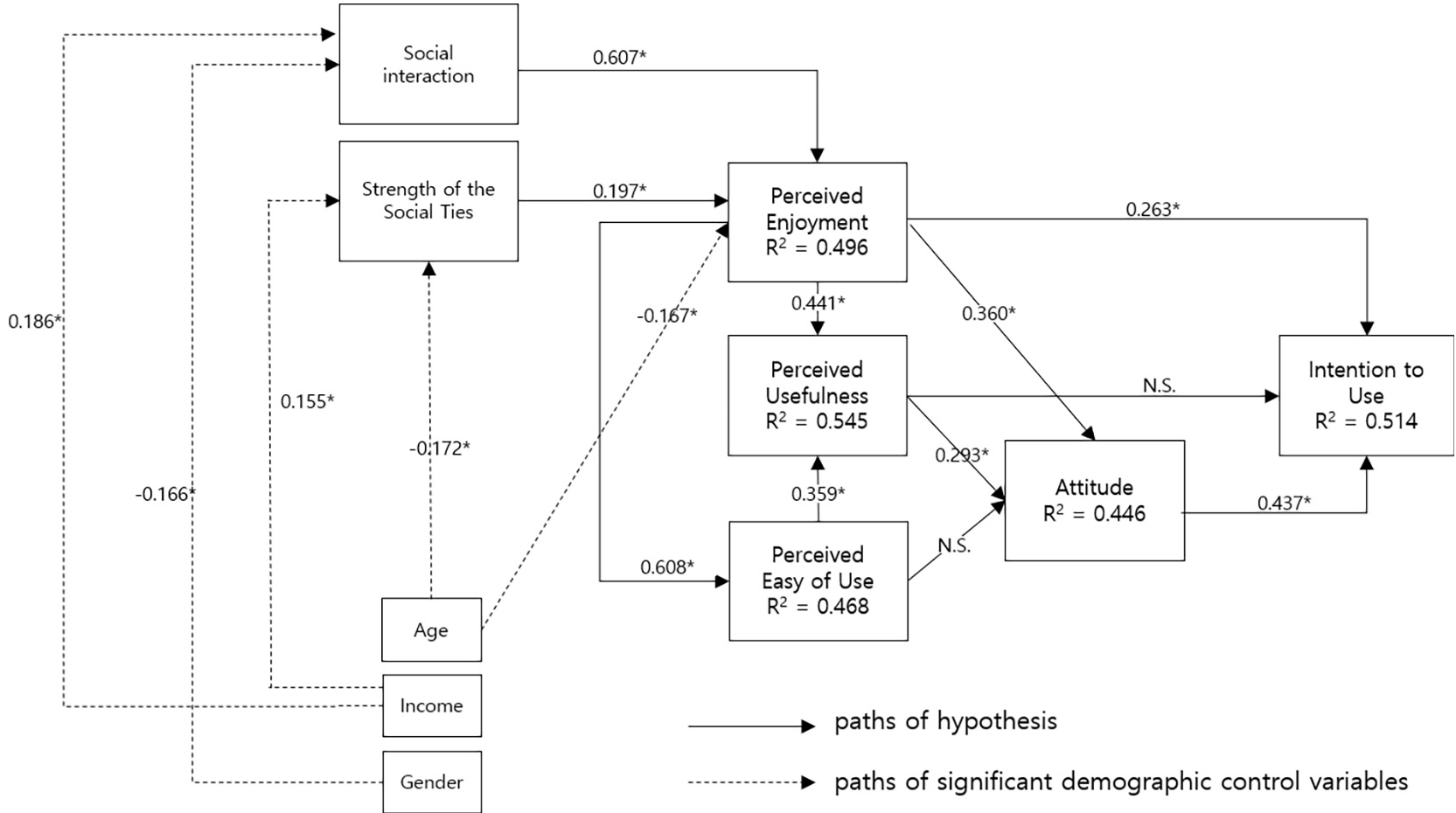
*Fig 1: The Research Model showing the paths from Social Ties to Intention to Use.*
## Deep Dive: Key Findings
The results of the Structural Equation Modeling (SEM) provided some counter-intuitive insights:
* **Usefulness vs. Enjoyment**: Surprisingly, Perceived Usefulness had **no significant direct effect** on the intention to use (p > 0.1). Users don't care if it's "useful" if it's not fun.
* **The Power of Interaction**: Social interaction had a massive standardized coefficient (β = 0.607) regarding enjoyment. This confirms that VR is viewed as a communication medium rather than just a display device.
* **Ease of Use as a Baseline**: Ease of use didn't directly affect attitude. Why? The authors suggest that in 2026, consumers expect tech to be easy to use by default—it's no longer a "bonus" that creates a positive attitude; it’s a prerequisite.
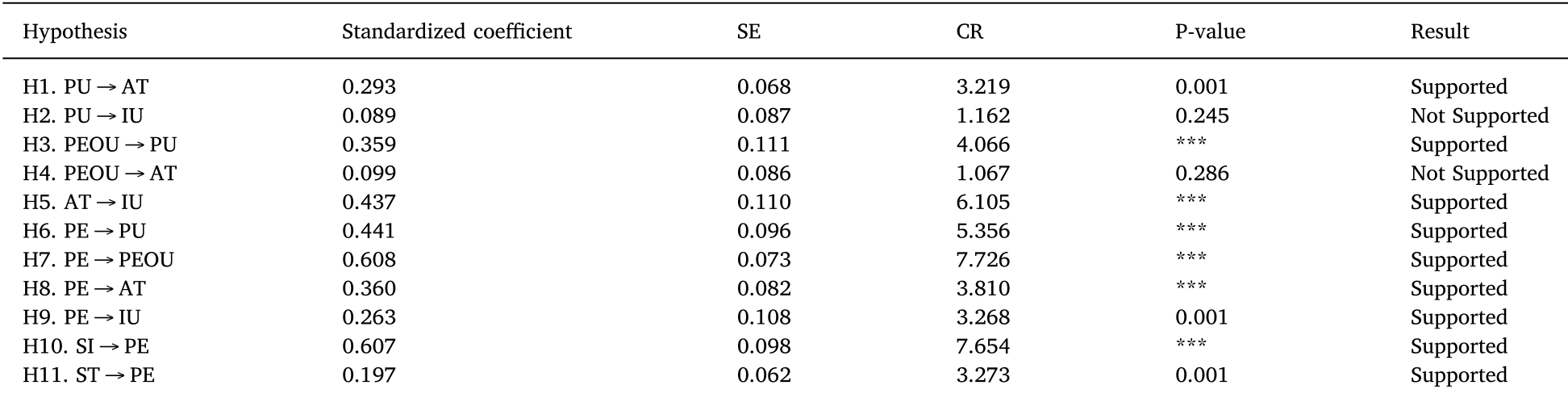
*Table 1: Hypothesis testing results showing the high significance (***) of Social factors.*
## Critical Analysis & Conclusion
### The "Social VR" Mandate
The most profound takeaway is that VR manufacturers like Meta (Oculus) and Sony are correct in their strategic pivot toward SNS integration. The data shows that **indirect effects** of social ties are what actually drive long-term adoption via enjoyment.
### Limitations
1. **Indirect Experience**: Most survey respondents hadn't used VR extensively, meaning their "perceptions" are shaped by media/marketing rather than hands-on testing.
2. **Broad Concept**: The study treats "VR" as a monolith. Future research needs to distinguish between social VR (like VRChat) and solo VR (like Tetris Effect).
## Final Takeaway
To cross **Moore’s Chasm**—the gap between tech enthusiasts and the general public—VR must stop being marketed as a "headset" and start being marketed as a "hangout." If you can't talk to your friends inside the simulation, the technology is essentially dead on arrival for the mass market.