
The Intimacy Paradox: Why We Fear for Our Friends More Than Ourselves in Mobile Fraud
Telematics and informatics
This study investigates the perceptual and behavioral impacts of mobile Internet fraud in China using the Third-Person Effect (TPE) framework combined with a social network approach. Based on a sample of 816 respondents, it finds that users perceive their "strong ties" (family and close friends) to be more vulnerable to fraud than "weak ties" (acquaintances), both of which are seen as more susceptible than the users themselves.
TL;DR
A study of 816 mobile users in China reveals a fascinating psychological shift: while we still believe we are more "immune" to mobile fraud than others (the Third-Person Effect), we actually perceive our closest social circles (strong ties) as being at the highest risk—even more so than casual acquaintances. This "connected presence" makes mobile fraud a deeply interpersonal threat, where network homogeneity fuels our anxiety.
Contextual Framework: Beyond Mass Media
In the era of traditional television and newspapers, communication was impersonal. If you saw a report on the harms of "violent media," you’d likely think the "general public" was at risk, but your family was safe. This is the Social Distance Corollary.
However, this paper argues that the mobile Internet has fundamentally changed the coordinate system. Our smartphones aren't just tools; they are extensions of our social ties. This study places itself at the intersection of Social Network Theory and Media Psychology, examining how the "always-on" nature of mobile interconnectivity in China—a culture emphasizing hierarchy and harmony—redefines risk perception.
The Problem: The Vulnerability of Connected Presence
Existing research was conflicted: does digital closeness make us feel safer or more exposed? The authors suggest that mobile use creates a state of "connected presence," where the psychological boundaries between self and others blur. Because we trust our "strong ties" (family/best friends) so deeply, we paradoxically view them as "soft targets" for sophisticated high-tech scams.
Methodology: Mapping the Social Grid
The researchers focused on two primary social network attributes:
- Tie Strength: Differentiating between Strong Ties (intimacy, mutual obligation) and Weak Ties (acquaintances).
- Network Homogeneity: How similar your contacts are in terms of age, education, and ethnicity.
Using hierarchical regression, they measured how these factors, alongside "Awareness" and "Exposure," influenced the Third-Person Perception (TPP).
Key Findings: The Hierarchy of Perceived Risk
The results provide a striking visual of how we rank vulnerability:
- Level 1 (Highest Risk): Strong Ties (Family/Close Friends)
- Level 2: Weak Ties (Acquaintances)
- Level 3 (Lowest Risk): Self
The Role of Homogeneity
Interestingly, the more homogeneous a user’s network is, the higher they perceive the negative impact of fraud across the board. If everyone in your circle is "just like you," the threat feels more pervasive and harder to escape.

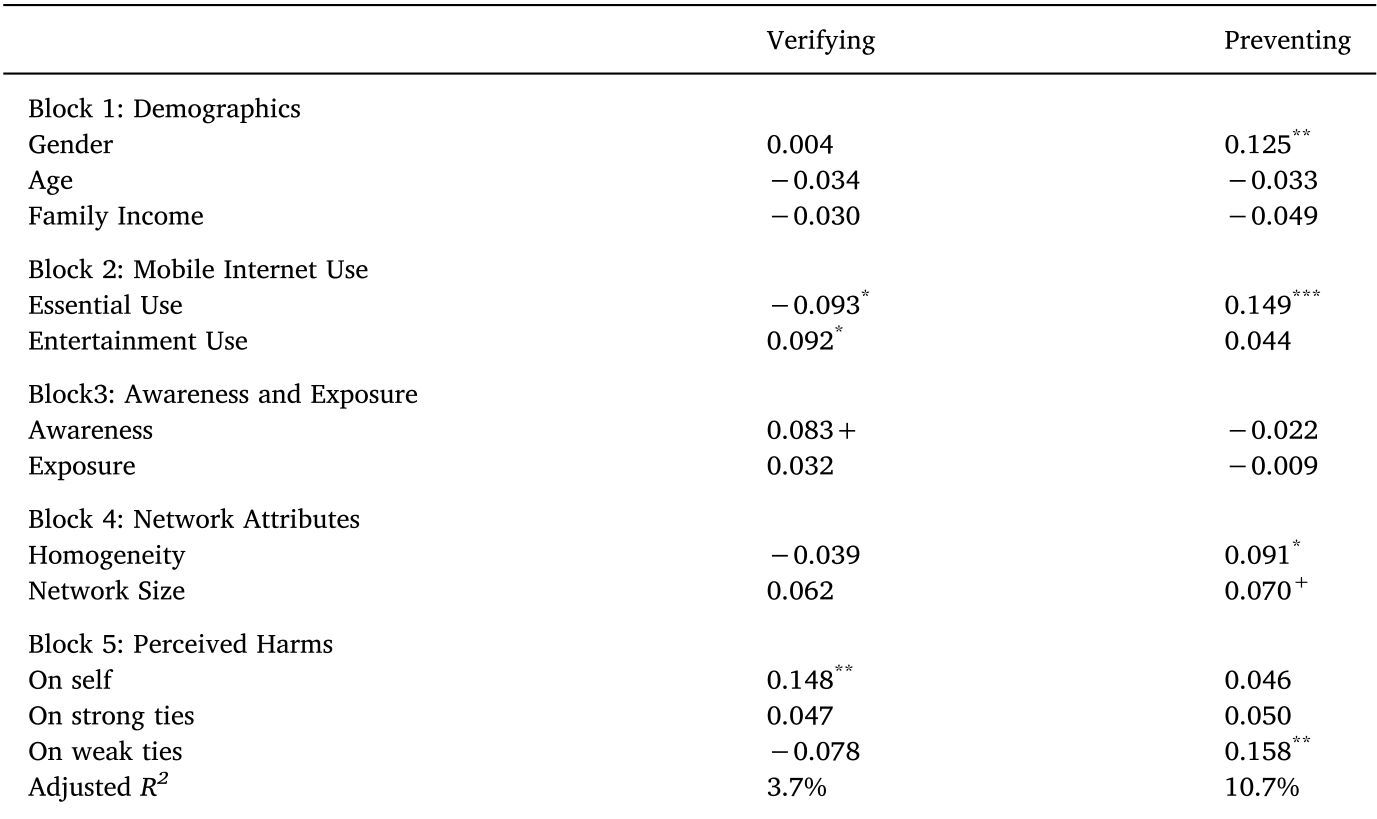
Behavioral Consequences: Verifying vs. Preventing
The study discovered a "Parallel Process" in how people react to these perceptions:
- Self-Protection via Verification: When respondents felt they were the target, they took active steps to verify (calling the bank, checking with the sender).
- Social Protection via Prevention: When they saw weak ties as vulnerable, they acted as a "warning system," reducing their own mobile use and staying alert. They viewed victims in their network as cautionary tales.
Critical Insight & Conclusion
The "Takeaway" is profound for the UX of security: Mobile Internet is not just "Internet + Smartphone." It is a relationship-based ecosystem.
Limitations: The study relies on a student sample in China, which, while highly active on mobile, may not reflect the technological anxiety of elderly populations who are often the actual primary targets of financial fraud.
Future Outlook: As we move toward 5G and ubiquitous "Device-to-Device" (D2D) connectivity, our social networks will become even more automated. This paper suggests that the next generation of "Anti-Fraud" tools shouldn't just protect the individual; they should protect the "Social Tie," allowing users to verify and shield their "Strong Ties" as a collective unit.