
MSN in War-Torn Societies: Beyond Socializing to Survival
Telematics and informatics
This study investigates the motivations and determinants behind the continued use of Mobile Social Networking (MSN) for crisis management in war-torn societies using the Syrian civil war as a case study. It employs Smart PLS to analyze survey data, demonstrating how MSN fulfills critical humanitarian needs based on Maslow's hierarchy.
TL;DR
In the middle of the Syrian civil war, a mobile phone is not a luxury; it is as essential as water and food. This research explores how Mobile Social Networking (MSN) serves as a life-critical infrastructure for crisis management. By applying Maslow’s Hierarchy of Needs, the study proves that even in high-risk environments where "online cells" hunt activists, the survival and cognitive benefits of MSN force users to persevere.
The "Survival" Paradigm: Why Ordinary Models Fail
Standard crisis management literature assumes a functioning state—police, fire departments, and reliable authorities. In war-torn Syria, these pillars are gone. The study highlights that people drop to the lowest levels of Maslow’s pyramid: Physiological and Safety needs. When formal telecommunications fail, the "weapon of choice" for survival becomes the smartphone. The research identifies a unique conflict: the same tool used for rescue is used by terrorists for recruitment and by snipers to track movement.
Methodology: Mapping Human Needs to Digital Acts
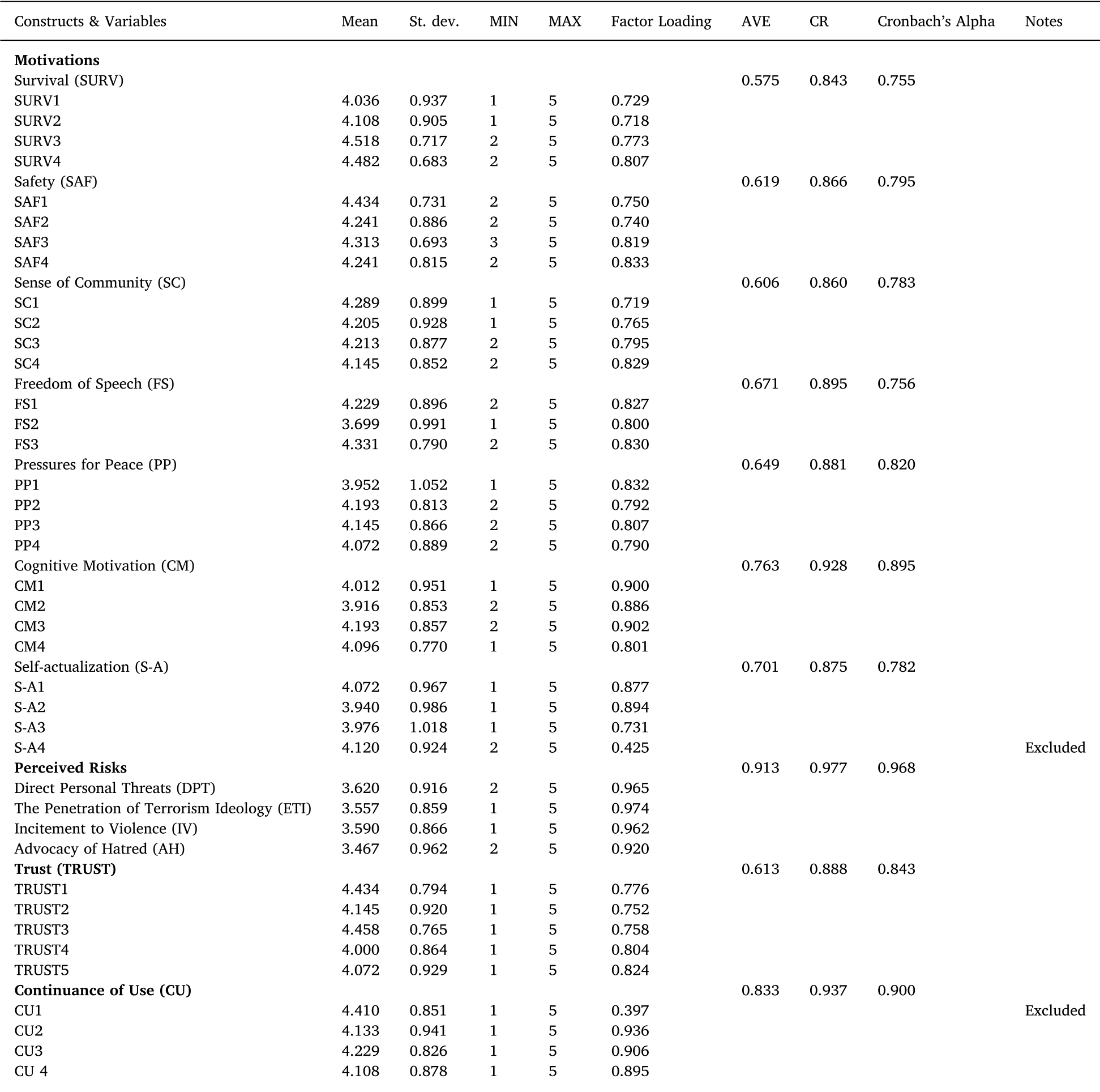
The author constructs a model linking seven human needs to the continued use of MSN. Through a snowball sampling of 214 Syrians remaining in the country, the study used Partial Least Squares (PLS) to validate the following mechanism:
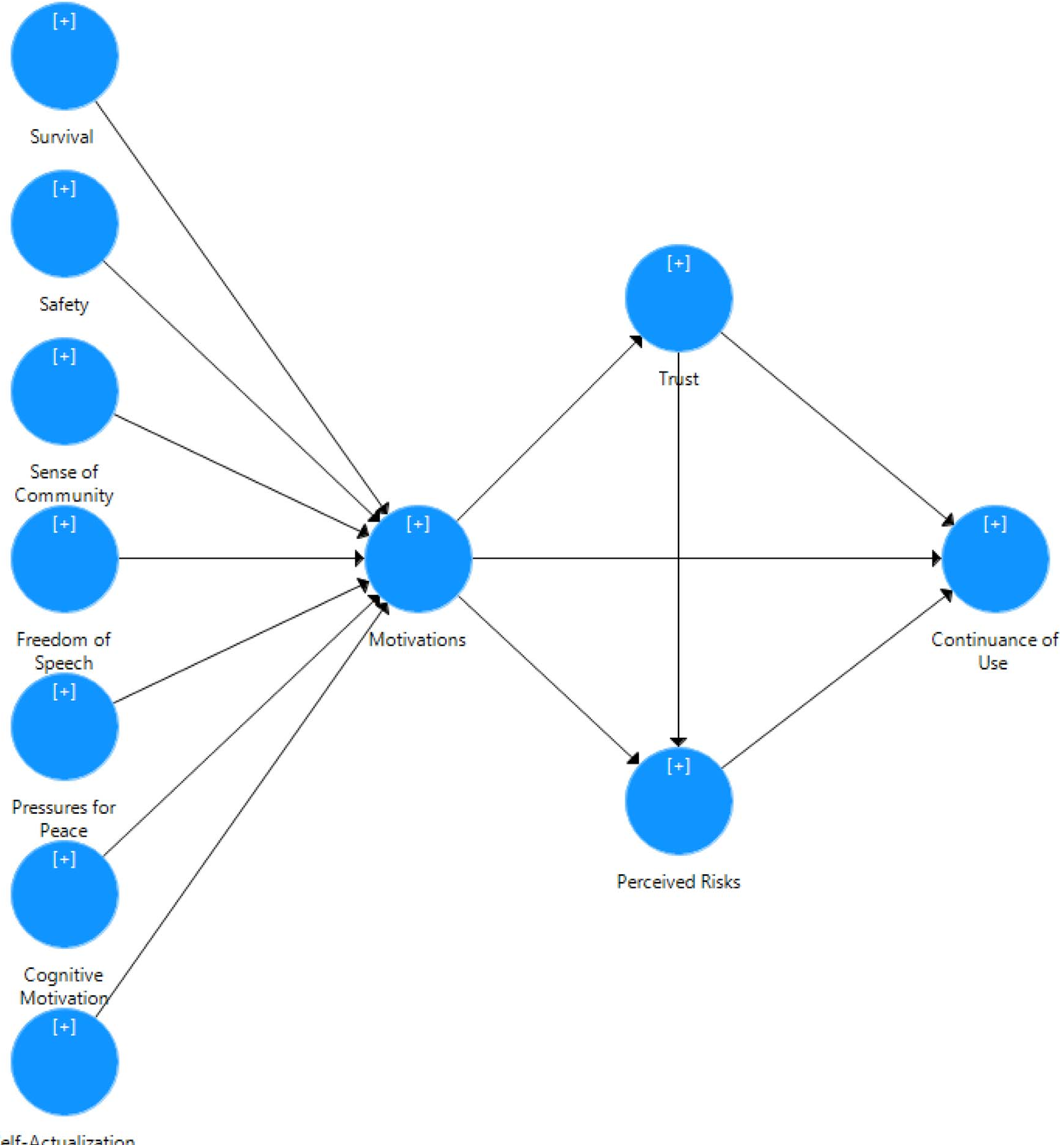
- Survival & Safety: Locating bread, water, medical aid, and identifying "snipers on the road."
- Cognitive Motivation: Replacing state propaganda with "first-hand accounts" to gain situational awareness.
- Self-Actualization: The rise of citizen journalism, where individuals find purpose by documenting the reality of their regions.
The Risk vs. Trust Paradox
One of the most profound findings is the role of Perceived Risks. In a normal setting, high risk leads to lower usage. However, in Syria:
- Direct Personal Threats: Participants fear "electronic cells" (like those of ISIS) that hunt anti-activists.
- Dark Risks: The penetration of terrorism ideology and incitement to violence.
Surprisingly, H10 (Direct impact of perceived risks on continuance) was not supported. This represents a "survival-driven necessity"—the perceived benefits of staying alive via MSN information outweigh the risk of being tracked. Trust, however, acts as the ultimate mediator. Users don't necessarily trust the platform; they trust the vetted social circles and "digital volunteers" they've built within those platforms.
Deep Insight: Critical Analysis
The study’s core contribution is shifting MSN research from "Social Capital" to "Survival Capital." It highlights that in authoritarian and war-torn contexts:
- Connectivity is a Human Right: UNHCR reports suggest refugees sacrifice meals for data plans.
- Privacy is Dead but Necessary: There is a desperate need for "Privacy by Design" in humanitarian apps, as metadata can literally be a death sentence.
- The Trust Gap: Validation is the biggest challenge. The study suggests a "gradient scale" of reliability (from green to red) to help civilians discern truth from psychological warfare.
Conclusion & Future Outlook
The Syrian crisis has turned MSN into a decentralized crisis management center. While the study is limited by the difficulty of sampling in a war zone, it provides a blueprint for how international aid agencies should interact with locals—not through top-down broadcasts, but by infiltrating and supporting the informal mobile networks where Syrians already live.
For tech developers, the takeaway is clear: In the next decade, the most vital "Safety" features won't be about password protection, but about location obfuscation and rumor-verification for the world's most vulnerable populations.