
Telemedicine: Bridging the Gap via the Internet of Medical Things (IoMT)
Telemedicine: An IoT Application For Healthcare systems
The paper presents a comprehensive Internet of Medical Things (IoMT) platform designed for telemedicine, facilitating real-time remote monitoring and consultation between patients and doctors. The system integrates five different medical sensors with an Arduino-based hardware layer and evaluates the performance of Wi-Fi, Bluetooth, and GSM communication protocols for medical data transmission.
TL;DR
In a world where healthcare costs are skyrocketing, this paper introduces a robust IoMT platform that connects patients and doctors through a specialized sensor-to-server framework. By integrating Arduino-based hardware with a sophisticated MATLAB/C# software stack, the authors demonstrate how real-time vitals like heart rate and blood pressure can be monitored remotely. The study concludes with a critical comparative analysis of Wi-Fi, Bluetooth, and GSM, providing a roadmap for selecting the right communication protocol for diverse medical scenarios.
Background & Motivation: Why IoMT?
The healthcare industry is at a crossroads. While the global health market is projected to exceed $136 billion, digital adoption in medicine has historically lagged. The primary challenge isn't just "gathering data"—it's the reliable, low-latency transmission of that data from a patient's home to a doctor's dashboard.
The authors identify a critical gap: existing telemedicine solutions often suffer from poor user experience, high infrastructure requirements, or inappropriate technology choices (e.g., using high-power Wi-Fi for simple wearable tasks). Their goal was to build a cross-platform solution that balances hardware simplicity with data-driven medical insights.
Methodology: The IoMT Architecture
The proposed system is structured as a "many-to-many" platform. Multiple patients can connect to a network of available doctors via a centralized server.
1. Hardware Layer
The patient kit utilizes three ATmega_32 (Arduino) boards. These boards are equipped with:
- Vital Sensors: Heart rate, humidity, temperature, blood pressure, and alcohol sensors.
- Power Resilience: Integrated solar cells to ensure the system remains operational during power outages.
- Communication Modules: HC-05 (Bluetooth), ESP8266 (Wi-Fi), and SIM 908 (GSM/GPS).
2. Software & Interface Layer
The system employs a dual-language approach to maximize efficiency:
- MATLAB: Handles intensive matrix calculations and complex medical data processing.
- C# & SQL Server: Manages the high-level application logic, including the chat interface, patient records, and real-time database updates.
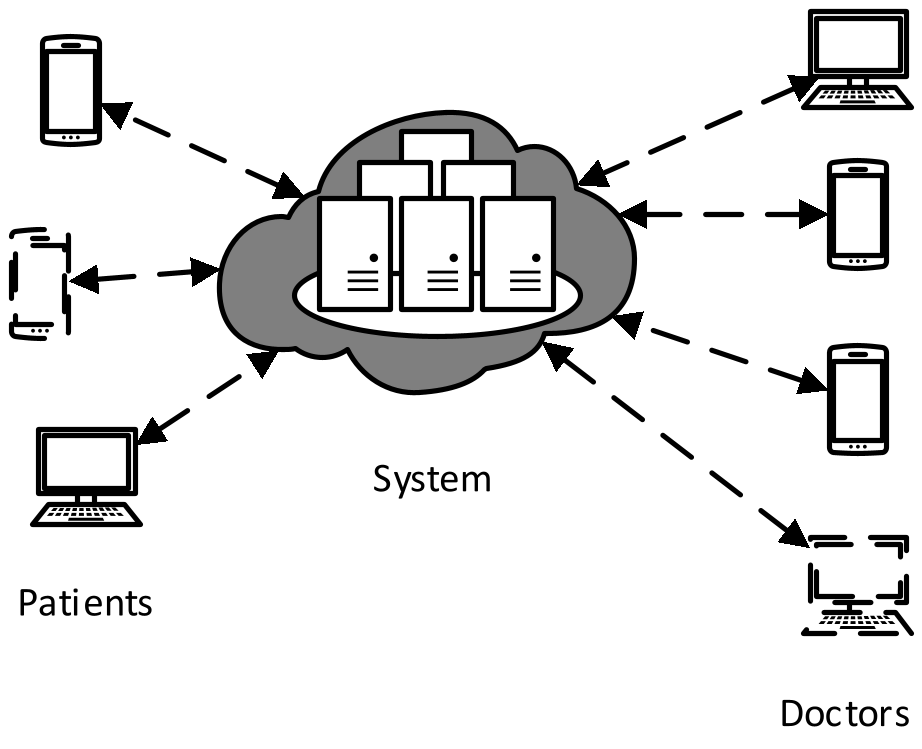 Figure 1: The proposed network architecture showcasing the bridge between patient hardware and doctor interfaces.
Comparing Connection Technologies
A standout feature of this research is the rigorous comparison of wireless standards. Telemedicine isn't a monolith; different use cases require different "pipelines."
- Bluetooth: Best for "In-Room" monitoring. It features the lowest latency and cost but is strictly limited by distance.
- Wi-Fi: The "High-Performance" choice. It supports high throughput (ideal for video streaming) but suffers from higher transmission delay and requires existing router infrastructure.
- GSM: The "Rural Solution." While slow and expensive, its massive range makes it the only viable option for remote areas without internet infrastructure.
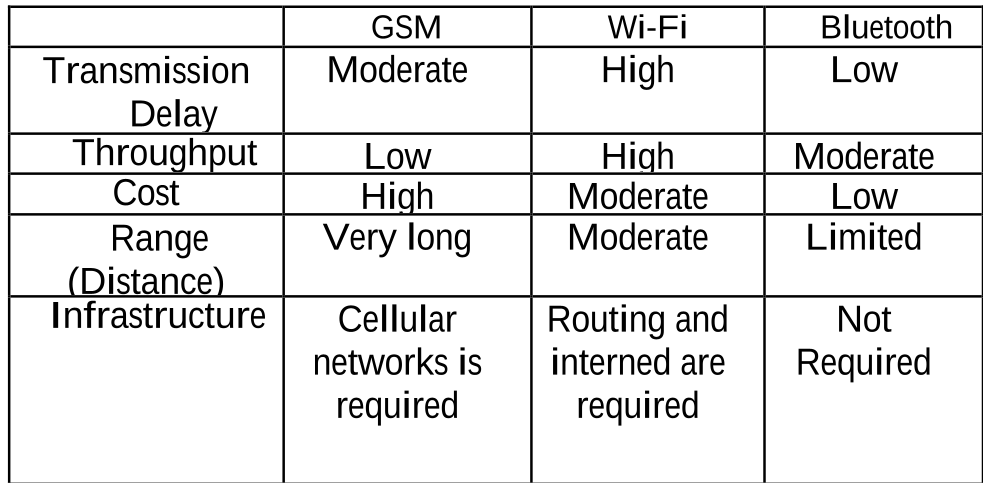 Table 1: Trade-offs between GSM, Wi-Fi, and Bluetooth in medical applications.
Experimental Implementation
The authors successfully prototyped the system, using an Arduino board to aggregate sensor data and transmit it via the chosen modules. A GUI was developed to allow doctors to see "visit IDs" and live vital signs.
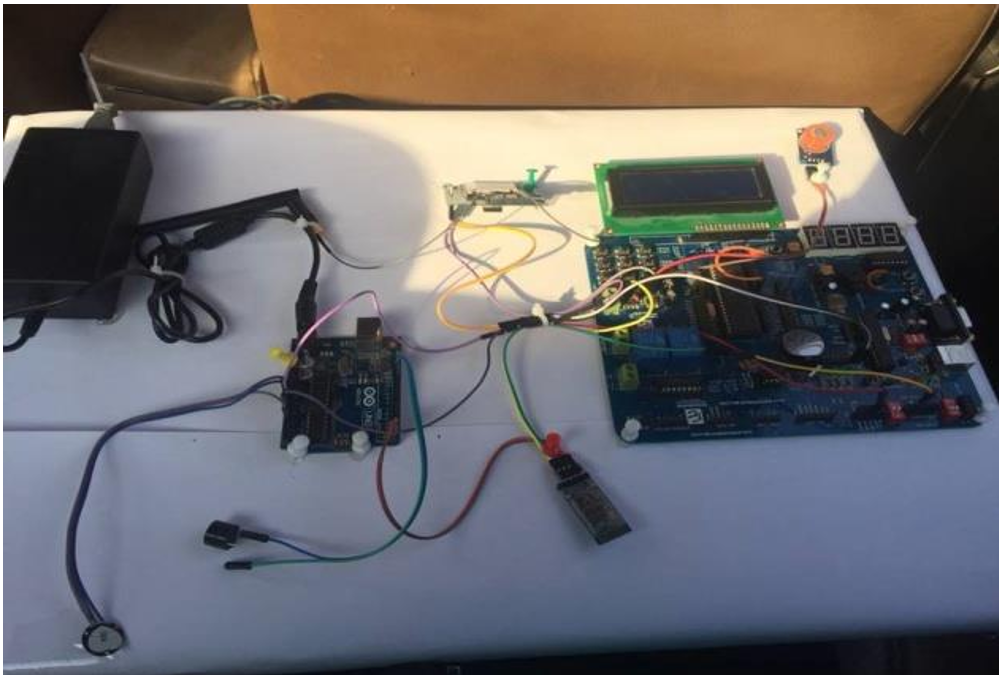 Figure 2: The physical hardware prototype including the Arduino board and sensor array.
Critical Insight & Future Outlook
While the paper provides a solid foundation for IoMT connectivity, several "real-world" hurdles remain:
- Security & Privacy: The authors suggest future work should focus on a secure payment and data framework. In medical contexts, HIPAA-compliant encryption is non-negotiable.
- Emergency Response: The inclusion of a "Panic Button" and GPS (via SIM 908) is a vital step toward proactive rather than reactive medicine.
- Usability: The paper acknowledges that the end-user experience (placing sensors correctly) is still a barrier to general deployment.
Conclusion: This work successfully maps the technical terrain of telemedicine. By proving that off-the-shelf components like Arduino and ESP8266 can handle critical vitals, it paves the way for more affordable, decentralized healthcare.