
Beyond Sync: Asynchronous Temporal Aggregation for Superior Emotion Recognition
Temporal aggregation of audio-visual modalities for emotion recognition
This paper introduces a novel multimodal fusion technique for emotion recognition that utilizes a temporal aggregation mechanism. By combining audio spectrograms and video frames from asynchronous temporal windows within a segment, the proposed method achieves a SOTA accuracy of 68.4% on the CREMA-D dataset, surpassing both human performance (63.6%) and existing recurrent attention models.
TL;DR
Researchers from the University Politehnica of Bucharest have developed a new multimodal fusion strategy that breaks the "synchronicity" requirement in emotion recognition. By aggregating audio and visual data from asynchronous temporal windows across multiple segments, their model achieved 68.4% accuracy on the CREMA-D dataset, outperforming human raters and complex recurrent neural networks.
Background: The Inductive Bias of Human Perception
When we judge someone's emotional state, we don't just look at a static snapshot or listen to a single syllable. We integrate visual cues (facial expressions) and vocal cues (inflection, intensity) over a short window of time. Most researchers assume these modalities must be perfectly aligned. However, the true "signal" of an emotion often drifts between what we see and what we hear.
The authors argue that by introducing temporal offsets—allowing the audio and video inputs to be slightly asynchronous—the model learns more robust, generalized features of emotion rather than overfitting to specific micro-moments of synchronization.
Methodology: Temporal Aggregation & Asynchronous Sampling
The core of the proposed system is the Temporal Aggregation Mechanism. Instead of processing the entire video as a monolithic sequence, the pipeline follows these steps:
- Segmentation: The input is divided into equal temporal segments.
- Asynchronous Sampling: Within each segment, the model randomly picks a video frame and then selects an audio window centered within a small offset () of that frame's timestamp.
- Core CNN Processing: Each segment is analyzed by a CNN that processes the frame and the audio spectrogram. Features are concatenated and passed through a Fully Connected (FC) layer to produce class probabilities.
- Late Fusion/Aggregation: The final prediction is the sum of probabilities across all segments.
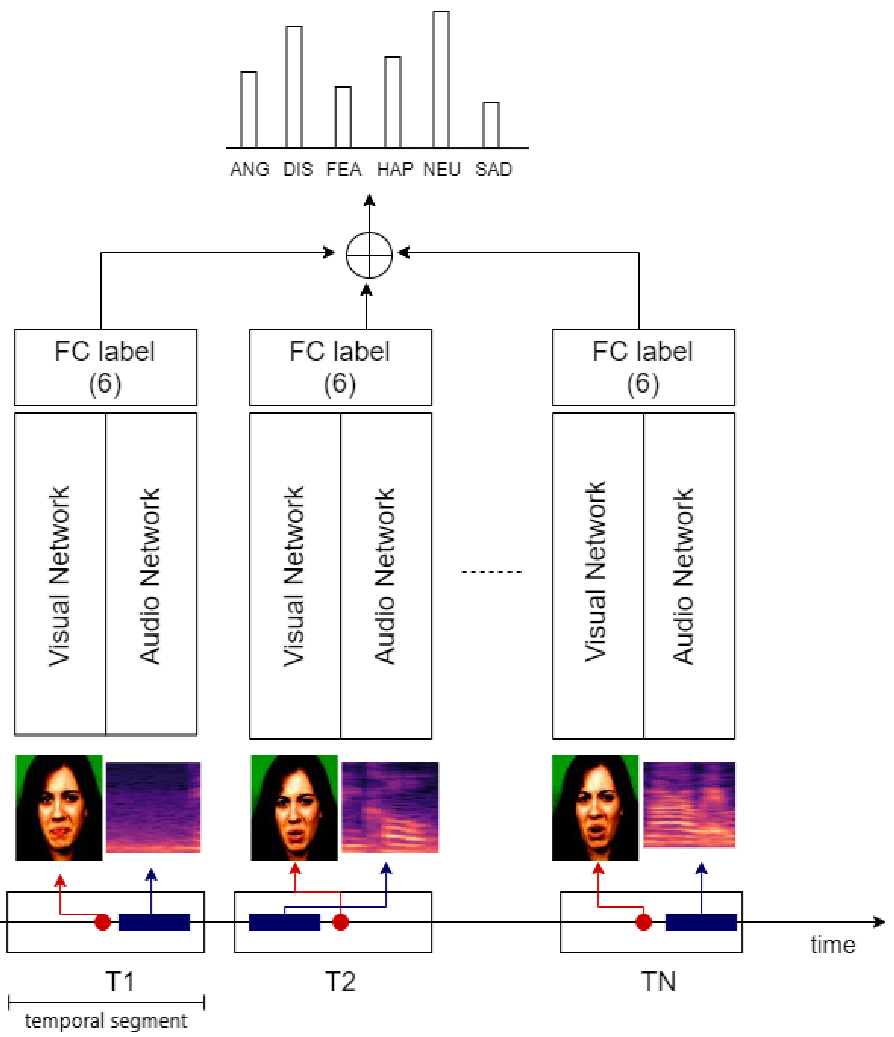 Figure 1: The temporal aggregation mechanism showing how independent segments contribute to the final classification.
Experiments and Performance
The model was validated on the CREMA-D dataset, which consists of over 7,400 clips of actors conveying six basic emotions.
Breaking the Human Baseline
One of the most impressive findings is that the model's accuracy (68.4%) significantly exceeds the human rating accuracy (63.6%). This suggests that the CNN-based feature extraction from spectrograms can identify emotional nuances in vocal intensity that the human ear might miss, especially when aggregated over multiple temporal windows.
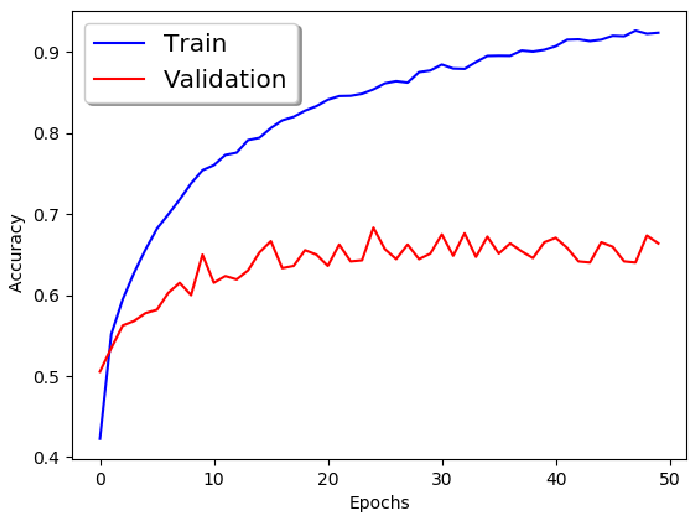 Figure 2: Confusion matrix showing high precision in "Anger" and "Disgust" categories.
The Content vs. Complexity Trade-off
The researchers also conducted an ablation study on the number of segments (). They found that while more segments lead to higher accuracy, the benefits plateau after . This is a crucial insight for real-time deployment: you can achieve near-peak performance with fewer segments, significantly reducing inference latency.
| Method | Accuracy [%] |
|---|---|
| Human accuracy | 63.6 |
| CNN-based (Prior Work) | 55.8 |
| Recursive Multi-Attention (RMA) | 65.0 |
| Proposed Method | 68.4 |
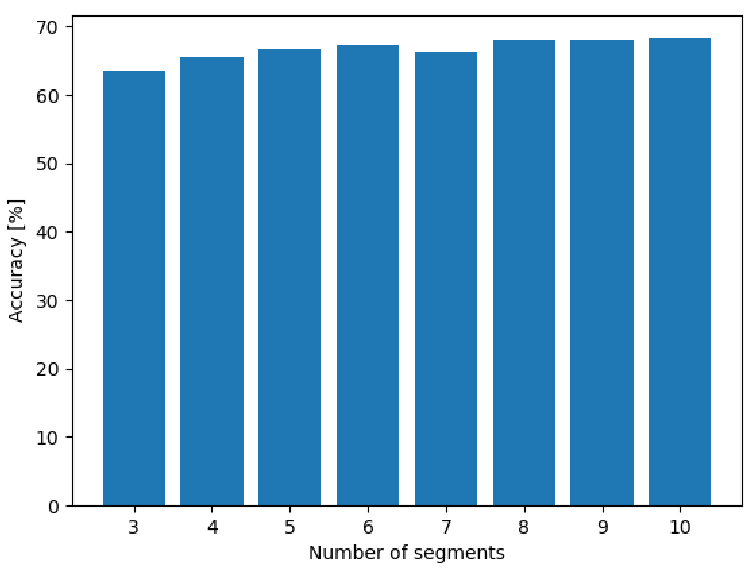 Figure 3: Accuracy improvement as the number of aggregated segments increases.
Critical Insight: Why is Asynchrony Effective?
The effectiveness of this method stems from diversity through randomness. In standard synchronized models, the network sees the same paired data every time. By using random sampling within segments and temporal offsets, the authors essentially performed a version of "temporal data augmentation." This forces the network to learn the underlying emotional state that persists through the segment, rather than relying on a single perfectly synced frame-audio pair.
Conclusion and Future Outlook
This work demonstrates that complex recurrent structures like LSTMs or Attention Hops aren't always necessary for high-performance temporal modeling. Simple temporal aggregation of CNN features, when combined with a smart asynchronous sampling strategy, can outperform more complex SOTA models.
Limitations: The model currently treats all segments with equal weight (simple summation). A potential future improvement would be a "Learnable Aggregation" or "Attention-based Gating" to weigh segments where the emotion is most visible/audible more heavily than neutral segments.