
Decoding Wind Turbine Failures: An Ontology-Based Text Mining Approach
Text mining analysis of wind turbine accidents: An ontology-based framework
The paper introduces an ontology-based text mining framework to analyze wind turbine accidents using news articles. By integrating text processing, clustering, and Multidimensional Scaling (MDS), the authors reveal hidden patterns and associations between turbine components, geographical locations, and seasonal shifts in accident occurrences.
TL;DR
As wind energy scales globally, understanding what goes wrong is as critical as improving efficiency. This paper addresses a significant research gap by applying text mining and unsupervised machine learning to a verified dataset of wind turbine accident news. By mapping unstructured text onto a specialized ontology, the authors reveal critical correlations, such as the seasonal vulnerability of certain components and the disproportionate reporting of specific accident types in various countries.
Academic Positioning: This work bridges the gap between traditional reliability engineering and modern data science, moving from simple accident counts to a semantic understanding of "why, where, and when" failures occur.
The Problem: A Data Desert in a Growing Industry
While we have extensive literature on how to build turbines, there is a surprising lack of academic depth on how they fail. Prior work often relies on tabular databases that are poorly maintained or non-verifiable. Furthermore, these datasets rarely capture the nuanced context found in descriptive reports. The challenge lies in extracting "actionable intelligence" from the thousands of unstructured news reports scattered across the internet—a task impossible for humans alone but perfectly suited for AI.
Methodology: From Unstructured News to MDS Insights
The core of this research is a dual-layered framework that processes raw text into a structured "Ontology-Based" map.
1. The Text Processing Pipeline
The authors utilize a rigorous 7-step extraction process (using RapidMiner) which includes:
- Tokenization & Stemming: Reducing words to their linguistic roots (e.g., "blades" to "blade").
- Percentual Pruning: Removing noise by selecting terms that appear in at least 5% of the document collection.
- Vectorization: Converting text into relative term frequencies.
2. The Ontology Framework
What makes this paper stand out is the human-in-the-loop Ontology Construction. Instead of letting the machine guess, the authors categorize 40 key terms into four pillars: Month, Turbine Component, Country, and Outcome. This "Inductive Bias" ensures that the machine learning results remain relevant to the engineering domain.
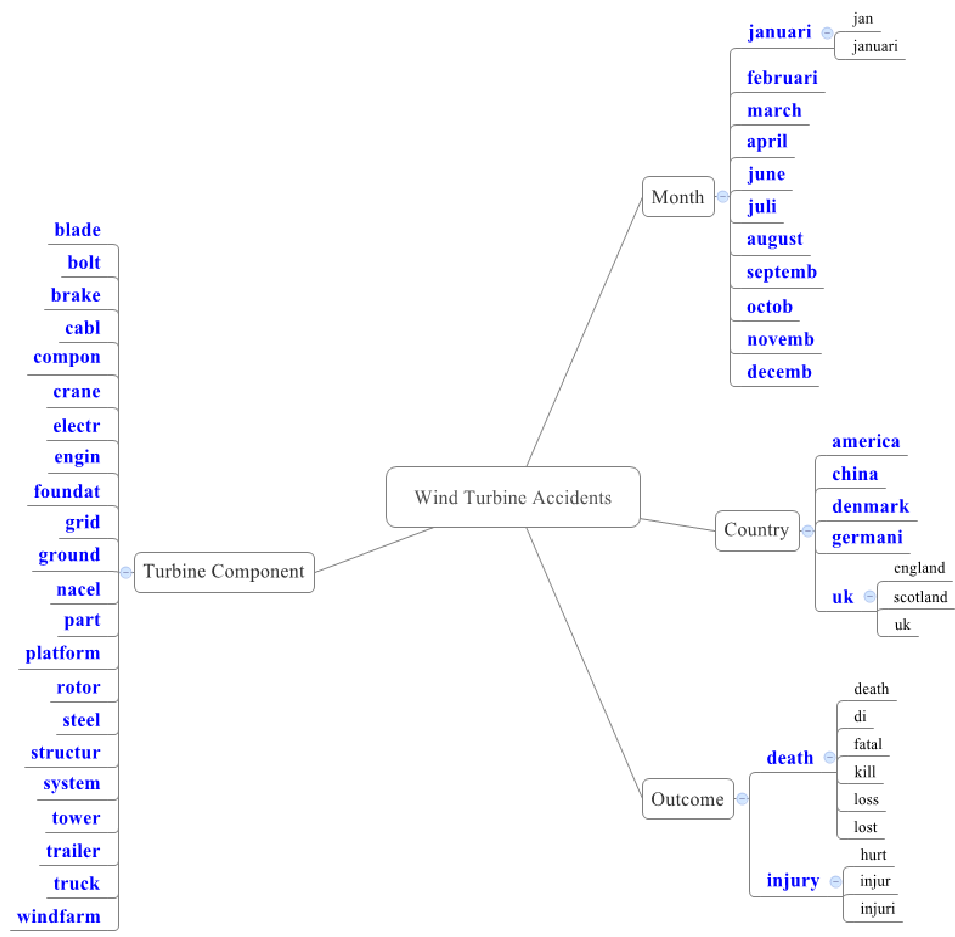 Fig 3. The hierarchy used to guide the machine learning process.
Experiments and Visual Insights
Using Multidimensional Scaling (MDS) and hierarchical clustering, the authors "folded" high-dimensional term relationships into a 2D map.
Major Findings:
- Seasonal Vulnerability: Blade accidents are strikingly frequent in January and February, suggesting cold-weather stresses or high-wind seasonalities.
- Fatal Chains: A critical cluster was found linking "Death" with "Crane" and "September". This suggests that maintenance/installation periods involving heavy lifting are high-risk windows.
- Regional Specialties: In Denmark, the dominant failure modes are "Blade" and "Brake" related, whereas accidents in China are more frequently linked to "Grid" issues and report higher fatality rates.
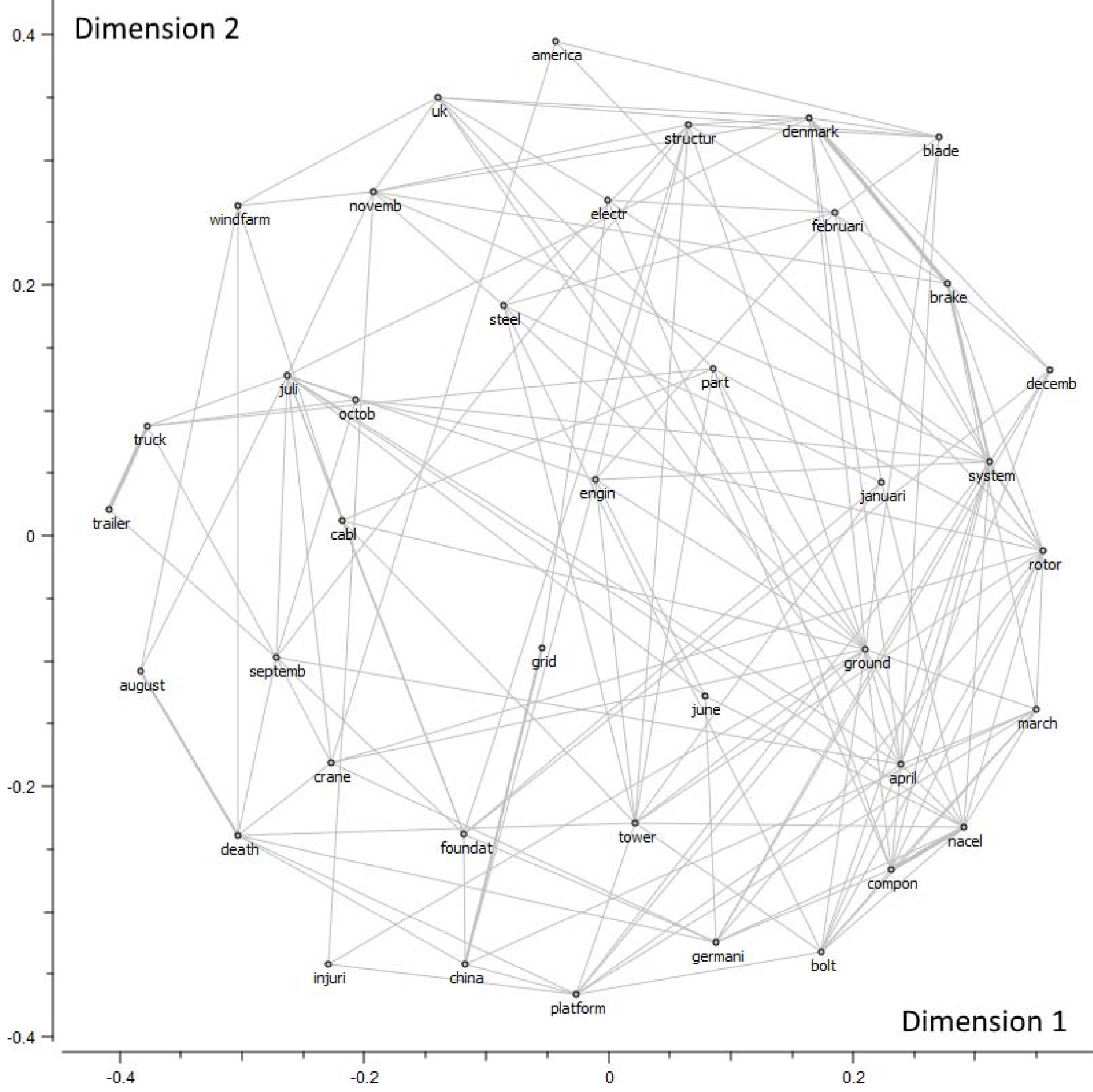 Fig 6. MDS Visualization showing how terms like "Death" and "September" cluster together.
Critical Analysis & Conclusion
Takeaway
The value of this paper is not just in its findings about blades or cranes, but in the Workflow. It proves that by using a domain-expert-guided ontology, researchers can turn relatively small (n=218) but high-quality datasets into a "risk map" that provides immediate value to manufacturers and insurance adjusters.
Limitations & Future Work
The authors acknowledge a limitation in dataset size. Future research should look beyond publicly available news to internal government and insurance records. Furthermore, as LLMs (Large Language Models) evolve, the "Human Domain Expert" step in filtering terms could be automated, allowing this framework to scale to tens of thousands of reports in real-time.
This study serves as a foundational step toward "Predictive Safety" in the renewable energy sector.