
From Opinions to Emotions: Deciphering the Evolution of Sentiment Analysis
Current state of text sentiment analysis from opinion to emotion mining
This survey provides a comprehensive taxonomy and state-of-the-art review of text sentiment analysis, specifically distinguishing between Opinion Mining (polarity-based) and Emotion Mining (fine-grained emotional states). It categorizes methodologies across various granularities (document, sentence, aspect) and introduces critical resources, including lexicons like WordNet Affect and datasets like CBET.
TL;DR
While "Sentiment Analysis" is a household term in AI, we often limit its potential to simple binary "thumbs up/down" classifications. This seminal survey by Yadollahi et al. redefines the field by drawing a sharp line between Opinion Mining (judgment-based) and Emotion Mining (affect-based). By organizing the messy landscape of lexicons, theories, and machine learning models, the authors provide a roadmap for moving beyond polarity toward a more nuanced understanding of human feelings in digital text.
Problem & Motivation: The Identity Crisis of Sentiment Analysis
The industry has long suffered from a terminology overlap. In many papers, Sentiment Analysis, Opinion Mining, and Polarity Classification are used interchangeably. However, the authors argue this is semantically unsound.
An opinion is a judgment ("This phone is good"), whereas an emotion is a state of mind ("I feel frustrated with this phone"). These can even conflict: "My family thinks it’s a good decision (Opinion: Positive), though they feel sad to miss me (Emotion: Negative)."
The motivation for distinguishing them is clear: detecting depression, improving customer care, and enhancing e-learning all require the "Why" (emotion) behind the "What" (opinion).
Methodology: A Multi-Dimensional Taxonomy
The authors break down the field into two distinct tracks, each with its own "Detection" and "Classification" workflows:
- Opinion Mining: Scales from Subjectivity Detection to Opinion Spam Detection and Summarization.
- Emotion Mining: Scales from simple Emotion Polarity to Fine-grained Emotion Classification and Emotion Cause Detection (identifying why an emotion was triggered).
The Architecture of Emotion Sensing
The methodology section evaluates the transition from traditional features (Unigrams, TF-IDF) to linguistic-heavy approaches (Part-of-Speech, Negation handling, Syntax trees).
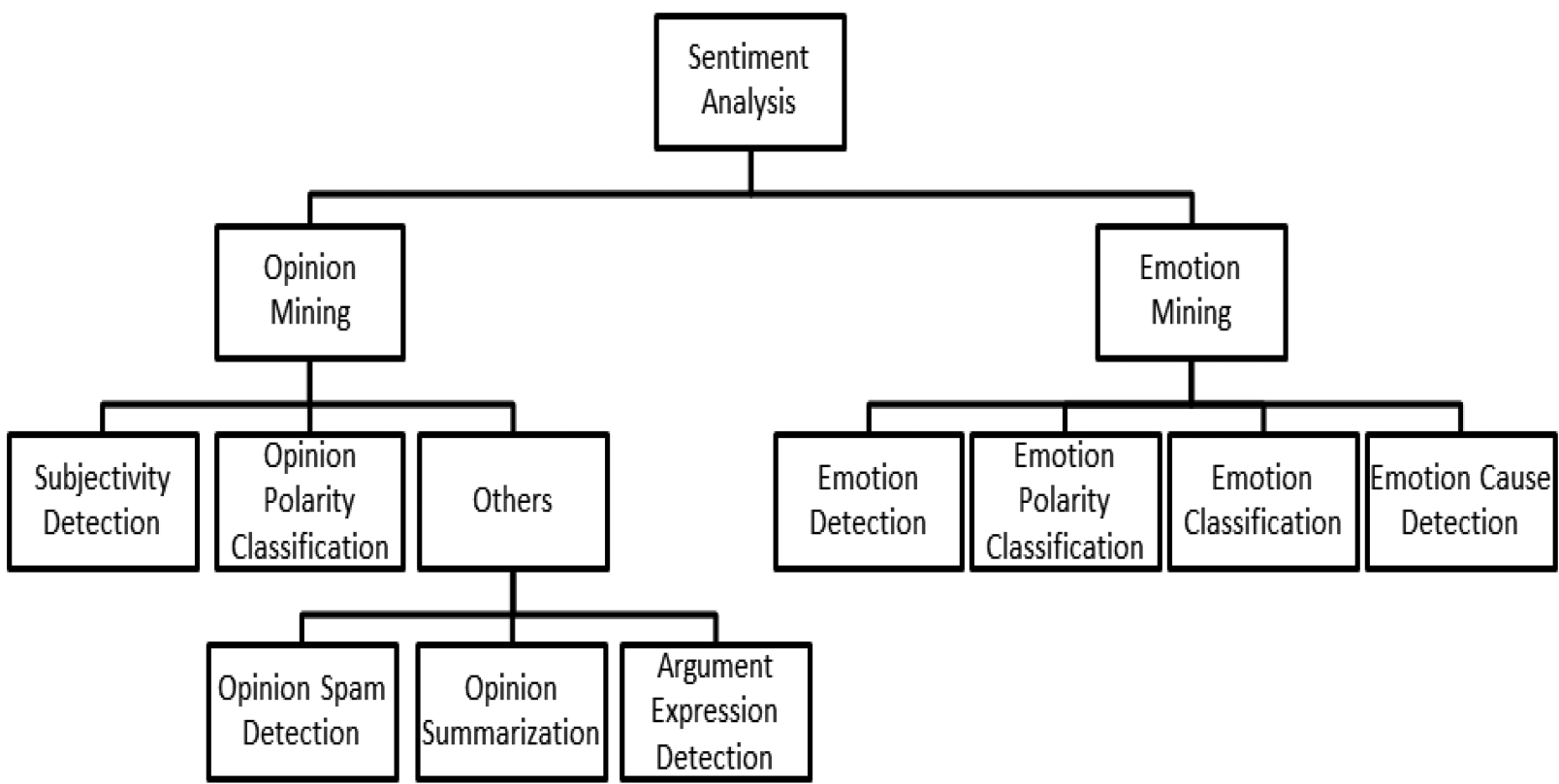 Figure 1: The hierarchical classification of Sentiment Analysis tasks proposed by the authors.
A significant portion of the paper focuses on Lexicon Expansion. Since manual labeling is expensive, the authors detail how researchers use "seed words" (like excellent or poor) to propagate sentiment scores across a corpus using co-occurrence and Graph Theory (Random Walks).
The Theoretical Foundation: How Many Emotions Are There?
To build a classifier, you must first define the output labels. The authors compare several psychological models:
- Ekman (1972): The "Big Six" (Anger, Disgust, Fear, Joy, Sadness, Surprise).
- Plutchik (1986): A dimensional model featuring 8 basic emotions in bipolar pairs.
- Lövheim (2012): A fascinating 3D cube model based on neurotransmitters (Serotonin, Dopamine, Noradrenaline).
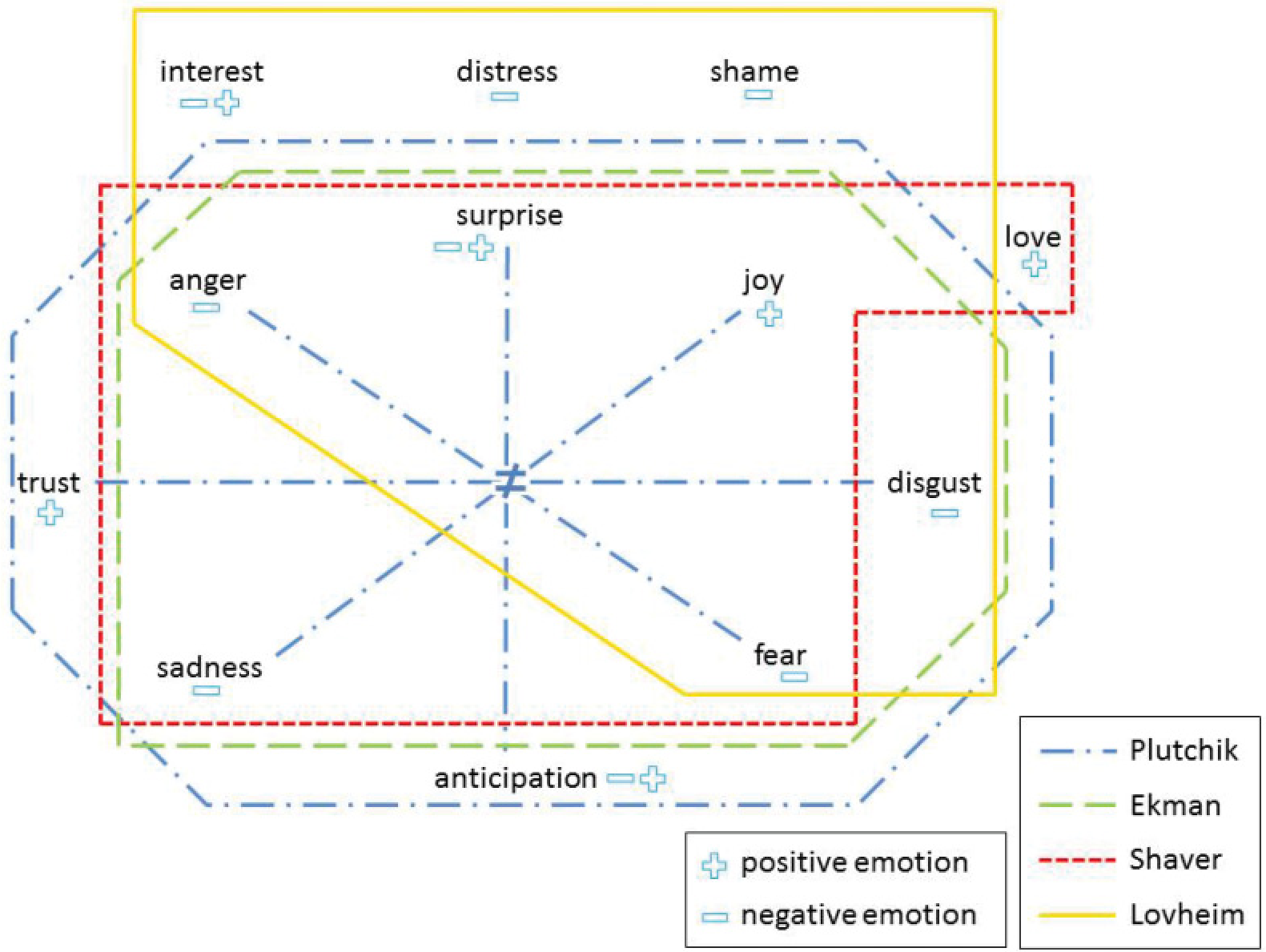 Figure 2: A comparative visualization of the leading psychological theories used to categorize human affect in AI.
Experiments & Critical Resources
The survey serves as a "Golden Guide" to resources. Key takeaways from their experimental review include:
- Twitter is the Wild West: Hashtags function as "noisy labels," but they are surprisingly consistent with professional psychological annotations.
- The Size Matters: The transition from small datasets like ISEAR (7k paragraphs) to CBET (81k tweets) has allowed for more robust supervised training.
- Precision vs. Interpretability: Rule-based systems like AAM (Affect Analysis Model) offer high interpretability but struggle with context-specific modulations (e.g., "I love this to death").
 Table: A summary of benchmark datasets, illustrating the shift from news headlines to social media corpora.
Critical Analysis & Conclusion
The value of this work lies in its systemization. It moves the needle from "experimental NLP" to "Affective Computing."
Takeaway: We are entering an era where AI must not only know "if" a customer is unhappy but "how" they are unhappy (Are they angry? Disappointed? Fearful?).
Limitations: One gap noted is the relative lack of research in non-English languages and the difficulty of "Emotion Cause Detection"—understanding the trigger of an emotion remains a significant hurdle for current models. Future work in Multimodal Analysis (combining text with facial/vocal data) will likely be the next frontier in achieving human-level empathy in AI.