
THINPLE: Bridging the Real-World Gap in Social Networking via NFC and IoT
THINPLE - the new online Sociality is built on top of NFC-based Contacts
THINPLE is a novel mobile-cloud social networking platform that bridges the gap between physical encounters and online sociality using Near Field Communication (NFC). It introduces a hybrid social graph where "things and people" coexist, ensuring that digital connections are only established through explicit, proximal physical realization.
TL;DR
Current social networks are cluttered with meaningless connections. THINPLE (Things + People) is a mobile-cloud architecture that forces online social growth to mirror physical reality. By utilizing the ultra-short range of Near Field Communication (NFC), it guarantees that every "friendship" or "interest" is born from a deliberate, synchronous physical encounter between users or objects.
Background: The Crisis of Digital Densification
In the early days of social media, digital connections reflected real-life bonds. Today, our social graphs are "densifying" with low-value ties, leading to spam and privacy erosion. The authors argue that proximity-based sensing (like Bluetooth or GPS) isn't enough because it lacks intent. Being in the same room is an accident; "tapping" a phone against another is a choice.
Methodology: The "Things + People" Unified Graph
THINPLE's core innovation is the treatment of objects and humans as equivalent nodes in a unified social graph.
1. The Social Capital Model
- Human Capital: Your 1-hop connections to people you have physically met.
- Environmental Capital: Your links to "things" (monuments, products, venues) you have physically interacted with.
- 2-Hop Visibility: You can see your friends' friends and your friends' objects to discover new interests, but you cannot see strangers who happened to tap on the same object (preserving privacy while allowing discovery).
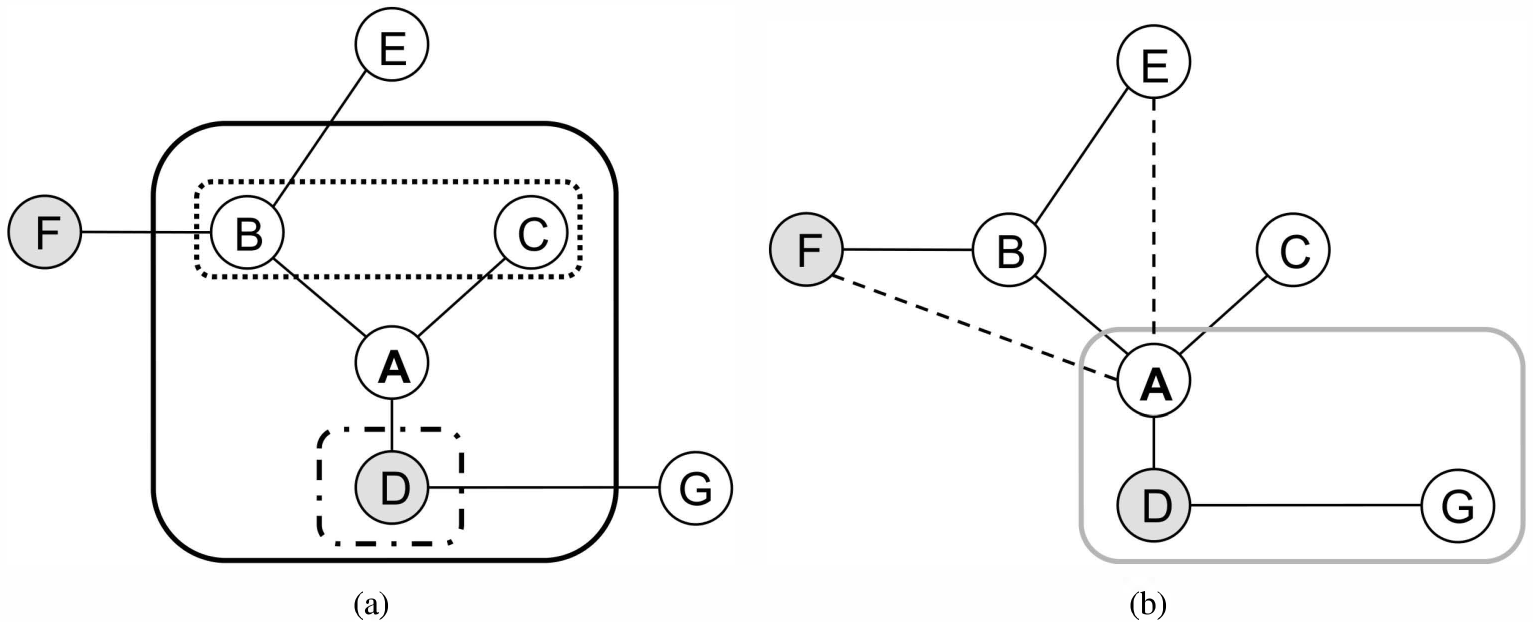 Fig 1. The THINPLE graph: White nodes represent people, grey nodes represent things. Social capital is the union of human and environmental capitals.
2. Overcoming NFC Hardware Limitations
NFC hardware on Android is often asynchronous—one device acts as a reader while the other acts as a card, making mutual pairing difficult. THINPLE implements a Contact Manager that starts a local timer during an NFC handshake; if a full exchange isn't completed immediately, it transparently migrates the session to Bluetooth to finalize the data swap.
System Architecture
The platform is split into THINPLE-Mobile (for event capture and content caching) and THINPLE-Cloud (for graph management).
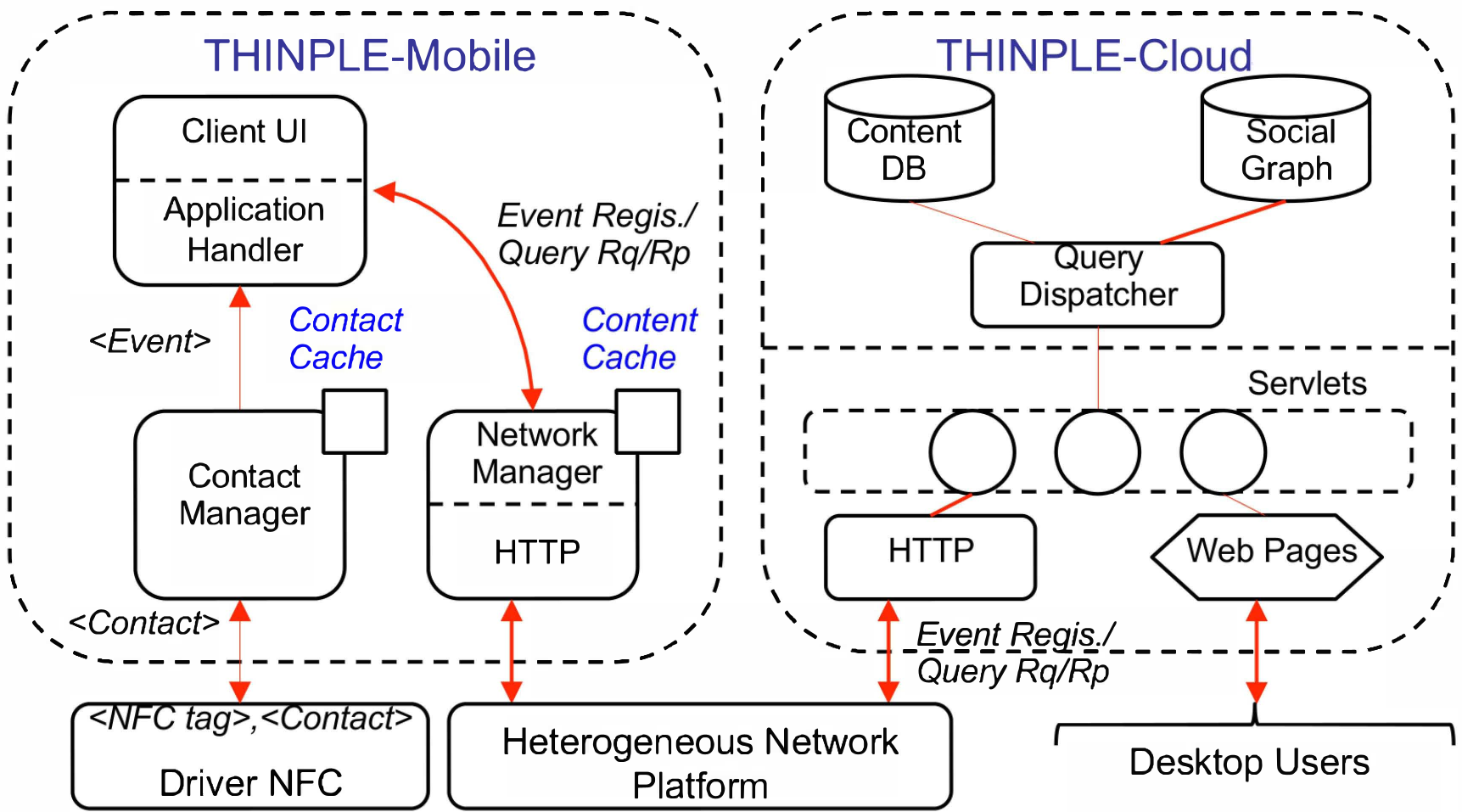 Fig 2. The multi-layered architecture separating local contact management from cloud-based graph processing.
- Network Awareness: The Network Manager checks signal quality. On WiFi, it pulls rich media (video/images). On 3G, it restricts downloads to metadata to maintain responsiveness.
- Graph Database: Unlike traditional SQL databases, THINPLE uses Neo4j to handle the complex, recursive relationship queries inherent in social graphs.
Real-World Applications
The paper outlines two compelling use cases that transform static physical encounters into dynamic digital experiences:
- The Modern "Grand Tour": Travelers tap on monuments (NFC tags) to instantly download guides, join localized discussion communities, and automatically generate a "travel diary" based on their physical movement through historical sites.
- Product Traceability: A consumer taps a domestic boiler tag upon installation. This creates a trusted link between the "object" and the "owner," enabling direct manufacturer support, recall notifications, and remote control capabilities through a secure public-key exchange.
Critical Analysis & Conclusion
THINPLE is a fascinating shift back toward authentic sociality. While the paper successfully provides a roadmap for linking the "Internet of Things" (IoT) with the "Internet of People," it currently relies on a centralized cloud architecture. Future iterations would benefit from exploring decentralized identifiers (DIDs) to mitigate the privacy risks of a single server holding an entire city's physical encounter history.
Takeaway: By making physical presence the "cost of entry" for digital connection, THINPLE restores the scarcity—and thus the value—of online social relationships.