Social Network Integrity: Deciphering the Nexus of Privacy Leaks and Social Engineering
Threats Against Information Privacy and Security in Social Networks: A Review
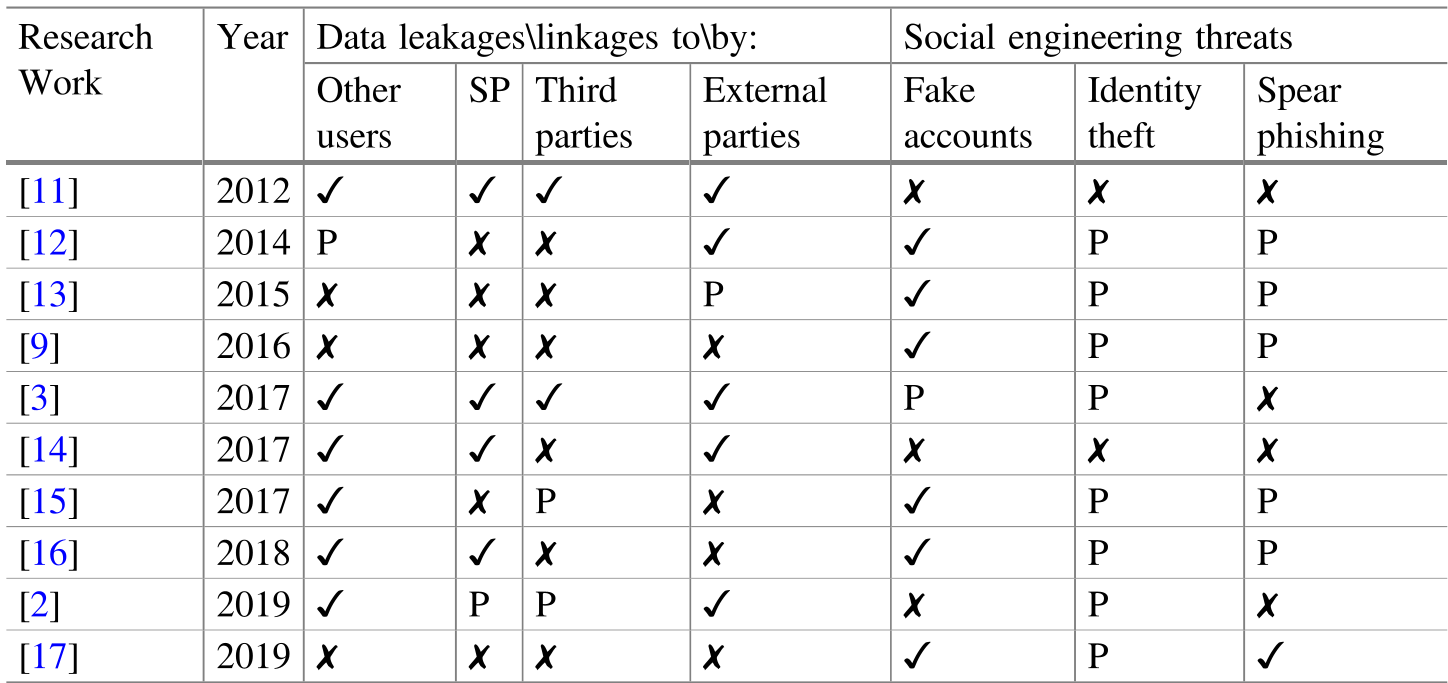
This review paper provides a comprehensive analysis of emerging threats to information privacy and security within Social Networks (SN). It categorizes privacy risks into data leakages and linkages while focusing on social engineering attacks such as fake accounts, identity theft, and spear phishing, synthesizing a guideline for future defense mechanisms.
TL;DR
Social Networks (SNs) have evolved from simple communication tools into massive data mines. This review paper dissects the two-front war against information threats: Privacy (leakage across entities) and Security (the human-centric exploitation of social engineering). It argues that while we can patch software, "patching" human behavior requires a fundamental shift in transparency and awareness.
The Anatomy of the Threat
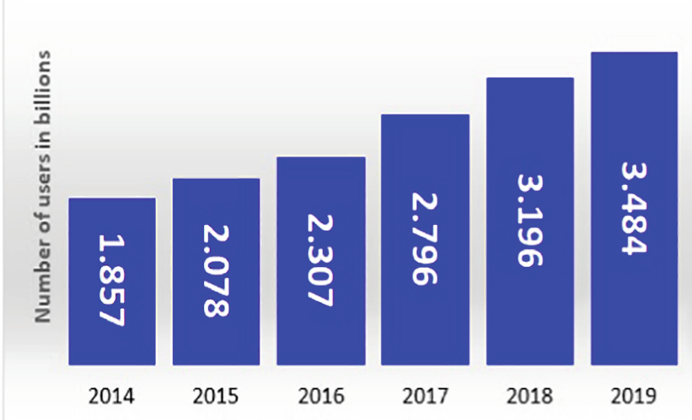
As of 2019, nearly 45% of the global population used social media, spending an average of over two hours daily on these platforms. This creates an unprecedented surface area for exploitation.
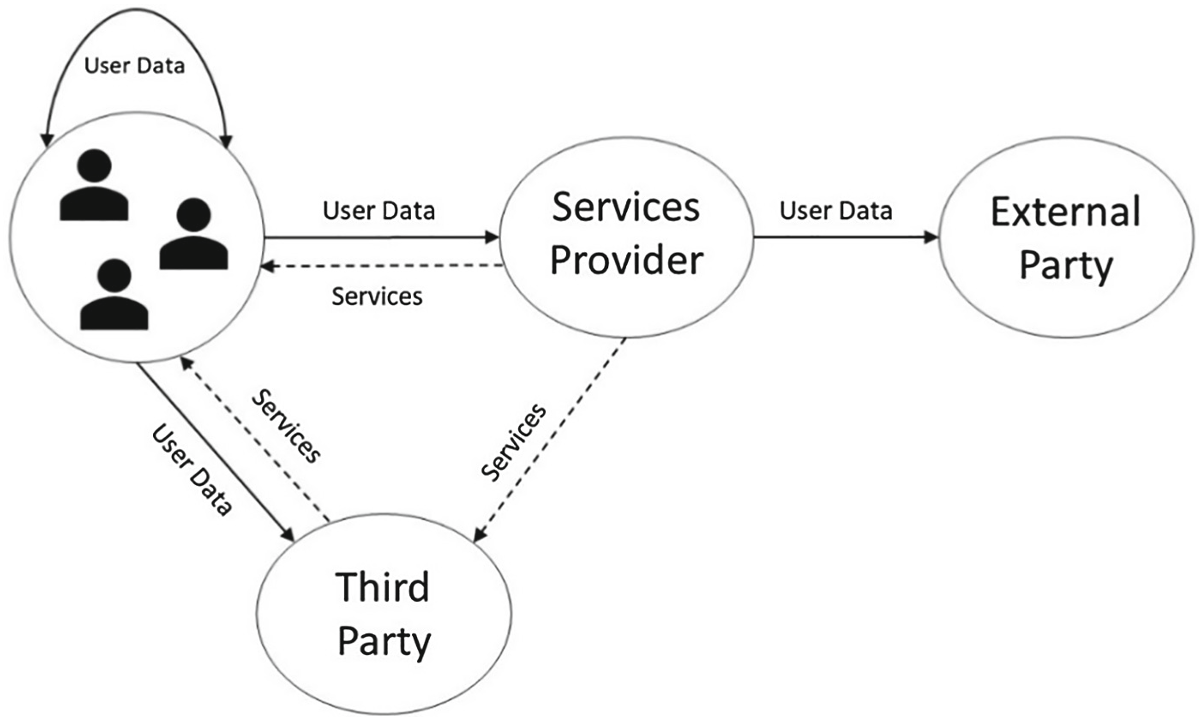
The core friction lies in the "Accept All or Leave" paradigm. Users trade "Service Data" (names, emails) and "Behavioral Data" (locations, interactions) for free services. The paper identifies that the most dangerous vulnerabilities are not in the code, but in the trust protocols between four specific entities:
- Service Providers (SP): The custodians who often lack transparency.
- Users: The "weakest link" due to a lack of awareness.
- Third-party Developers: Who often gain excessive API permissions.
- External Parties: Advertisers and researchers who link disparate data sources to "de-anonymize" users.
Deep Dive: The Privacy Leakage Matrix
The paper categorizes privacy threats into four distinct leakage channels:
- User-to-User Leakage: Often results from misunderstood privacy settings (e.g., the "Friends of Friends" visibility in tagging).
- SP Collection: Inappropriate storage of PII that exceeds service requirements.
- The API Gap: Third-party apps (like Facebook games) often request "full profile access" when only a tiny subset is needed for functionality.
- Data Linkage: This is the most sophisticated threat. External parties can synthesize a "digital shadow" by correlating data from multiple platforms (e.g., matching a LinkedIn professional profile with a private Instagram account).
Social Engineering: Weaponizing Trust
Security in SNs is uniquely plagued by Social Engineering, which the authors describe as more complex than technical attacks because it combines human psychology with technical strategy.
1. Fake Accounts & Sybil Attacks
Attackers use social bots to flood networks. In early 2018, Facebook disabled 583 million fake accounts. These are used to spread misinformation or launch "Sybil attacks" to manipulate online consensus.
2. Identity Theft (Cloned vs. Compromised)
- Cloning: An attacker creates a shadow profile using a user's public photos to trick their friends.
- Compromising: This is far more dangerous. The attacker hijacks a legitimate account, leveraging years of established "Network of Trust." Detection here requires monitoring Behavioral Deviation—identifying when the interaction latency or typing style of a user suddenly changes.
3. Spear Phishing
Unlike "spray and pray" phishing, spear phishing in SNs is highly targeted. Threat actors use the rich demographic data available on SNs to craft messages that are almost indistinguishable from legitimate professional or personal correspondence.
Critical Insight: The "Behavioral Deviation" Solution
One of the paper's strongest methodology highlights is the shift toward social behavioral features. Since static passwords and even 2FA can be circumvented via social engineering, SPs are moving toward analyzing:
- Top Peer Transmission: Who does the user talk to most?
- Action Latency: How fast does the user navigate between pages?
- Top Webpages: Which internal SN URLs are visited?
If these patterns shift abruptly, the system can flag a compromised account even if the login credentials were correct.
Conclusion and Future Outlook
The review concludes that information privacy is not a solo endeavor. It requires:
- Accountability: SPs must implement "Least-Privilege" API access.
- Authentication: Moving toward tying accounts to verified identities (Phone/Passport) to kill the Sybil threat.
- Awareness: Users must be trained to recognize the psychological triggers used in phishing.
Ultimately, as long as data remains the "new oil," social networks will remain a battlefield. This paper serves as a vital reminder that in the virtual world, your identity is only as secure as the weakest link in your social graph.