
The Road to Omniscient Machine Intelligence: Three Trends in Computational Paralinguistics
Three recent trends in Paralinguistics on the way to omniscient machine intelligence
This paper reviews the evolution of Computational Paralinguistics, focusing on three major trends: efficient "big data" exploitation via gamified crowdsourcing, autonomous deep end-to-end learning, and holistic multi-modal/multi-task sensing. It synthesizes results from nine years of Interspeech Challenges (ComParE) to chart a path toward superhuman-level machine intelligence for speaker state and trait analysis.
TL;DR
While machines can recognize what we say (ASR) with massive datasets, they struggle to understand how we say it—the "Computational Paralinguistics" of emotion, health, and personality. This paper outlines a strategic shift from small, hand-labeled datasets to a "big data" approach using gamified crowdsourcing, deep end-to-end learning, and holistic multi-modal architectures to reach superhuman parity in speaker analysis.
Contextual Positioning
This is a pivotal review and position paper by Schuller et al., reflecting on nearly a decade of the Interspeech Computational Paralinguistic Challenge (ComParE). It acts as a bridge between the "feature engineering" era of paralinguistics and the modern "Deep Learning/Big Data" paradigm.
The Bottleneck: The Data-Label Paradox
A 10-year-old child has heard roughly 10,000 hours of speech, learning nuances of tone and emotion through reinforcement and context. In contrast, even sophisticated paralinguistic models are often restricted to databases of ~10 hours. The primary pain point is the cost of labeling: while social media provides millions of hours of raw audio, obtaining "ground truth" labels for subjective states like "likability" or "sincerity" remains a monumental task.
Methodology: The Three Pillars of Progress
1. Efficiency: Gamification & Active Learning
To bridge the label gap, the authors advocate for iHEARu-PLAY, a gamified platform that turns data annotation into a competitive social experience. By using "Small-World" modeling for data selection and Active Learning, the system identifies the most "informative" audio snippets, requiring human intervention only where the machine is most uncertain.
2. Deep Intelligence: Beyond Hand-Crafted Features
The field is moving away from the "brute-force" feature sets (like the 6,373 features in openSMILE) toward:
- End-to-End Learning: Training models directly on raw waveforms.
- Cross-Domain Transfer: Borrowing pre-trained ImageNet models (VGG, AlexNet) to analyze audio spectrograms—a technique termed "Deep Spectrum."
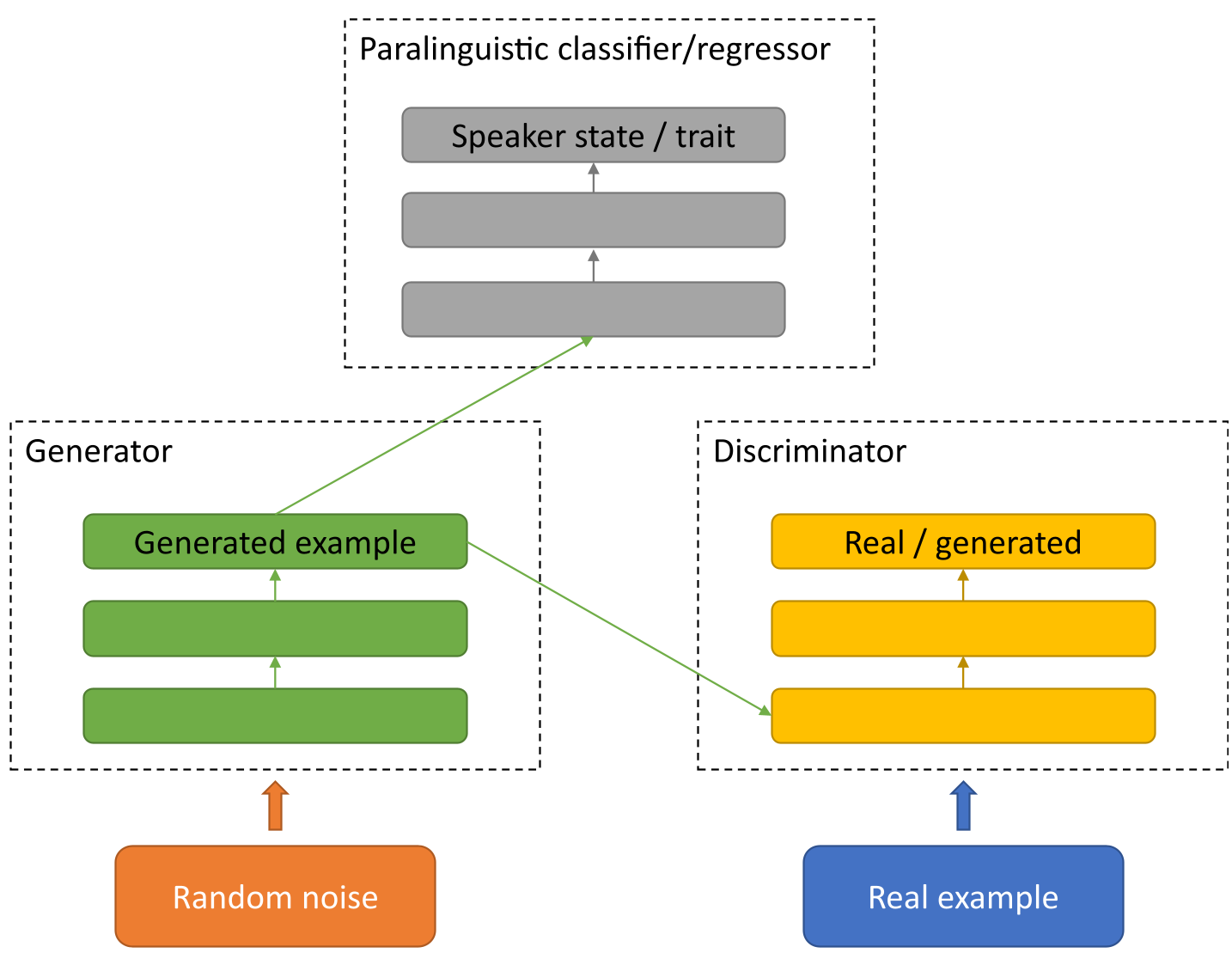
- Generative Adversarial Networks (GANs): Using GANs to generate feature representations from unlabeled data, significantly boosting performance in low-resource settings like autism diagnosis.
3. Holism: The "Deep Fusion" Approach
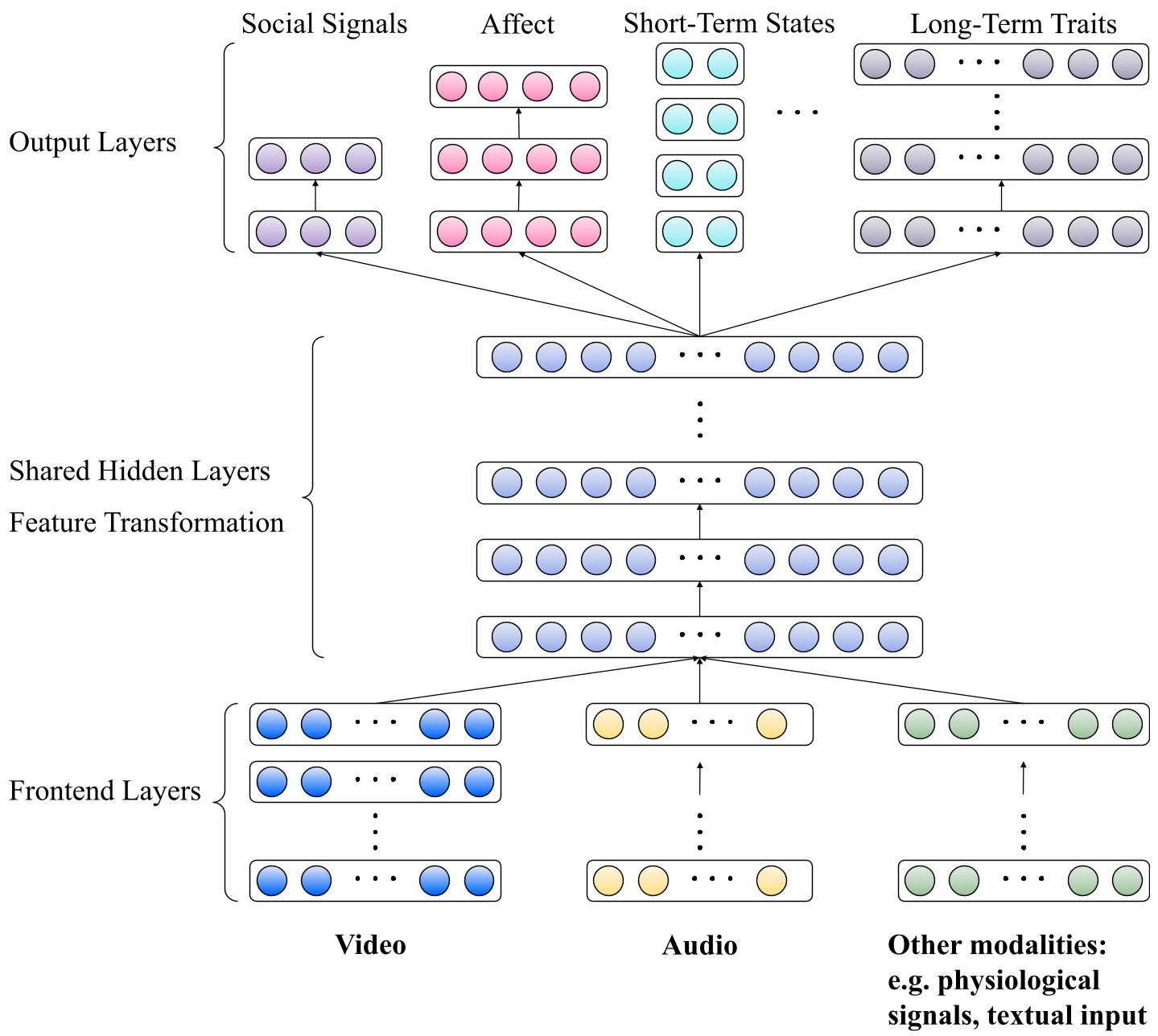
Human communication is never unimodal. The paper argues for a holistic sensing framework where audio, video, physiology (ECG/GSR), and text are processed jointly. By using multi-task learning, a model can learn to recognize emotion while simultaneously accounting for a speaker's age, gender, and even physical intoxication, preventing "crosstalk" between different paralinguistic signals.
Evidence of Evolution: The ComParE Benchmarks
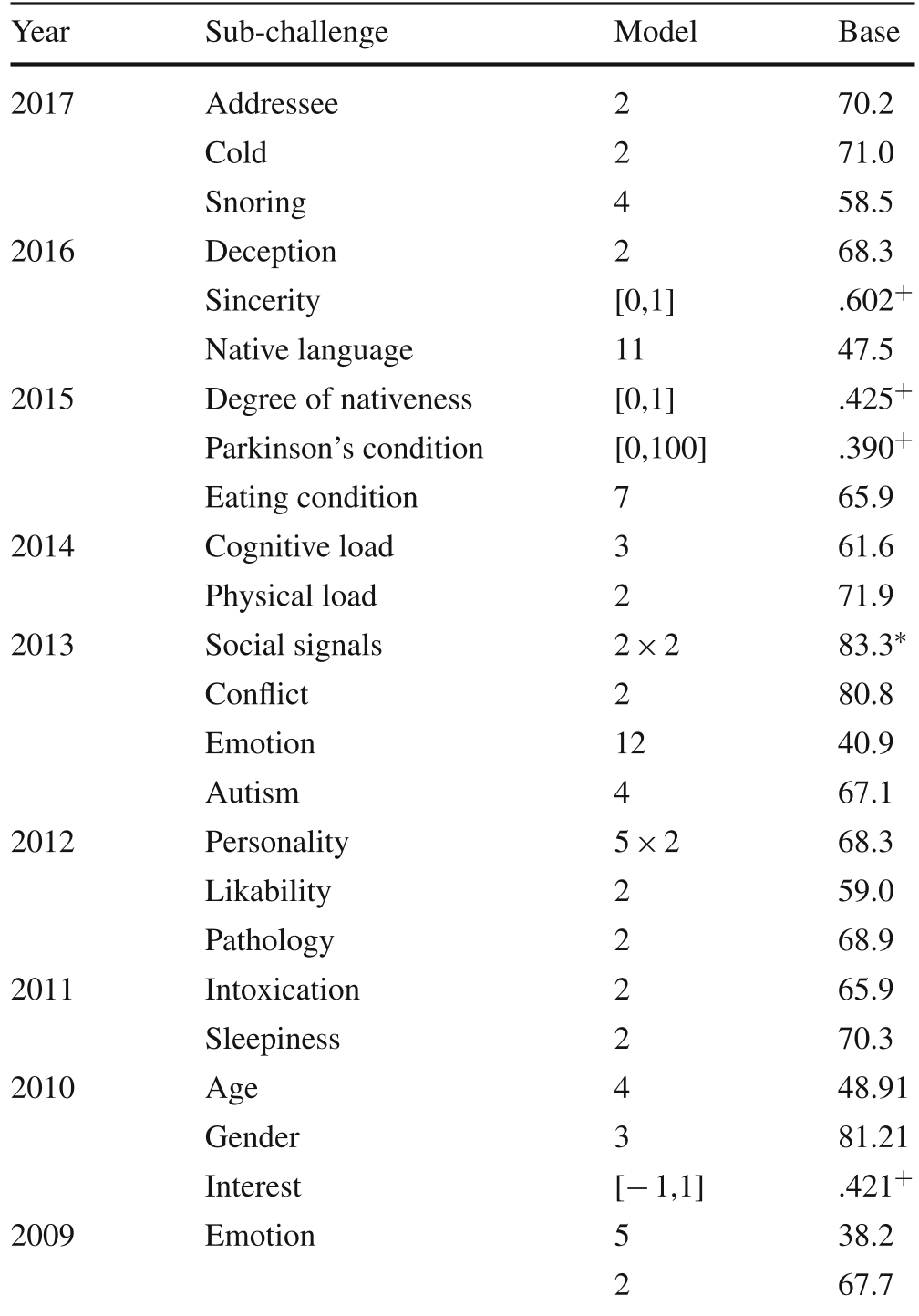
The paper provides a comprehensive table (Table 1) of results from 2009–2017.
- Success Stories: Intoxication, Sleepiness, and Gender recognition consistently achieve high accuracy (>70%).
- The Challenges: Subjective tasks like "Sincerity" or "Deception" still linger near lower performance tiers (~60-68%), highlighting the difficulty of modeling complex social signals from short audio clips.
Critical Insight & Future Outlook
The authors conclude with "crystal ball gazing," suggesting that we are on the cusp of superhuman automatic speaker analysis. However, they also raise a red flag regarding Ethical, Legal, and Societal Implications (ELSI). If a machine can detect deception with 70% accuracy or diagnose a health condition from a voice clip, how should that information be used in job interviews or insurance assessments?
Takeaway: The future of paralinguistics isn't just about "bigger" models; it's about "smarter" data exploitation and a "holistic" understanding of the human voice as a multi-dimensional signal.
Limitations: The paper acknowledges that while deep learning shows promise, the limited size of specialized corpora (e.g., for rare diseases) remains a bottleneck that even pre-trained models struggle to fully overcome.