
Quantifying the Invisible: A Domain-Independent Approach to Tie Strength
What do we really need to compute the Tie Strength? An empirical study applied to Social Networks
This paper presents a domain-independent computational model for estimating Tie Strength in social networks. By leveraging a first-of-its-kind public dataset of over 500 social ties, the authors validate a linear combination of social variables that outperforms existing SOTA methods across different platforms.
TL;DR
In the realm of social networks, not all connections are created equal. This paper bridges the gap between sociological theory and practical computation by providing a robust, domain-independent model for measuring Tie Strength. Using a novel dataset, the researchers prove that we can accurately predict how close two people are by focusing on Intimacy and Mutual Tastes, moving beyond platform-specific metrics like "Facebook likes."
The Logic of Loyalty: Why Previous Models Failed
For decades, researchers have relied on Mark Granovetter's 1973 definition of tie strength: a combination of time, emotional intensity, intimacy, and reciprocal services. However, translating this into code has been a nightmare:
- Domain Over-fitting: Models built for Facebook (using specific API triggers like "wall posts") fail on LinkedIn or professional financial networks.
- Reproducibility Crisis: Most datasets are private, and variables are often nominal/subjective.
- The "Surrogate" Problem: We often mistake frequency of contact for depth of relationship.
The authors ask: What do we really need to compute Tie Strength?
Methodology: Decoding the Four Pillars
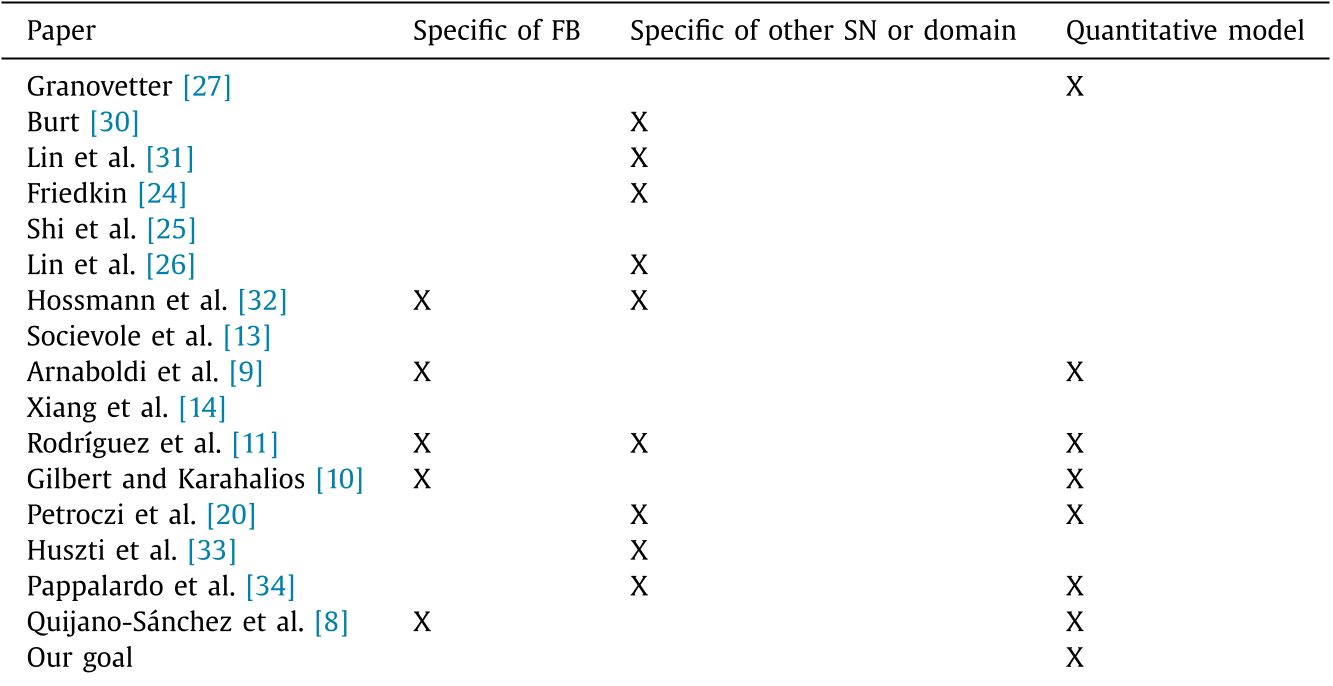
The researchers designed a survey of 100+ participants covering 500+ ties, creating the first public dataset to explicitly include tie strength measures. They mapped these to generic social variables:
- Intensity: Communication frequency (Online vs. Real-world).
- Intimacy: Relationship type (Partner, Close friend, Acquaintance).
- Duration: Years known.
- Reciprocal Services: Represented here by Common Tastes (Similarity).
Architecture of the Study
The study employed Factor Analysis of Mixed Data (FAMD) to see if these variables actually cluster into Granovetter's dimensions.
Key Insights: What Actually Matters?
The analysis yielded surprising results regarding the "Physics" of our social bonds:
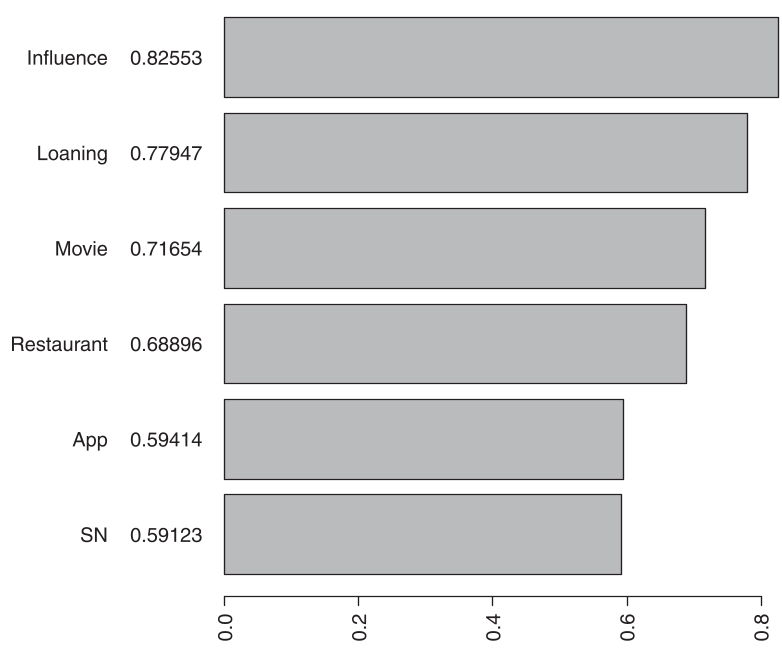
- Intimacy & Tastes are King: These two variables have the highest correlation with tie strength. Knowing someone for a long time (Duration) is actually a weak predictor compared to sharing mutual interests.
- The Nonlinear Curve of Social Media: Higher Facebook usage doesn't linearly increase tie strength. In fact, moderate users often have stronger ties than "power users" who might follow thousands of acquaintances.
- Recommendation Susceptibility: Strong ties are highly predictive of whether you will loan someone money or trust a movie recommendation—crucial for FinTech and E-commerce.
Experiments: Proving the Model's Versatility
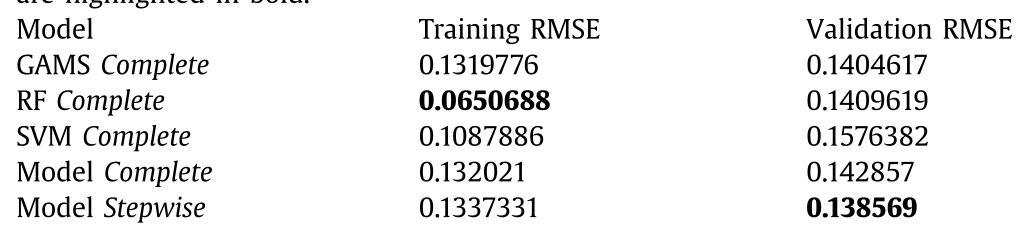
The authors compared Linear Models against Support Vector Machines (SVM) and Random Forests (RF).
- Linear Model Performance: RMSE of ~0.14.
- Random Forest: Achieved the best training error (0.065), but the linear models were more robust for cross-domain validation, suggesting that social ties follow a largely additive logic.
Real-World Application: The Financial Network
To prove it wasn't just for Facebook, they applied the model to a Spanish bank's Enterprise Social Network (ESN). By mapping transaction types (e.g., paying rent to "Intimacy Level 1", co-owning an account to "Intimacy Level 6"), they predicted tie strength with a high correlation (0.82) to expert human judgment.
Critical Analysis & Takeaways
This work is a significant "cleanup" of the tie-strength literature. It provides a lite version of social modeling that doesn't require invasive API access.
Limitations:
- The dataset remains relatively small (100 participants).
- It assumes honesty in survey responses, which may carry subjective bias.
Future Outlook: This model is a blueprint for the next generation of Trust-Aware Recommender Systems. By identifying "influencers" in a financial network or "experts" in an enterprise, businesses can optimize knowledge transfer and customer acquisition with mathematical precision.