
The Digital Buffer: Why BMI Predicts How Young Adults Spend Time Online
An exploratory study of time spent with interactive technology and body mass among young adults
This exploratory study investigates the relationship between Body Mass Index (BMI) and time spent with interactive technologies (cell phones, social networking, email, and video chat) among young adults aged 18–25. Utilizing Uses and Gratifications Theory, the research identifies that obese young adults spend significantly more time on digital communication platforms than their non-obese counterparts.
TL;DR
A shift is occurring in how we view the relationship between technology and obesity. This study reveals that for young adults (18–25), Body Mass Index (BMI) is a significant predictor of time spent on interactive technologies. Specifically, participants classified as obese spend over 30% more time on social networking, email, and video chat than their peers. This suggests technology isn't just a sedentary trap; it’s a tool for controlled social interaction.
Background: Beyond the "Couch Potato" Narrative
For years, the academic consensus has been simple: more screen time equals less physical activity, leading to higher BMI. However, this "sedentary behavior" model fails to account for the nuance of interactive technology. Unlike passive television, modern digital tools are social. In the critical developmental window of "emerging adulthood," where identity exploration is paramount, the way we use these tools is deeply tied to our self-image.
Problem & Motivation
Young adulthood is a high-risk period for weight gain, yet it remains understudied. Traditional research often ignores the Uses and Gratifications (U&G) Theory, which posits that users are active goal-seekers. The authors of this study hypothesized that young adults with higher BMIs might have unique social needs—such as avoiding the stigma and "gating features" (like physical appearance) of face-to-face interactions—that make interactive technology particularly attractive.
Methodology: Reversing the Lens
The core innovation here is the conceptual flip: treating BMI as the independent variable.
- Sample: 802 university students (ages 18–25).
- Measures: Self-reported height/weight and weekly hours spent on four modalities: Cell phones (text/talk), Email, Social Networking, and Video Chat.
- Analysis: ANOVA and t-tests to identify differences in usage time across BMI categories (Underweight, Normal, Overweight, Obese).
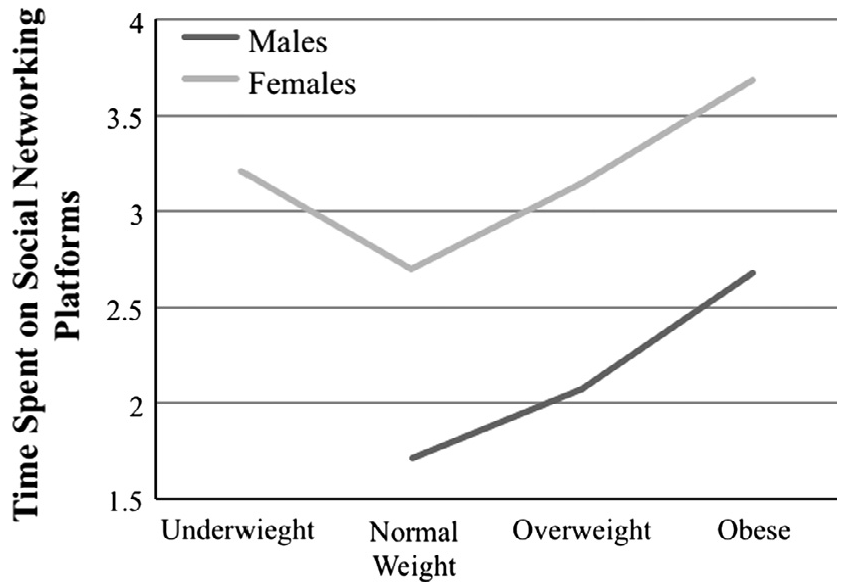 Figure 1: Comparison of social networking time across BMI categories, showing higher engagement among obese participants.
Key Results: The Obesity-Tech Correlation
The data showed that while access to technology was universal across weight groups, the intensity of use differed sharply:
- Email & Social Media: Obese participants spent significantly more time emailing (M=2.06) and social networking (M=3.54) than normal-weight peers.
- The Video Chat Paradox: Despite the physical visibility of video chat, obese participants used it at a much higher rate (M=2.16) than any other group. The authors suggest this may be due to the ability to control the "frame" (e.g., showing only the face).
- Gender Differences: Women consistently spent more time on cell phones and social media than men, regardless of BMI.
 Table 1: Quantitative breakdown showing significant (p < .01) differences in usage for email, social networking, and video chat.
Depth Insight: The "Hoped-for Possible Self"
Why do obese young adults gravitate toward these platforms? The study points to unobtrusive interaction. Digital spaces allow individuals to present their "hoped-for possible self." By removing physical barriers, these technologies provide a safer environment for those who might otherwise face bullying or social isolation in person.
The social risk is lower online. One can edit a photo, choose an avatar, or interact via text to ensure they are judged by their personality rather than their weight.
Conclusion & Future Outlook
This work challenges the industry to stop viewing technology solely as an "obesity-promoting" factor and start seeing it as a preferred communication channel for at-risk populations.
- Limitations: The study is cross-sectional and relies on self-reported data, which can be prone to bias.
- Takeaway for Health Tech: If obese young adults are already high-frequency users of these platforms, digital social networks may be the most effective medium for delivering health interventions and community support.
The future of obesity research must move beyond "screen time limits" and toward understanding the psychological gratifications that drive our digital lives.