
Digital Footprints of Despair: Analyzing Verified Suicide Timelines on Weibo
Exploring Timelines of Confirmed Suicide Incidents Through Social Media
This paper introduces a novel longitudinal dataset of 130 verified suicide victims on Sina Weibo (Chinese microblogging) between 2011-2016. Using NLP techniques like LDA topic modeling and linguistic sentiment analysis, the study reveals observable behavioral shifts—such as increased posting frequency and negative sentiment—in the final weeks leading to death.
TL;DR
Researchers from the University of Colorado Boulder have pioneered a study using a rare, verified dataset of 130 Sina Weibo users who committed suicide. Unlike previous studies that guess risk based on keywords, this work looks backward from a confirmed date of death to see exactly how linguistic patterns and social behaviors change. They discovered that the final weeks of life are marked by a "burst" of online activity and a measurable shift from mundane life topics to deep negative sentiment.
The Data Gap in Mental Health
In China, suicide is a major public health concern, yet it is notoriously under-reported and under-treated. Traditional clinical data is sparse because most victims never seek professional help. However, the "digital breadcrumbs" left on platforms like Sina Weibo—where 82% of users are in the high-risk under-30 demographic—offer a unique, albeit tragic, longitudinal view of a person's state of mind.
The authors moved beyond simple "ideation detection" to study confirmed cases, identifying users via memorial accounts that aggregate death reports from relatives.
Methodology: Mapping the Timeline
The core of the study lies in its temporal aggregation. The researchers analyzed posts across three scales: 10 months, 10 weeks, and 10 days prior to the suicide.
They employed two main technical lenses:
- Linguistic Ideation Scores: Using a 3,453-word Chinese suicide lexicon to calculate the probability of "at-risk" language.
- Topic Modeling (LDA): Categorizing 104,229 messages into 30 latent topics, then grouping them into six meta-categories like "Daily Life," "Sentiment (-)," and "Entertainment."
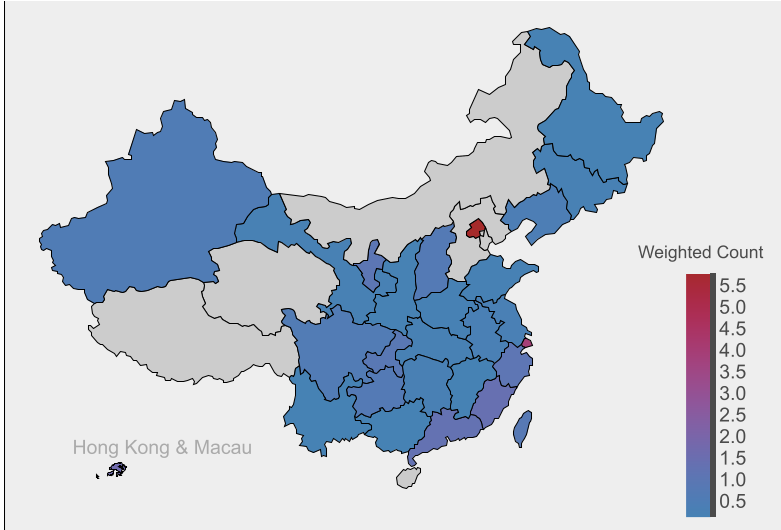 The dataset highlights a younger demographic, with a median age of 23.5 years, mirroring Weibo's user base.
Key Insights: What Changes Before the End?
The results confirm that suicide is rarely a "silent" event in the digital world.
1. The Activity Spike
One might expect a person to withdraw as they descend into crisis. However, the data shows that posting frequency actually increases in the final week. This suggests a desperate attempt to communicate, broadcast a final message, or document a rapidly deteriorating state of mind.
2. The Shift in Topic Composition
As the date of death approaches, the "noise" of everyday life (work, food, celebrities) fades.
- Decreased Topics: Daily Life, Entertainment.
- Increased Topics: Negative Sentiment, Suicidal Ideation.
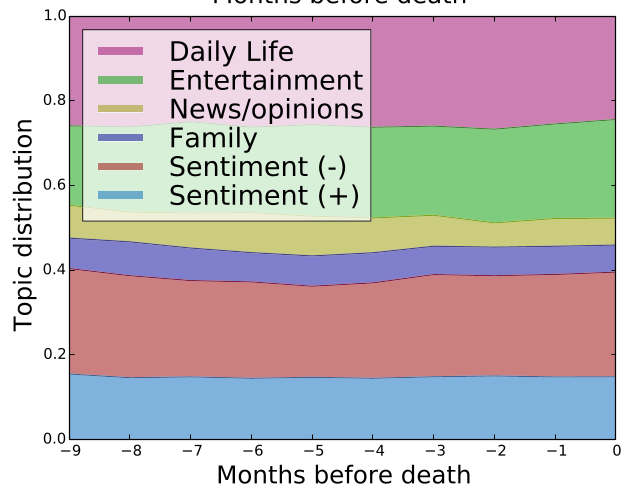 Figure 2: Note the visible rise in the suicidal ideation score (middle row) and the shift in topic density (bottom row) as we move toward 'Day 0'.
3. Context Matters: Heartbreak vs. Other Causes
The study found that reason-specific sub-groups behave differently. Users who committed suicide due to broken relationships (the most common identifiable cause in the dataset) were generally less active overall but exhibited a much sharper, "explosive" increase in activity in their final days compared to those with other motivations.
Critical Analysis & Future Directions
While the sample size (N=130) is small for traditional SOTA machine learning standards, the veracity of the labels (confirmed deaths) provides a gold standard for grounding future predictive models.
Limitations:
- Selection Bias: The data relies on users whose deaths were significant enough to be reported to memorial accounts, likely favoring urban users with larger social networks.
- Demographics: Elderly populations, a high-risk group in China, are virtually non-existent on Weibo and thus absent from this digital analysis.
The Takeaway: This research proves that automated suicide prevention systems must look for changes in velocity. It isn't just about what someone says, but the acceleration of negative sentiment and frequency that marks the transition from ideation to action. Future work could integrate "social interaction" data—how a user's network responds (or fails to respond) to these final digital cries for help.