
Tips, Dones, and ToDos: Unmasking the Social Archetypes of Foursquare
Tips, dones and todos: uncovering user profiles in foursquare
This paper presents a comprehensive characterization of user behavior in Foursquare, specifically focusing on "tips," "dones," and "to-dos." By analyzing a large-scale dataset of 1.6 million venues, the authors uncover four distinct user profiles, including highly influential brand accounts and a significant presence of opportunistic spammers.
TL;DR
While most research on Foursquare focuses on where people go, this study investigates what they say and how others react. By analyzing nearly 1 million tips, the researchers identified four distinct user personas: the Social Influencers (often major brands), the Occasional Tipsters, the Active Contributors, and the Overt Spammers. The study provides the first concrete evidence of spamming in location-based social networks (LBSNs).
The Missing Dimension: Beyond the Check-in
In the early 2010s, LBSNs were defined by the "Check-in"—a simple broadcast of location. However, Foursquare introduced a richer layer of interaction:
- Tips: Short reviews or recommendations left at a venue.
- To-Dos: A user's way of bookmarking a tip for the future.
- Dones: A "Like" equivalent, signifying that a user followed a tip and verified it.
The authors argue that these features turn Foursquare into a massive, crowdsourced recommendation engine. However, this power also attracts "bad actors" who exploit location visibility for irrelevant advertising.
Methodology: Mapping User Behavior
The researchers crawled 1.6 million venues to extract 984,251 tips. They used the Expectation-Maximization (EM) algorithm to cluster users based on three key metrics:
- Reach: Number of distinct venues tipped.
- Impact: Total number of Dones and To-Dos received.
- Suspicion: Frequency of external links (URLs/emails) in tips.
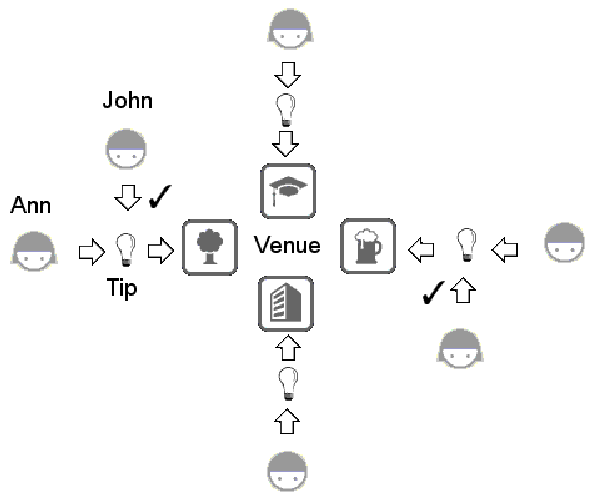 Figure 1: The lifecycle of a tip from posting to feedback.
The Four Facets of Foursquare Users
The clustering analysis revealed a highly stratified ecosystem:
- Cluster 0 (The Spammers): These users have an abnormally high percentage of links in their tips (avg. 83%). Manual inspection showed they post about "iPhone deals" or "fitness centers" at universities and restaurants alike.
- Cluster 1 & 2 (The Regulars): The majority of users (over 85%). They provide local reviews for "Food" and "Nightlife" but have limited global reach.
- Cluster 3 (The Influencers): A small group of high-impact users, including brands like The History Channel or Starbucks. They receive massive feedback (averaging over 1,300 dones/to-dos per user).
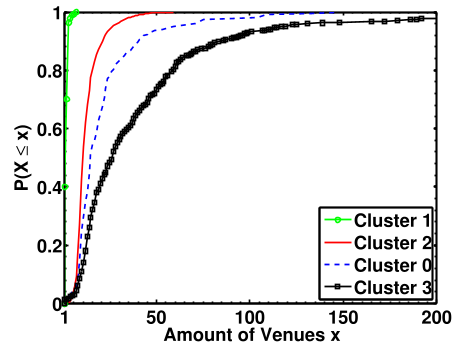 Figure 2: Distribution of feedback (right) and venue reach (left) by cluster.
The Anatomy of Location Spam
One of the paper’s most striking findings is the diversity of spam. The authors identify "unrelated tips"—where a user might post a real estate advertisement as a tip for a Japanese restaurant.
Interestingly, some spammers are quite successful. Even when content is irrelevant to the venue, if the "deal" is enticing enough, users still mark it as Done. This creates a challenge for automated filtering: if users "like" the spam, is it still spam?
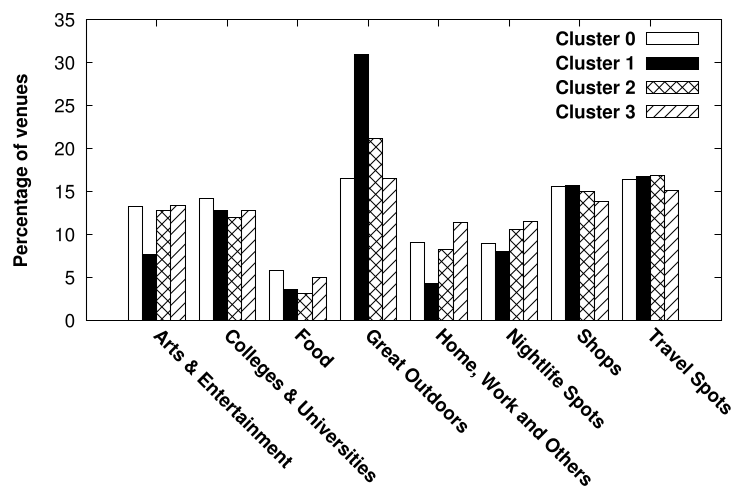 Figure 3: Semantic comparison between legitimate users (left) and spammers (right), highlighting keywords like "iphone", "business", and "franchise".
Critical Insight: Real-World Implications
The study highlights that Foursquare interactions "reverberate in the real world." A negative tip doesn't just stay online; it affects a restaurant's physical foot traffic and revenue. Conversely, the "Brand User" accounts demonstrate a new era of Geographic Marketing, where businesses don't just wait for customers—they proactively seed tips to guide them.
Conclusion & Future Outlook
This work serves as a foundational study in LBSN sociology. While it successfully identifies the "Who" and "How" of Foursquare interactions, it leaves an open challenge for the research community: developing robust, nuance-aware spam detection that can distinguish between "aggressive marketing" and "malicious noise." As LBSNs evolve into the backbone of local discovery, maintaining the integrity of the "Tip" is more crucial than ever.