
SVNNAT: Unveiling the Social Fabric of Software Engineering through Version Control
A Tool for the Analysis of Social Networks in Collaborative Software Development
The paper introduces SVNNAT (SVN Network Analysis Tool), a socio-technical framework for analyzing collaboration networks in software development. By processing Subversion (SVN) version control data through a multi-layered refinement process, it maps developer interactions onto social network topologies to evaluate productivity and code quality.
TL;DR
Software development is as much a social endeavor as it is a technical one. SVNNAT (SVN Network Analysis Tool) is an analytical framework that mines Subversion (SVN) repositories to reconstruct the collaboration networks of developers. By moving beyond simple text diffs and employing syntactical context analysis via srcML, the tool provides a high-fidelity map of how developers interact within the codebase, weighted by productivity and code quality metrics.
Positioning: This work bridges the gap between Source Code Analysis and Social Network Analysis (SNA), moving from "who touched which file" to "how do developers logically collaborate on functional blocks."
Problem & Motivation: The "Blind Spot" in Development Analytics
Most project managers rely on "gut feeling" or high-level tickets to judge team health. Existing research typically falls into two camps:
- Class Collaboration Graphs: Focus only on how code modules depend on each other, ignoring the humans.
- Communication Analysis: Focus on emails or Slack logs, which may not reflect the actual work happening in the compiler.
The authors argue that the Version Control System (VCS) is the ultimate "source of truth." However, early attempts at VCS mining were "syntax-blind"—they treated a change in a comment the same as a change in a mission-critical logic loop. SVNNAT aims to solve this by injecting programming language awareness into the social graph.
Methodology: The Three Levels of Insight
The core innovation of SVNNAT is its three-layered data refinement process.
1. Context Analysis (The Syntactical Layer)
Instead of comparing plain text lines, SVNNAT uses srcML to wrap source code in XML tags. This allows the tool to see the difference between a while loop and a variable declaration.
- The Intersection Logic: If two developers modify the same logical block (e.g., a specific method), their collaboration correlation increases.
- Formula Insight: The tool uses a modified cosine function to calculate
methodCorrelation, ensuring that shared activity in small, concentrated blocks yields a higher signal than random changes across a large file.
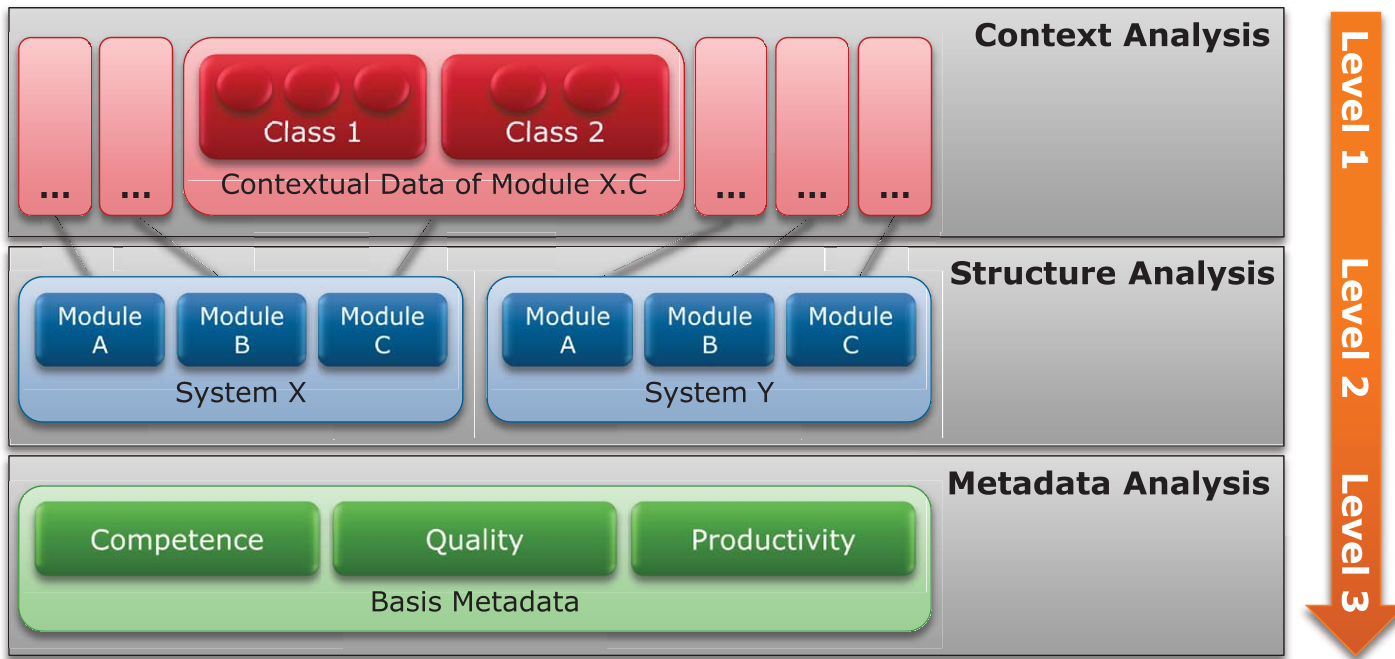 Fig 1: The SVNNAT layered structure: Context, Structure, and Metadata Analysis.
2. Structure Analysis (The Hierarchical Layer)
Collaboration is tracked up the tree—from methods to classes, then to packages. This captures "horizontal" collaboration (working on the same feature) and "vertical" collaboration (managing dependencies).
3. Metadata Analysis (The Human Layer)
The graph is not just nodes and edges; it’s weighted by:
- Quality: Using McCabe’s Cyclomatic Complexity and comment percentages.
- Productivity: A "Contribution Factor" (CF) that weights actions (e.g., fixing a bug is more valuable than committing a binary file).
Experiments & Results: Mapping the 'Ant' Project
The authors validated SVNNAT using the Apache Ant project. By slicing the repository into time frames, they visualized the network's evolution.
- Visual Evidence: In the generated graphs, developers are nodes, and edges represent collaboration intensity.
- Quality Clouds: A unique visualization feature surrounds high-performing developer clusters with darker "clouds," indicating better code quality (measured via complexity and documentation).
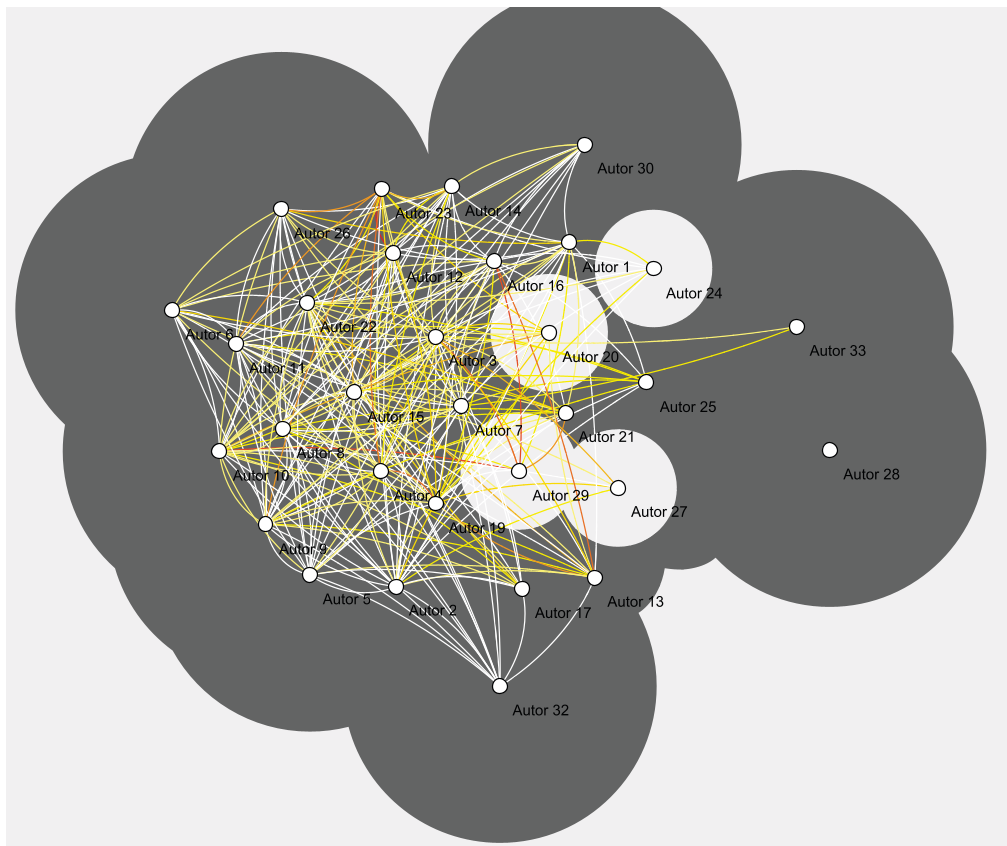 Fig 2: Collaboration network for the Ant project, showing the integration of quality attributes.
Key Findings:
- Topology: Software networks often exhibit Small-World properties (strong local clusters with few "weak ties" connecting them) and Scale-Free distributions (a few "super-developers" acting as hubs).
- Efficiency: Centrality measures (Betweenness, Closeness) help identify "key players" whose absence might cause the project to stall—invisible information that standard project management tools often miss.
Critical Analysis & Conclusion
Takeaway
SVNNAT transforms passive repository data into an active diagnostic tool. It proves that syntactic awareness is essential for any VCS-based social analysis; without it, you are just measuring noise.
Limitations
- Language Support: While srcML helps, the tool's effectiveness varies between languages (the paper focuses on OO languages like Java/C++).
- Project Centered: It currently struggles to track developers who work across multiple unrelated projects (inter-project correlation).
- Bias: While it minimizes "observation bias" (ex-post analysis), it assumes code complexity and LOC are the primary proxies for quality, which isn't always true for architectural work.
Future Outlook
As we move toward AI-assisted coding (Copilots), tools like SVNNAT could be evolved to distinguish between human-to-human collaboration and human-to-AI collaboration, providing a new dimension to software productivity metrics.