
Designing for Truth: Bridging the Information Audit Gap in Social Networks
Providing Tools to Enable Information Audit in Social Networks
This paper introduces a framework for enabling "Information Auditability" in social media through Non-Functional Requirements (NFRs) and Human-Computer Interaction (HCI) principles. It proposes a set of tool prototypes designed to help users verify the accuracy and credibility of shared content in real-time.
TL;DR
Information on social networks moves faster than our ability to verify it. This paper proposes a systematic approach to "Auditability," transforming abstract transparency requirements into concrete UI tools. By integrating NFRs (Non-Functional Requirements) with HCI principles, the authors present prototypes that alert users to misinformation and provide the metadata necessary to judge credibility at a glance.
Contextualizing Auditability
In the current social media landscape, the lack of traditional editorial gatekeepers means that rumors and official reports share the same visual weight. The authors position this work as a bridge between Software Transparency and User Empowerment. This isn't just a technical fix; it's a design intervention targeting the "subjective and biased" nature of user-generated content.
The Problem: The Credibility Dilemma
Why do we fall for fake news? The authors argue that most users are simply not equipped with the tools to perform "Information Auditability"—the ability to examine content carefully for accuracy.
- Prior Work Failings: Current systems focus on engagement metrics (likes/shares) rather than verification metrics.
- The Insight: By defining auditability through five pillars—Explanation, Traceability, Verifiability, Validity, and Controllability—we can create an interface that nudges users toward critical thinking.
Methodology: From NFRs to UI Elements
The core of this research is a mapping between high-level architectural requirements and specific functional features. The researchers identified 15 characteristics essential for an auditable system.
The Auditability Checklist
The authors utilized a checklist derived from HCI best practices to ensure that the audit tools were usable.
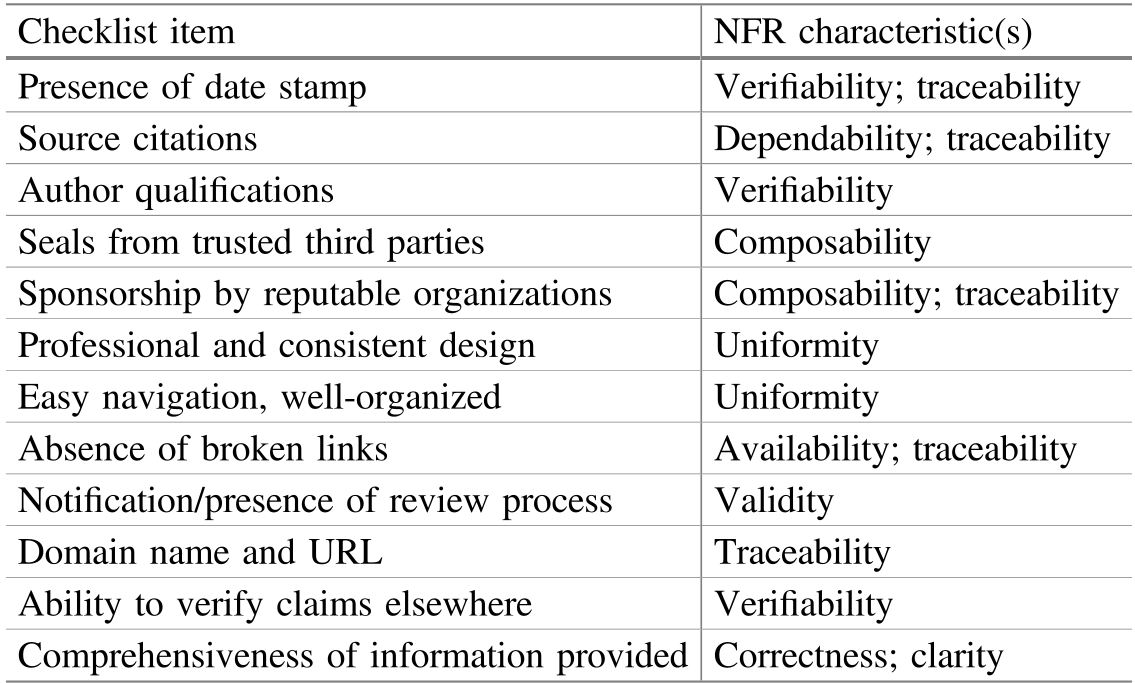 Figure 1: This mapping shows how a simple 'Date Stamp' serves the complex NFRs of Verifiability and Traceability.
Visualizing the Solution: Tool Prototypes
The paper introduces a prototype interface that utilizes "Tooltips" to provide context without cluttering the user experience.
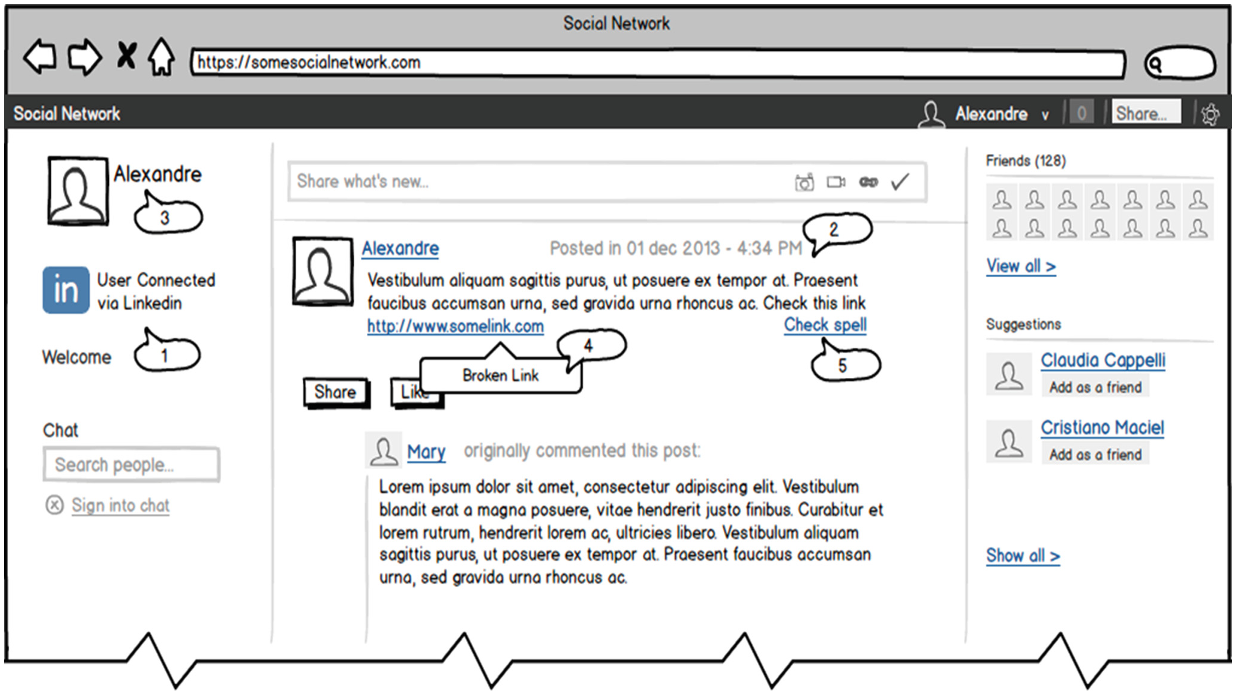 Figure 2: The proposed interface highlighting five key intervention points.
Key Prototype Features:
- Multi-Platform Identity (Composability): Linking a social post to a professional LinkedIn profile to verify user reputation.
- Temporal Context (Traceability): Prominent timestamps to prevent out-of-date information from resurfacing as "new."
- Source Reliability (Dependability): Detecting broken links or "empty" profiles to flag potential bots or low-effort misinformation.
- Content Clarity (Correctness): Using automated grammar and spell-checking as a proxy for source professionalism.
Critical Analysis & Conclusion
The merit of this work lies in its Human-Centric Approach. It doesn't suggest a "Black Box" AI that labels things as "True" or "False"; instead, it provides the evidence (the metadata) for the human user to make an informed decision.
Limitations: The current approach relies heavily on the user's willingness to engage with the tooltips. In the high-speed "doom-scrolling" environment of modern social media, even the best UI might be ignored. Furthermore, the paper focuses on the design of the tools, but the backend mechanism for verifying "Author Qualifications" or "Source Citations" remains a significant technical hurdle in decentralized environments.
Future Outlook: The authors plan to evaluate these prototypes using Nielsen’s Heuristics and traditional print-media criteria (Authority, Accuracy, Currency). As we move toward an era of AI-generated content, these "Auditability" tools will likely evolve from optional features into mandatory infrastructure for any platform claiming to provide credible information.