
Beyond Keywords: Efficient Twitter Topic Detection via Joint Complexity and Compressive Sensing
Topic detection and compressed classification in Twitter
The paper introduces a low-complexity framework for Twitter topic detection and classification by combining Joint Complexity (JC) for feature extraction, Compressive Sensing (CS) for dimension reduction, and Kalman Filtering for state refinement. The method achieves state-of-the-art accuracy on large-scale tweet datasets while being language-agnostic and context-free.
TL;DR
Researchers from Bell Labs have pioneered a method to classify tweets without using dictionaries, grammars, or expensive semantic models. By treating text as a mathematical string and similarity as a sparse signal, they use Joint Complexity and Compressive Sensing to achieve a 27% accuracy improvement over state-of-the-art baselines while maintaining ultra-low computational overhead.
Context: The Limitations of "Bag-of-Words"
The standard approach to Twitter classification usually involves Document-Pivot (DP) methods using TF-IDF or Bag-of-Words. However, Twitter presents unique challenges:
- Noise: Slang, abbreviations, and distorted word usage break traditional dictionaries.
- Volume: Thousands of tweets per second require sub-linear or linear processing speeds.
- Context: Individual tweets are too short for robust semantic analysis ( complexity).
The authors pivot away from NLP traditions, instead viewing the problem through the lens of Information Theory and Signal Processing.
Methodology: The Three Pillars of Efficiency
1. Joint Complexity (JC)
Instead of checking if two tweets share the word "Politics," the JC method builds Suffix Trees for strings. JC is defined as the cardinality of common distinct factors between two strings.
- Intuition: If two strings share many common subsequences (not just words), they likely belong to the same topic.
- Performance: Suffix tree construction and superposition happen in or even sub-linear average time.
2. Compressive Sensing (CS)
The authors recognize that a tweet's relationship to a set of categories is sparse—a tweet usually belongs to only one or two topics. By applying CS, the system can:
- Reduce the "signal" (the JC scores) into a much smaller measurement vector.
- Transmit less data from mobile devices to central servers.
- Recover the original classification category using -norm minimization.
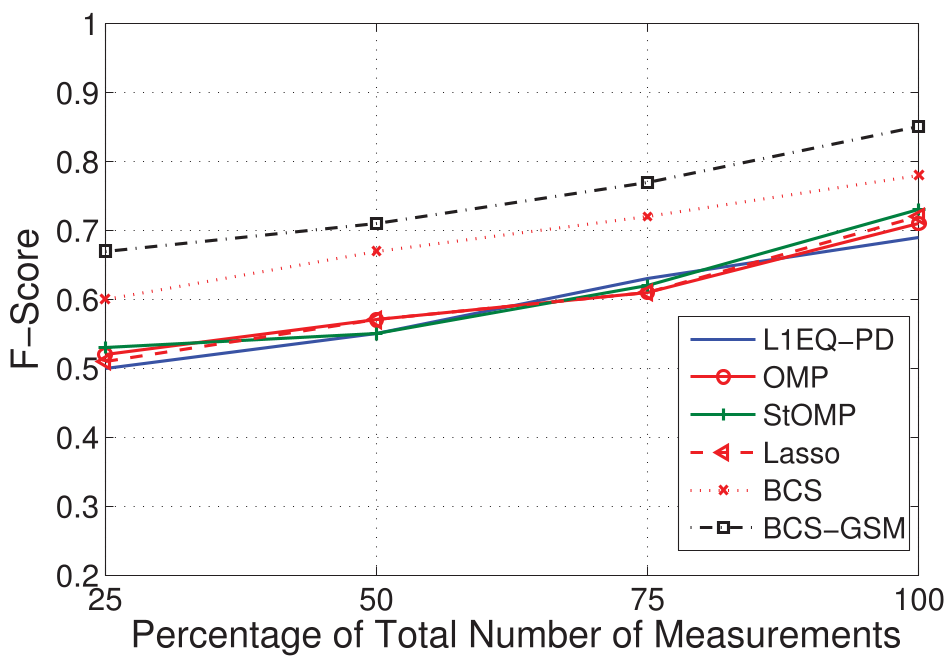 Fig 1: The integration of Joint Complexity and CS for tracking.
3. Kalman Filter Refinement
To account for the fact that a user's interests usually evolve smoothly over time, a Kalman Filter is applied to the CS output. It treats the "current topic" as a state in a dynamical system, filtering out transient misclassifications and improving steady-state accuracy.
Experimental Results
The framework was tested on a ground truth dataset of over 1 million tweets.
- Accuracy Boost: The JC+CS approach reached significantly higher F-Scores compared to Document-Pivot methods. The inclusion of URL information (JCurl+CS) further pushed the lead.
- The "Kalman" Effect: Integrating the Kalman Filter provided an additional 11% improvement in classification performance by leveraging the temporal "path" of a user's tweets.
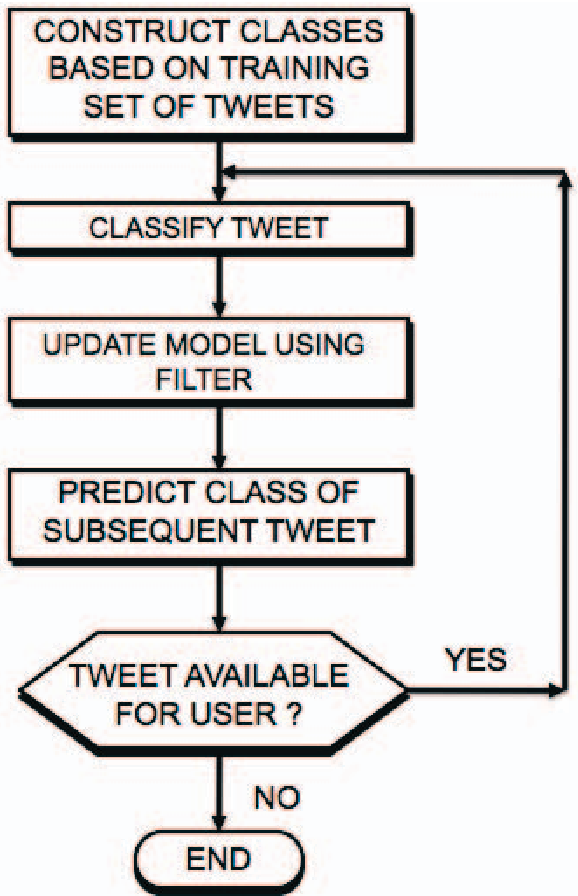 Fig 2: Classification accuracy (F-Score) vs. Number of measurements. JC-based methods significantly outperform DP.
Critical Insight: Why This Works
The genius of this work lies in its Inductive Bias. It assumes that similarity is structural rather than just semantic. By using Suffix Trees, the model captures the "DNA" of the text. Furthermore, by using Compressive Sensing, the authors acknowledge that the information density in social media is low, allowing for extreme data compression without losing the "topic signature."
Limitations & Future Work
While highly efficient, the method relies on "Central Tweets" (CTs) as anchors. If the CTs for a category are poorly chosen or the topic shifts drastically (concept drift), the classification might lag. The authors suggest that exploring Joint Sparsity (multiple representative tweets per class) could be the next frontier for even higher precision.
Conclusion
This paper serves as a powerful reminder that Combinatorics and Signal Processing remain potent tools in an era dominated by Deep Learning. For real-time, language-agnostic, and resource-constrained environments, the JC+CS+Kalman pipeline offers a compelling alternative to traditional LLM-based classifiers.