
Unmasking the Underground: Using LDA to Monitor Web Service Abuse
Topic modeling of freelance job postings to monitor web service abuse
2011-10-21
Summary
Problem
Method
Results
Takeaways
Abstract
This paper presents an unsupervised framework using Latent Dirichlet Allocation (LDA) to detect and monitor web service abuse in freelance marketplaces. By analyzing over 350,000 job postings from Freelancer.com, the authors successfully identified clusters of abusive activities, such as CAPTCHA solving and social network spamming, achieving results comparable to labor-intensive supervised methods.
## TL;DR
Researchers from UC San Diego have demonstrated that **Latent Dirichlet Allocation (LDA)**—an unsupervised machine learning technique—can autonomously identify web service abuse in freelance job postings. By processing over 355,000 listings, the system identified major clusters of "dirty jobs" (like CAPTCHA breaking and SEO spam) with performance rivaling manual human labeling, but with a fraction of the effort.
## The Motivation: Cybercrime's Human Element
Modern web defenses like CAPTCHAs and phone verification (PVA) have forced attackers to move away from pure automation. Instead, they are hiring "boots on the ground" via crowdsourcing sites like Freelancer.com and Amazon Mechanical Turk.
Previous research into this phenomenon relied on **supervised learning**, which is the academic equivalent of "manual labor": researchers had to read and label thousands of jobs to train a classifier. This paper asks a critical question: *Can we find the signal in the noise without telling the machine what to look for?*
## Methodology: The Power of Latent Dirichlet Allocation
The core of this work is **LDA**, a probabilistic generative model. It assumes that every job posting is a mixture of "topics," and every topic is a distribution over words.
### 1. Identifying the "Flavor" of Abuse
The authors used the **Variational EM algorithm** to estimate these topics. To find the most descriptive words, they used a **term-score** metric that highlights words unique to a specific topic rather than words common to the entire site.
### 2. The Model Architecture
The process involves calculating topic proportions ($ heta$) for documents and topic assignments ($z$) for individual words.
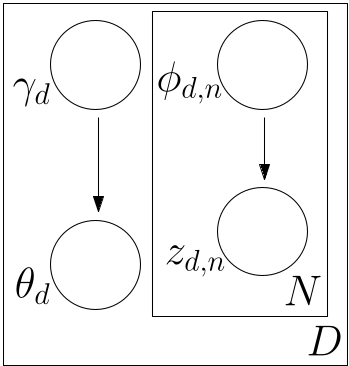
*Figure 1: The Graphical model for the variational approximation in LDA used to infer hidden structures.*
## Experimental Results: SOTA Performance Without the Labels
The LDA model revealed 12 distinct categories of abuse. The results were matched against a previous SVM-based supervised classifier to check for accuracy.
* **CAPTCHA Solving**: 94% accuracy in classification.
* **OSN Linking (Social Media Spam)**: 83.4% correlation with manual labels.
* **SEO Content Generation**: Highly clustered with distinctive keywords like "copyscap" and "plagiarar."
### Keyword Evolution
One of the most profound insights was the ability to track the "death of MySpace" and the "rise of Facebook" through topic modeling. By analyzing keywords within the "OSN Linking" topic, the researchers visualized how attackers shifted targets in real-time.
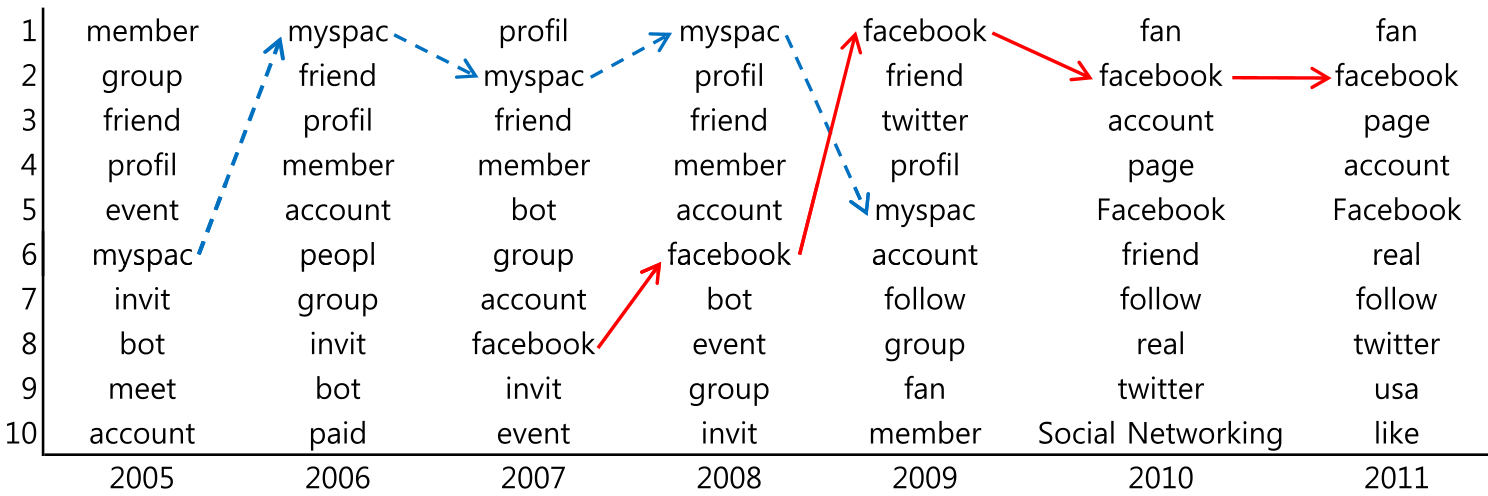
*Table: The shift from MySpace-centric keywords in 2005 to Facebook/Twitter dominance by 2011.*
## Deep Insight: Beyond Just Words
The authors went further by analyzing **User Profiles**. By correlating the topics of buyers and workers, they discovered "mergeable" topics. For instance, while LDA split SEO into two clusters, the worker correlation matrix (showing a 0.7 correlation) revealed that the same workers were bidding on both, suggesting they are effectively the same market segment.
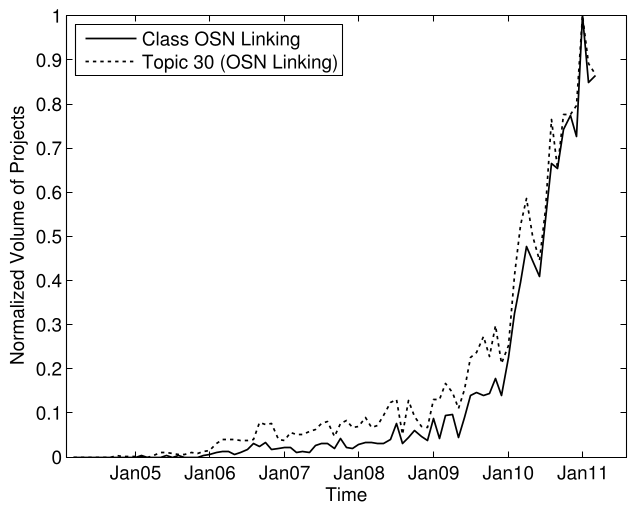
*Figure 2: Correlation matrices showing how different abuse topics relate through the lens of buyers and workers.*
## Critical Analysis & Future Outlook
**Strengths**: This method is highly scalable and removes the "inductive bias" of human researchers who might miss new types of abuse because they aren't looking for them.
**Limitations**: LDA can sometimes be "too granular" (splitting one category) or "too coarse" (merging two). It also struggles with "private jobs" that contain very little text description.
**Conclusion**: This work serves as a blueprint for platform integrity teams. By using unsupervised clustering, companies can monitor the "underground economy" as it evolves, identifying new threats the moment they appear in the job queue.