
Beyond K-Means: Mastering Process Complexity with Context-Aware Trace Clustering
A New Trace Clustering Algorithm Based on Context in Process Mining
The paper introduces ContextTracClus, a novel trace clustering algorithm for process mining that utilizes "trace contexts" (common prefixes) to group event logs. Unlike traditional methods like K-means, it automatically determines the number of clusters and avoids iterative convergence, significantly reducing computational complexity while improving process discovery precision.
TL;DR
Process mining often suffers from "Spaghetti Models"—complex, unreadable diagrams generated from messy event logs. While clustering is the standard solution, traditional methods like K-means are often a "square peg in a round hole." This paper introduces ContextTracClus, a tree-based algorithm that uses "Trace Contexts" (common prefixes) to automatically partition logs into clean, logical sub-processes with higher precision and lower overhead than ever before.
The Problem: The "Spaghetti" Nightmare
Process discovery aims to turn event logs into Petri nets. When logs are small, the result is elegant. However, real-world logs are chaotic. Standard K-means clustering treats these logs as flat vectors, losing the sequential "flow" that defines a business process. Furthermore, someone has to guess the value of (number of clusters), and the iterative nature of these algorithms makes them slow for massive datasets.
 Fig 1. Difference between a structured model (left) and the dreaded 'Spaghetti' model (right).
The Insight: Context is Key
The researchers argue that every business process follows discrete "procedures" (e.g., personal loans vs. corporate loans). These procedures naturally reveal themselves through Common Prefixes. If a group of traces starts with the same sequence of activities, they likely belong to the same logical variant.
The Context-Tree
To find these prefixes efficiently, the authors designed a Context-Tree. This is a compact data structure where:
- Each node represents an activity.
- Each branch represents a sequence.
- Nodes store a
countof how many traces passed through that specific path.
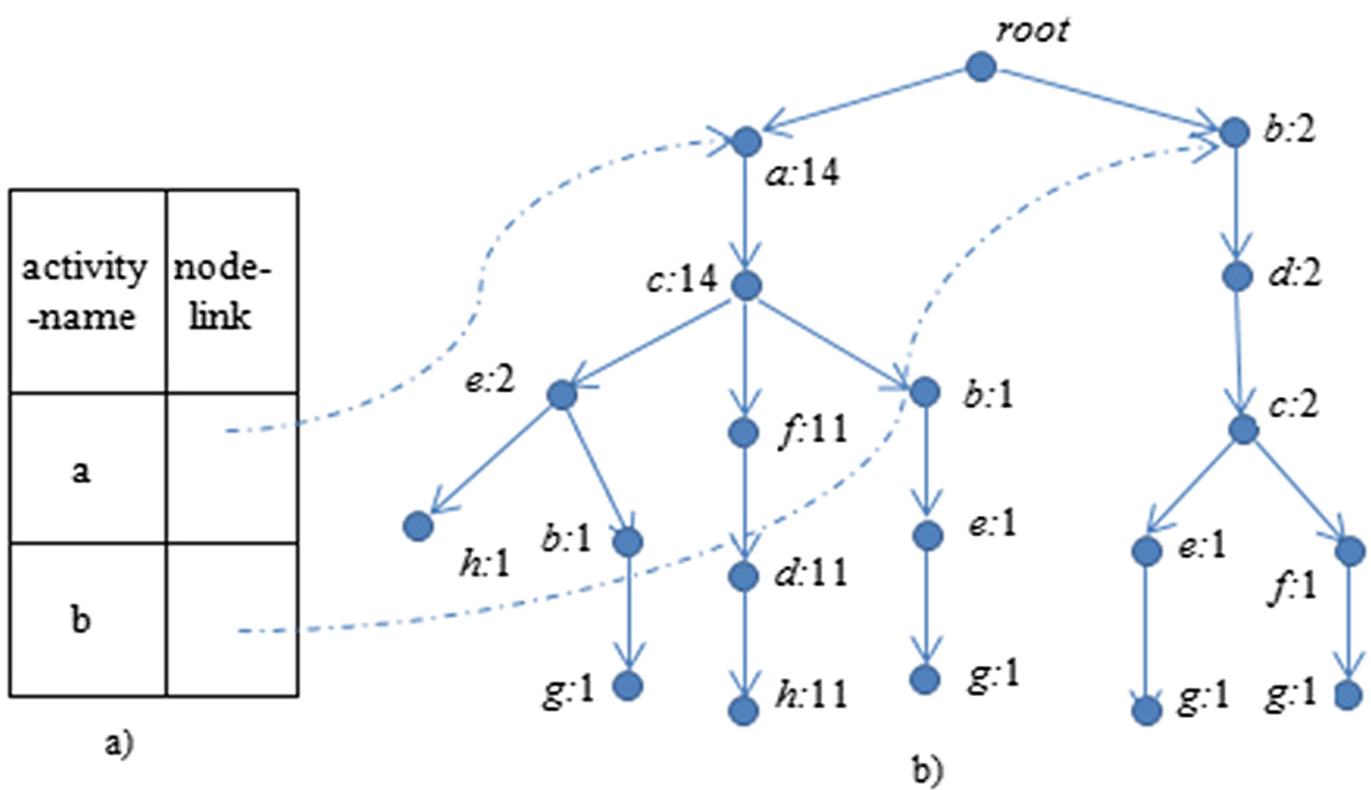 Fig 2. The Context-Tree: Mapping traces into shared branches to identify logical contexts.
Methodology: ContextTracClus
The algorithm operates in two elegant phases:
- Cluster Discovery: It builds the Context-tree in one pass. For any trace, its "Context" is the longest sequence of nodes from the root where the
count > 1. This effectively identifies shared procedural pathways. - Adjustment: Small "micro-clusters" (under a specific threshold) are merged into their nearest contextually similar neighbor.
Key Advantage: Zero iterations. No waiting for centroids to converge. It works directly on the traces without converting them into high-dimensional binary vectors.
Experimental Performance
The authors tested the algorithm against K-means across three different event logs (Lfull, prAm6, prHm6).
Precision is the Winner
While Fitness (the ability to replay logs) remained high across all methods, Precision saw a massive boost. Because ContextTracClus groups traces that share specific structural paths, the resulting Petri nets are much tighter and don't allow for behaviors that never actually occurred in the data.
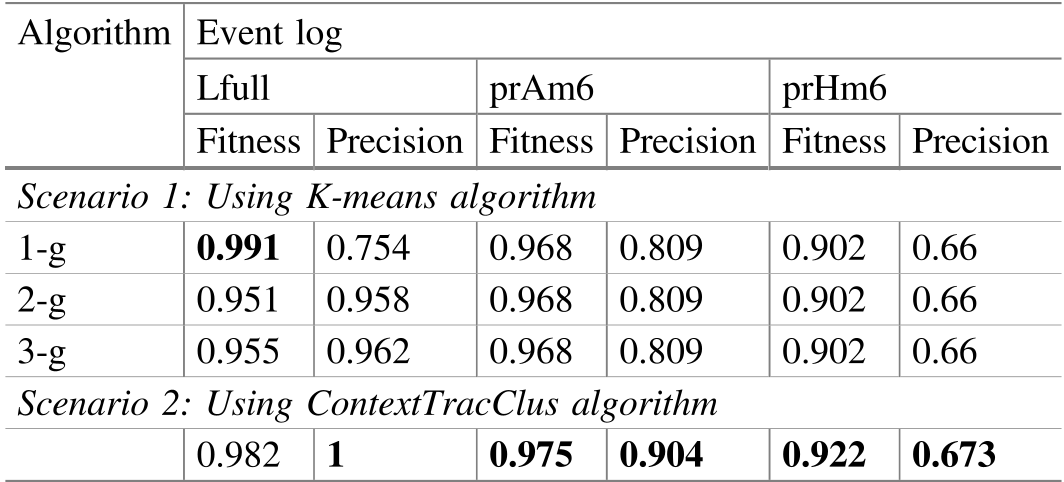 Table 1. ContextTracClus consistently outperforms K-means, especially in Precision.
Critical Insight: Why it Works
Traditional clustering (like K-means with k-grams) is probabilistic. It looks at the frequency of activity pairs. ContextTracClus is structural. It respects the "Start-to-Finish" integrity of a business process. By using a tree structure, it preserves the causality of the first few critical steps of a process, which are often the strongest indicators of which "variant" a case belongs to.
Conclusion & Future Outlook
ContextTracClus proves that specialized data structures (like the Focus-tree) can outperform general-purpose ML algorithms by baking domain logic into the architecture. For organizations dealing with massive event logs, this offers a path toward Automated Process Discovery that doesn't require a data scientist to tune hyperparameters.
Future work could involve expanding this "Context" beyond just prefixes to include Resource-based context (who is doing the work) or Time-based context (holiday seasons), creating a multi-dimensional view of process variants.