
Quality or Quantity? Navigating the Crowdsourcing Tradeoff in Emotion Recognition
Tradeoff between quality and quantity of emotional annotations to characterize expressive behaviors
This paper investigates the optimal balance between the number of annotators (quantity) and the agreement levels (quality) in crowdsourced emotional labeling for the MSP-IMPROV database. By applying the "effective reliability" framework, the authors demonstrate that a smaller pool of high-quality labels can match or exceed the classification performance of a larger, unvetted dataset.
TL;DR
In the world of Affective Computing, labels are gold—but not all gold is pure. This study by the MSP Lab at UT Dallas tackles a crucial question for anyone building emotional datasets: Should you pay for 20 random workers per clip, or 5 careful ones? By using Effective Reliability and a novel Angular Similarity metric, they prove that "more" isn't always "better." A filtered set of 15 raters actually outperformed an unfiltered set of 20 in training emotion classifiers.
Background: The Crowdsourcing Wild West
Historically, emotional databases like IEMOCAP or FAU AIBO relied on a handful of expert raters. While reliable, this approach doesn't scale. Enter Amazon Mechanical Turk (MTurk). While MTurk provides access to thousands of raters, it introduces "noise": bots, speed-runners, and workers who simply lack the emotional intuition required for the task.
The authors identify a gap in how we measure success: we often report Fleiss’ Kappa (agreement) or N (the number of raters), but rarely the interaction between the two.
Methodology: The Science of Reliability
The researchers utilized the MSP-IMPROV database, which contains 8,438 speaking turns. To solve the quality-quantity puzzle, they leaned on two heavy-hitting concepts:
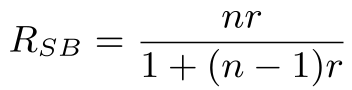
1. The Spearman-Brown Equation
This formula calculates Effective Reliability (), a metric that essentially tells you how many "unreliable" raters you need to equal one "reliable" expert.
2. Angular Similarity
To track worker quality in real-time, the authors calculated the "angle" between a worker's choice and the consensus. If a worker consistently chooses "Anger" when everyone else says "Happiness," their angular similarity drops, triggering a potential filter.
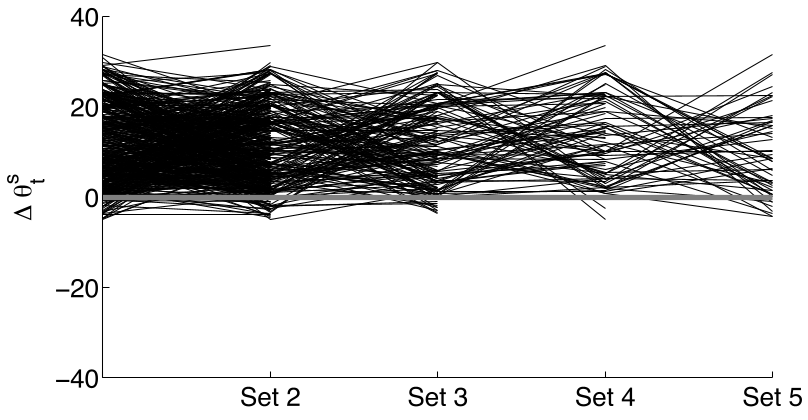 Figure 1: Comparison of worker performance thresholds. Stricter filters (c) remove more low-performing workers to boost overall agreement.
Experiments: Performance vs. Noise
The team created four "Cases":
- Case 1: High quality, low quantity (Strict filter, 5 raters).
- Case 2: Balanced quality and quantity (Moderate filter, 15 raters).
- Case 3: Low quality, low quantity (No filter, 5 raters).
- Case 4: Low quality, high quantity (No filter, 20 raters).
Using an SVM classifier with OpenSMILE features, they tested which case yielded the best emotion recognition model.
Key Findings
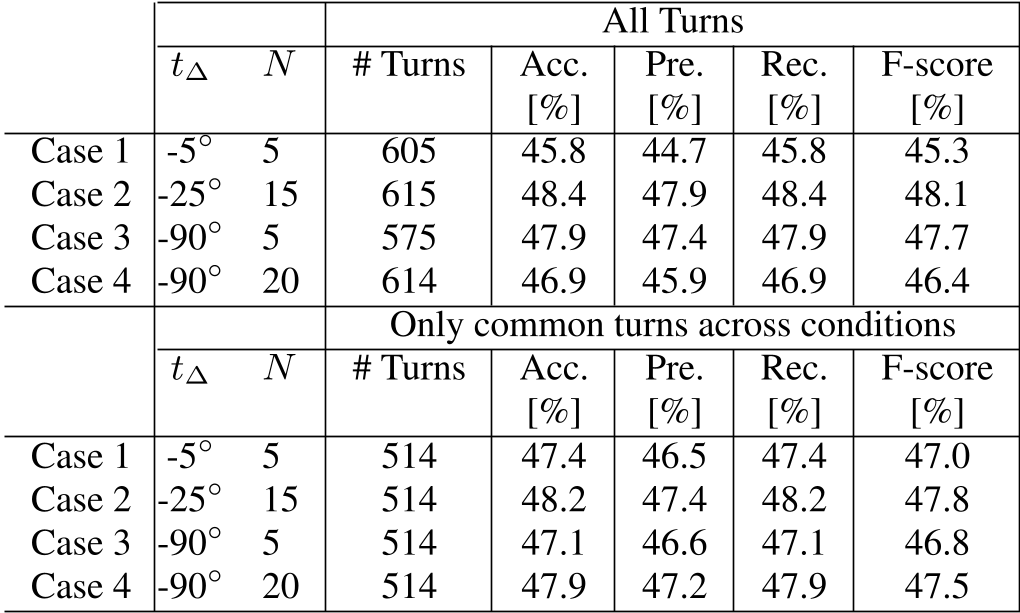 Table 4: Classification performance across different annotation conditions.
The results reveal a fascinating intuition: Case 2 (15 balanced raters) performed the best. Interestingly, Case 4 (20 raters) was actually worse than Case 2, despite having more data points per video. This suggests that the noise introduced by the extra 5 unfiltered raters actively harmed the model's ability to learn emotional boundaries.
Critical Insight: The "Good Enough" Threshold
One of the paper's most practical takeaways is that only 7.8% of sentences changed labels when moving from 5 raters to 15-20 raters. This suggests a diminishing return on investment. For budget-constrained researchers, 5 high-quality, vetted raters provide almost the same categorical signal as a much larger, more expensive crowd.
Conclusion and Future Outlook
This work clarifies that in Affective Computing, Effective Reliability is the metric that matters. Simply throwing more money at the crowd to get 30 raters per sample is a waste of resources if those raters aren't being vetted.
Future Directions: The authors suggest extending this to continuous dimensions like Activation, Dominance, and Valence, where agreement is even harder to reach. For developers building real-world AI, the lesson is clear: invest in your filtering pipeline as much as your data collection.
Takeaway for Practitioners: Don't just count your raters; weight them by their agreement with the consensus. A small, harmonious crowd is better than a large, discordant one.