
TRAFAN: Transforming Social Media Noise into Urban Traffic Intelligence
TRAFAN: Road traffic analysis using social media web pages
TRAFAN is an interactive road traffic analysis system that extracts and processes traffic-related data from Indian cities' Facebook pages. It employs a novel "Word Priority" summarization algorithm and professional visualization tools to provide actionable insights for government organizations.
Executive Summary
TL;DR: TRAFAN (Traffic Analyzer) is a comprehensive framework designed to help government organizations monitor, analyze, and compare traffic issues across major Indian cities by mining Facebook data. By introducing a "Word Priority" algorithm, the system filters out the noise of social media comments to provide high-density summaries of traffic disruptions.
Positioning: This work bridges the gap between social media data mining and smart city governance. It moves beyond simple sentiment analysis toward a functional Information Retrieval (IR) system capable of supporting policy-making and resource deployment.
Motivation: The Social Media Deluge
Traffic police departments in cities like Delhi, Hyderabad, and Bangalore actively use Facebook to broadcast live updates and safety alerts. However, for a government official, these pages are "data graveyards." Finding all posts related to "water logging" or comparing "accident severity" between Mumbai and Delhi requires endless manual scrolling. Existing Information Retrieval tools often fail to capture the context provided by public reactions (comments), which are critical for gauging the severity of an issue.
Methodology: The Word Priority Insight
The core technical innovation of TRAFAN is how it handles Post Summarization. Standard algorithms like TF-IDF often extract keywords that are statistically frequent but contextually irrelevant because they treat the post and comments as a flat document.
1. The Word Priority Algorithm
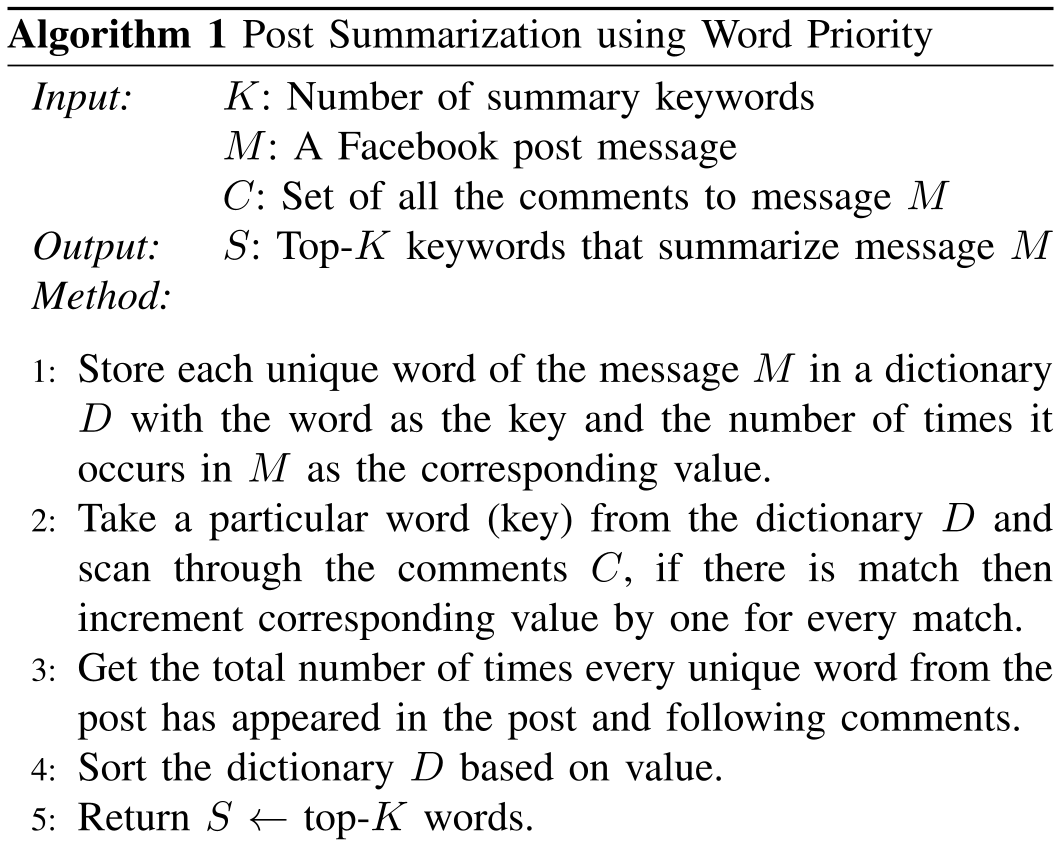
The authors' "Word Priority" algorithm operates on an intuitive insight: If a word appears in the official post and is then repeated frequently by the public in the comments, it is a high-salience keyword.
- Step 1: Extract unique words from the official post message.
- Step 2: Count the occurrences of these specific words within the thousands of subsequent user comments.
- Step 3: Rank and return the top-K words as the "Snippet."
2. Information Retrieval and Visualization
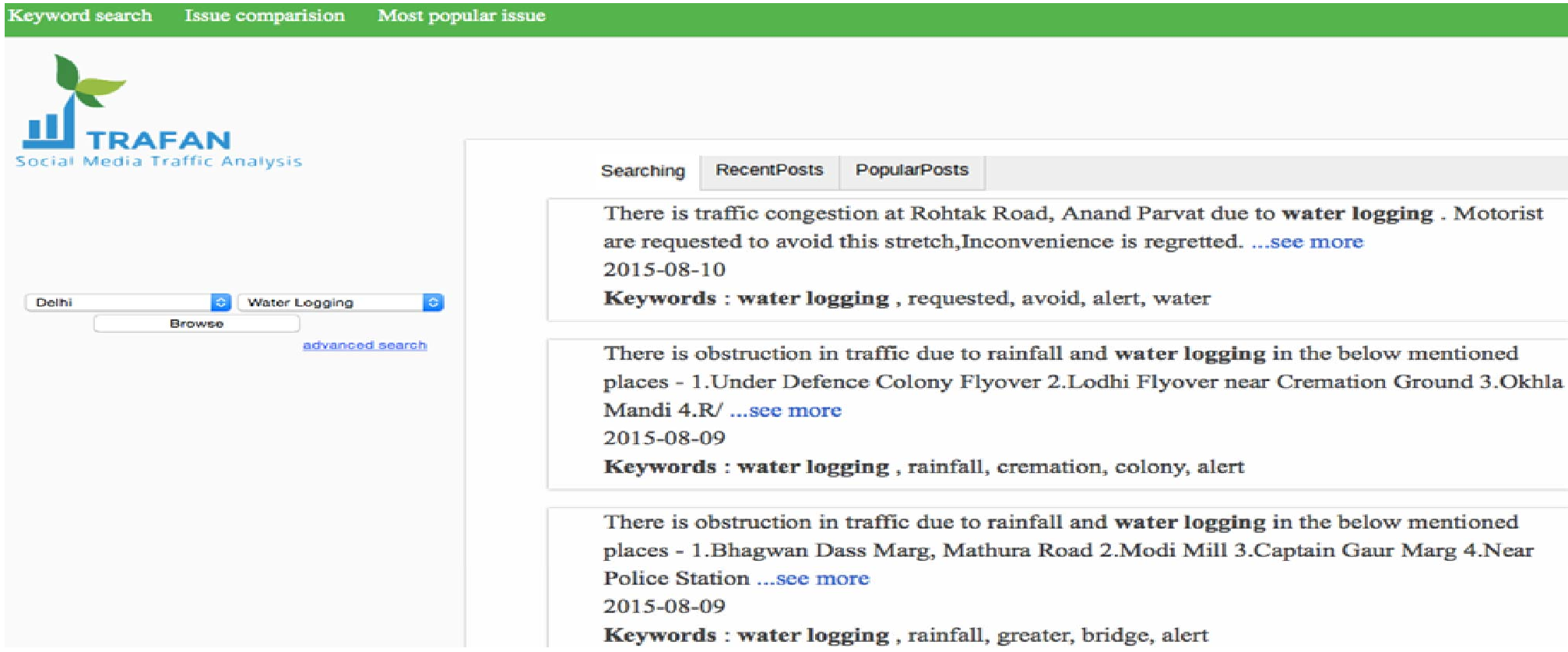
TRAFAN uses a Vector Space Model (VSM) with cosine similarity to rank posts against user queries. Unlike a standard search engine, it provides a dashboard for:
- Keyword Search: Quick access to specific issues using Topical n-grams.
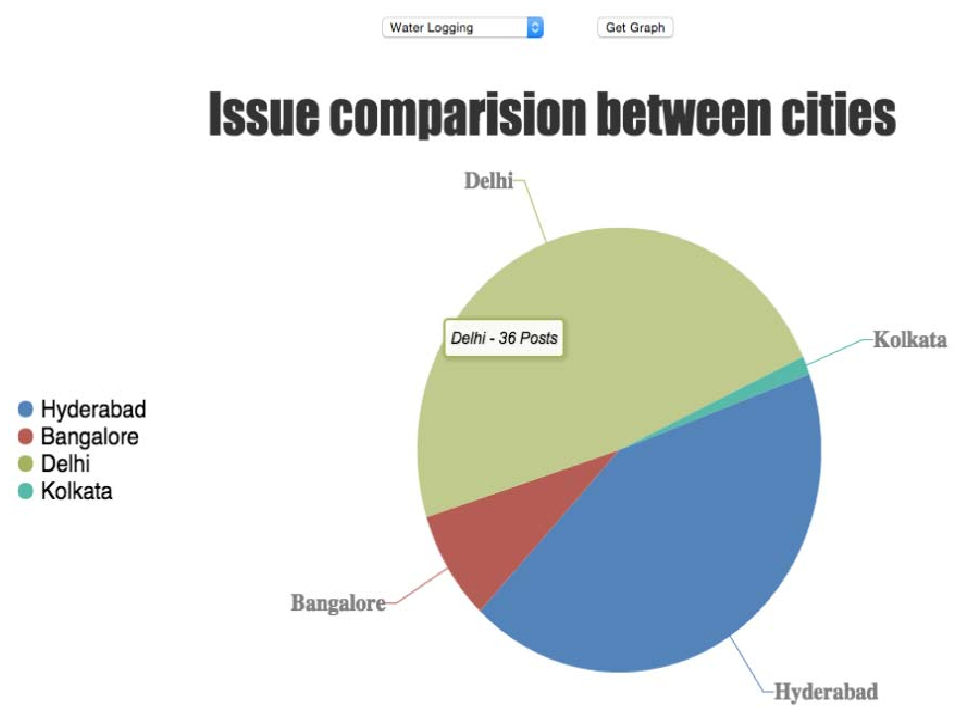
- Issue Comparison: Visualizing the severity of problems across cities via pie charts.
- Popularity Tracking: Identifying "chaotic" peaks in traffic activity based on share and like counts.
Experiments and Results
The system was evaluated using 21,000 posts from four major Indian traffic police pages.
- Retrieval Performance: The system achieved a Mean Average Precision (MAP) of 0.9, indicating that the ranked search results are highly relevant to the users' traffic-related queries.
- Qualitative Advantage: In comparisons with TF-IDF, Word Priority summaries were found to be significantly more descriptive. For example, in a post about a "drunken drive," TF-IDF might pick "suspension" or "job," while Word Priority correctly identifies "3 days," "driver," and "imprisonment" by anchoring the keyword search to the original message.
Critical Analysis & Conclusion
Takeaway
TRAFAN demonstrates that for specialized domains (like traffic or public safety), anchored summarization (using the post as a dictionary for the comments) is superior to open-ended statistical models. It effectively uses the "Wisdom of the Crowd" to validate and highlight the most critical parts of an official announcement.
Limitations & Future Work
While the system is robust, it primarily relies on text. Modern traffic reports on social media increasingly rely on images and videos, which TRAFAN does not currently process. Furthermore, the reliance on the Facebook Graph API suggests that the system's real-time capabilities are subject to the platform's API rate limits and privacy policies.
Future versions of TRAFAN could incorporate Multimodal Learning (processing images of accidents) and Streaming Algorithms to provide a truly real-time "Command and Control" center for urban traffic management.