
TAS+PNR: Leveraging Transfer Learning to Solve the Cold-Start Problem in Signed Social Networks
Transfer AdaBoost SVM for Link Prediction in Newly Signed Social Networks using Explicit and PNR Features
The paper introduces TAS (Transfer AdaBoost with SVM), a transfer learning framework designed for link sign prediction in newly formed social networks. It combines a boosting mechanism with RBF-kernel SVMs and proposes the use of Positive Negative Ratio (PNR) features to achieve SOTA performance in cross-domain link prediction.
TL;DR
Predicting whether a link in a social network is positive (trust) or negative (distrust) is crucial for recommendation systems. However, "new" networks lack the data to train reliable models. This paper proposes TAS (Transfer AdaBoost with SVM) combined with PNR (Positive Negative Ratio) features. It achieves a 40% accuracy boost by "borrowing" knowledge from mature networks while significantly cutting down processing time.
Background: The Trust-Distrust Dilemma
In platforms like Epinions (product reviews) or Slashdot (tech news), links aren't just about "following"—they carry sentiment. Effectively predicting these signs helps filter trolls and highlight trusted experts. The challenge is the Newly Signed Network: when a network is young, we don't have enough labeled data to train a traditional SVM or Logistic Regression model.
The Problem: Why Simple Transfer Fails
You might think: Why not just train a model on a big network (Source) and apply it to the new one (Target)? The issue is Distribution Shift. The way people express "distrust" on Wiki might be fundamentally different from how they do it on Slashdot. Simply combining datasets leads to "noise" that confuses the classifier.
Methodology: The TAS Framework and PNR Features
1. Transfer AdaBoost with SVM (TAS)
The authors extend the TrAdaBoost algorithm. Instead of using simple Decision Trees, they use RBFSVM (SVM with Radial Basis Function kernels) as the component classifier.
- The Intuition: TAS rewards source data that helps predict the target labels correctly and penalizes (decreases the weight of) source data that contradicts the target's distribution.
- Weight Mechanism: Target edge weights are increased to focus on hard-to-classify local samples, while irrelevant source samples are "faded out."
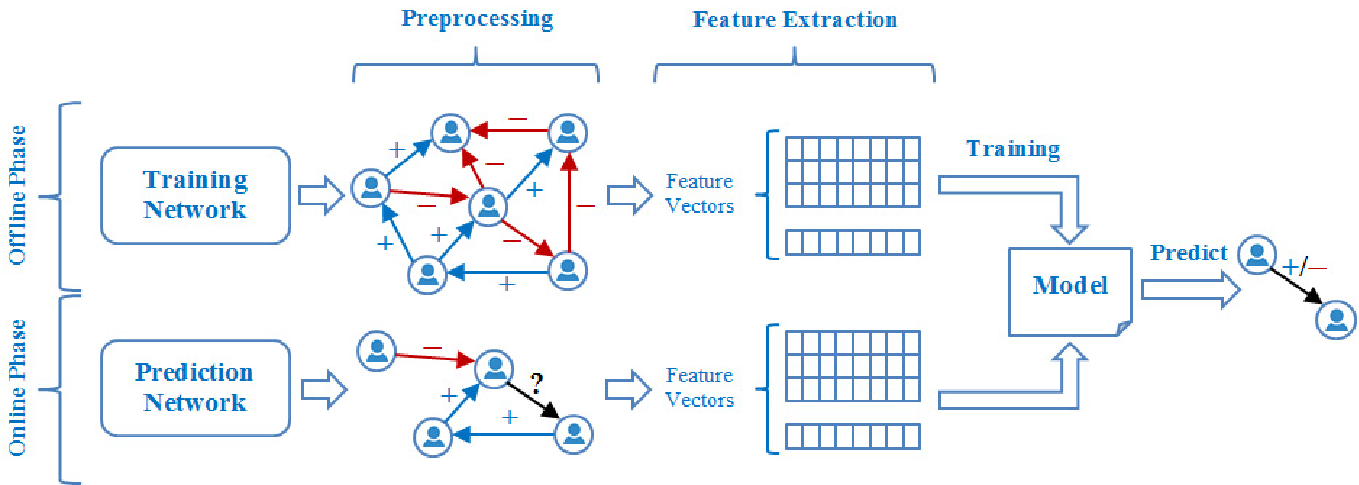 Fig 1. Overview of the TAS Transfer Learning Framework.
2. PNR (Positive Negative Ratio) Features
Most SOTA methods use "Latent Features" which are computationally heavy. The authors propose PNR, rooted in Social Psychology:
- Past Experience: Voters usually have a "habit" of being positive or negative.
- Herd Behavior: A node with many incoming positive links is likely to attract more.
- Anchoring: Initial impressions (likes/dislikes) act as anchors for future interactions.
The PNR feature is simple yet powerful: it tracks the ratio of positive to negative outgoing/incoming links, capped by a threshold to prevent mathematical instability.
Experiments & Results
The researchers tested their method on six cross-domain pairs (e.g., training on Epinions to predict Slashdot).
Performance Gains
The TAS+PNR combination consistently outperformed all baselines. In many cases, it achieved a 40% improvement in accuracy compared to models trained only on the sparse target data.
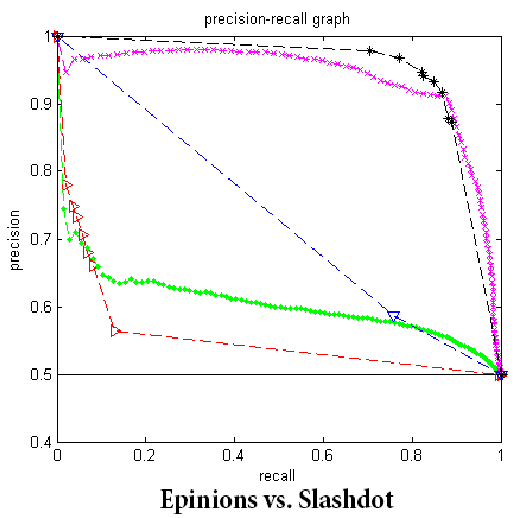 Fig 2. Prediction Accuracy across 6 cross-network pairs.
Efficiency Breakthrough
One of the most striking results is the speed. Because PNR features are explicit and simple to calculate (unlike Latent features that require iterative matrix updates), the training time for the "Combine+PNR" model was only 8.84s compared to 600.16s for the "Combine+Latent" version.
Deep Insight: Why it Works
The success of this work lies in the Inductive Bias. By using PNR features, the authors bake "human behavior logic" into the model. This makes the features Generalizable. While the specific topology of two networks might differ, the psychological principles of "benefit maximization" and "herd behavior" remain constant across the internet, making them the perfect bridge for transfer learning.
Conclusion
The TAS+PNR framework proves that you don't need massive compute or complex latent space transformations to solve the cold-start problem in signed networks. By combining a robust transfer learning algorithm (TAS) with psychologically grounded features (PNR), we can build trust-aware systems even for the newest online communities.
Limitations: The paper primarily focuses on static snapshots; future work could explore how these link signs evolve in real-time as a network matures.