
transFORM: Breathing Life into Ghost Squares via Robotic Origami
transFORM -A Cyber-Physical Environment Increasing Social Interaction and Place Aachment in Underused, Public Spaces
The paper introduces transFORM, a room-scale cyber-physical environment designed to revitalize underused public spaces. Using a robotic, origami-inspired kinetic structure, the system adjusts its shape, color, and sound to facilitate social interaction and strengthen "place attachment" by providing information services typically found in physical libraries.
TL;DR
In an era where we are more connected to our screens than our squares, transFORM proposes a radical solution: making the square itself as dynamic as a screen. This research introduces a cyber-physical, origami-inspired structure at room scale that physically reconfigures to encourage strangers to talk, play, and learn—essentially moving the public library's soul into the open air.
Background: The Death of the "Agora"
Historically, spaces like the Greek Agora or colonial taverns were the "social glue" of society. Today, digital networks have rendered many of these physical spots "underused." The authors argue that we are losing Place Attachment—the emotional bond between humans and their environment. Their mission? To use Human-Computer Interaction (HCI) at an architectural scale to win back our public spaces.
The Problem: The Static Built Environment
Current public spaces are static. A bench is always a bench; a wall is always a wall. However, human needs change based on whether they are alone, with family, or surrounded by strangers. The mismatch between "static stone" and "dynamic social needs" is why people stay glued to their phones instead of interacting with their surroundings.
Methodology: Kinetic Origami and Social Matrices
The heart of transFORM lies in its robotic origami mechanism (Figure 4-6). Unlike traditional construction, this system uses hinged panels that can "pop up" or flatten.
1. The Actor-Activity-Component Matrix
To ensure the methodology wasn't just "tech for tech's sake," the team surveyed 41 participants to map behaviors. They identified that interaction in public follows a specific funnel:
- Observing Others: Watching from a distance.
- Exploring Surroundings: Investigating the kinetic lights/canopies.
- Socializing/Playing: Direct engagement with others.
2. Physical Design
The system utilizes six fundamental components: Screen, Light, Bench, Floor, Canopy, and Table. Through MATLAB simulation, they analyzed the gravitational and reaction forces required to keep these "folding sculptures" stable while they move (Figure 7).
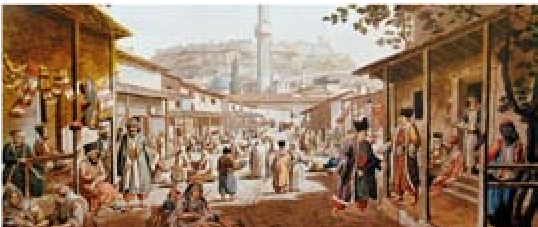 Figure: The kinetic diagrams showing how transFORM reconfigures its geometry to create different spatial affordances.
Experiments and Predicted Results
The authors established a Quasi-Experimental Design (Figure 12) featuring a series of observations (O1-O5).
- Baseline (O1-O2): Measuring low interaction in an empty square.
- The "transFORM" Effect (O3-O4): Testing the hypothesis that a responsive environment triggers proactive social behaviors.
- The Removal (O5): Observing if the social habits persist or vanish once the technology is removed.
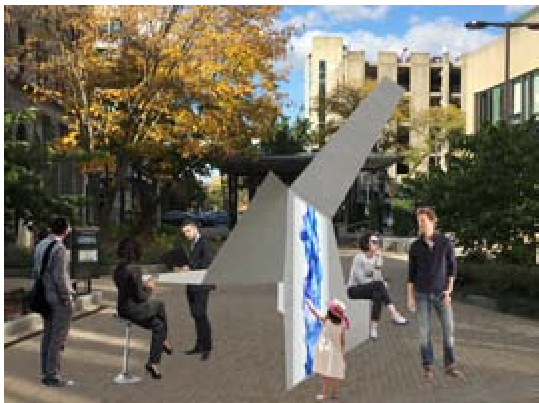 Figure: The mapping of user types (Alone vs. Strangers) to specific spatial activities supported by the installation.
Critical Insights: Why This Matters
The standard approach to "Smart Cities" often involves invisible sensors and data collection. transFORM takes the opposite route: Visible, Kinetic HCI.
The true value is the "Pattern Language" it develops—a set of rules for how machines and people can share a public ecology. By creating "affordances" (opportunities for action) like a canopy that opens for a group or a screen that attracts a curious loner, the architecture stops being a container and starts being a facilitator.
Conclusion & Future Work
While the paper focuses on the prototype and the "why," the long-term implication is a new category of urban furniture. The limitation remains the weather-proofing and durability of such complex kinetic structures in open-air public parks.
However, transFORM succeeds in proving that Cyber-Physical Systems aren't just for factories or private homes—they are the key to rebuilding the "social fabric" of our cities in the 21st century.