
Transit-based Task Assignment: Turning Commuter Waiting Time into Crowdsourcing Gold
Transit-based Task Assignment in Spatial Crowdsourcing
The paper introduces Transit-based Task Assignment (TTA), a novel spatial crowdsourcing framework that leverages workers' existing public transport transit routes. By utilizing waiting periods at transit stops, the authors propose three algorithmic variants (Offline, Batch-based Online, and Flexible) to maximize average worker rewards, achieving up to 3x higher rewards and 3x faster runtime compared to traditional online baselines.
TL;DR
Researchers have developed a new way to assign spatial crowdsourcing tasks (like taking photos or collecting noise data) by targeting passengers on public transport. By using a worker's transit route and waiting times at stops, the system maximizes earnings without disrupting the commute. The most advanced version, Flexible-TTA, allows workers to "miss a bus" for a high-paying task as long as they get home on time, resulting in 3x higher rewards than traditional methods.
The "Static Location" Problem
In traditional Spatial Crowdsourcing (SC), if you are a worker, the platform sees you as a dot on a map. It asks, "Are you near Task A right now?" This is inefficient because it ignores your intent. If you are on a bus, you are moving; your "current location" is fleeting.
The authors identify a massive untapped resource: Transit stops. Every commuter has a schedule—arrival at Stop A, departure at Stop B. The time spent sitting on a bench waiting for the next train is "dead time" that could be used for tasks. However, existing SOTA (State-of-the-Art) methods don't account for these rigid schedules or the transit network's geometry.
Methodology: From Bipartite Matching to "Flexible" Routes
The paper tackles the Transit-based Task Assignment (TTA) problem through three logical steps:
1. The Offline Reduction
The authors prove that if all tasks and worker routes are known in advance, the problem is a Maximum Weighted Bipartite Matching (MWBM) problem. You create a graph where one side is "Transit Stop Intervals" and the other is "Tasks." If a task can be finished during the wait time without making the worker late, an edge is drawn.
2. Batch-based Online Assignment
Since we don't know the future, the system processes workers and tasks in batches (e.g., every hour). They propose two main algorithms:
- MWBM-Batch: Solves the matching for the current batch optimally.
- DA (Direct Assignment): A greedy approach that prioritizes tasks that are closer to the worker, reducing travel weariness.
3. The "Flexible" Insight
The most innovative part of the paper is the Flexible-TTA. It acknowledges that humans are motivated by money (the Threshold Reward). If Task X pays $50 but requires you to wait 20 minutes longer at a stop—thereby missing your planned bus—you might take it, provided the next bus still gets you home by your "hard" deadline (Max Travel Time).
 Figure 1: Comparison of fixed vs. flexible transit routes for task completion.
Experiments: Real-world Simulation in Aalborg
The researchers used real public transport data from Aalborg, Denmark, via the Rejseplanen API. They simulated up to 25,000 workers and 25,000 tasks.
Key Findings:
- Reward Maximization: Flexible-DA delivered rewards 35% higher than fixed-route methods.
- Efficiency: Despite the complexity, these batch-based algorithms are 40x faster than purely online baselines (OLA).
- Credibility Matters: They introduced CTA (Credible TTA), which ensures tasks are only assigned to workers with a history of high-quality responses (Credibility Score).
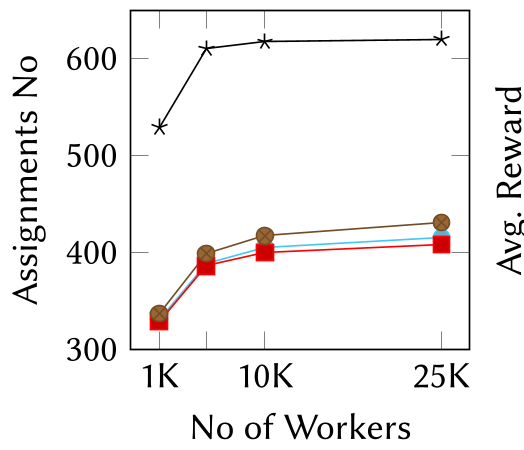 Figure 2: Performance metrics showing Flexible-DA's superiority in reward and task completion.
Critical Analysis & Conclusion
Takeaway
The core contribution is the shift from "Location-based" to "Trajectory-based" assignment. By treating the public transit schedule as a constraint-satisfaction problem, the authors unlock a "passive" workforce of commuters.
Limitations
- Computational Cost: The Flexible-DA relies on external REST API calls (Rejseplanen) to check if a worker can still reach their destination. At 0.7s per call, this is a bottleneck for true real-time million-user scenarios.
- Incentive Bias: The model assumes workers provide honest service rates and thresholds, which might require more complex game-theoretic modeling in practice.
Future Work
The authors suggest moving toward a "Bidding" model, where workers compete for tasks, further refining the price discovery for waiting at transit stops. This could be integrated into existing transport apps to provide a seamless "Work while you wait" experience.