
TrendTV: Revolutionizing TV Discovery through Social Trust and Automation
TrendTV: An architecture for automatic change of TV channels based on social networks with multiple device support
TrendTV is a multi-device social recommendation architecture designed for Digital TV (DTV) that enables real-time channel switching based on viewer feedback. It leverages a social network structure where "Confidence Levels" among friends weight the influence of program ratings, culminating in an automated system that changes channels to the highest-rated content without manual intervention.
TL;DR
TrendTV is a sophisticated software architecture that turns television viewing into a social, automated experience. By linking users across Web, Mobile, and TV platforms, it builds a real-time recommendation engine that doesn't just suggest what to watch—it automatically switches your TV to the highest-rated program according to your trusted social circle.
Context & Motivation
The transition to Digital Television (DTV) brought a paradox of choice: more content than any viewer can realistically navigate. While Electronic Programming Guides (EPGs) have existed since the 80s, they are often static and impersonal.
The authors of TrendTV identified a critical missing link: Social Context. Most recommendation systems treat every user's "Like" the same way. In reality, we trust some friends more than others. TrendTV addresses this by incorporating "Degrees of Confidence" into the recommendation loop, solving the "first-rater" problem through immediate, peer-driven feedback.
Methodology: The TrendTV Ecosystem
The architecture is comprised of three distinct but interconnected layers designed to bridge the gap between social media and hardware control.
1. The Multi-Layered Architecture
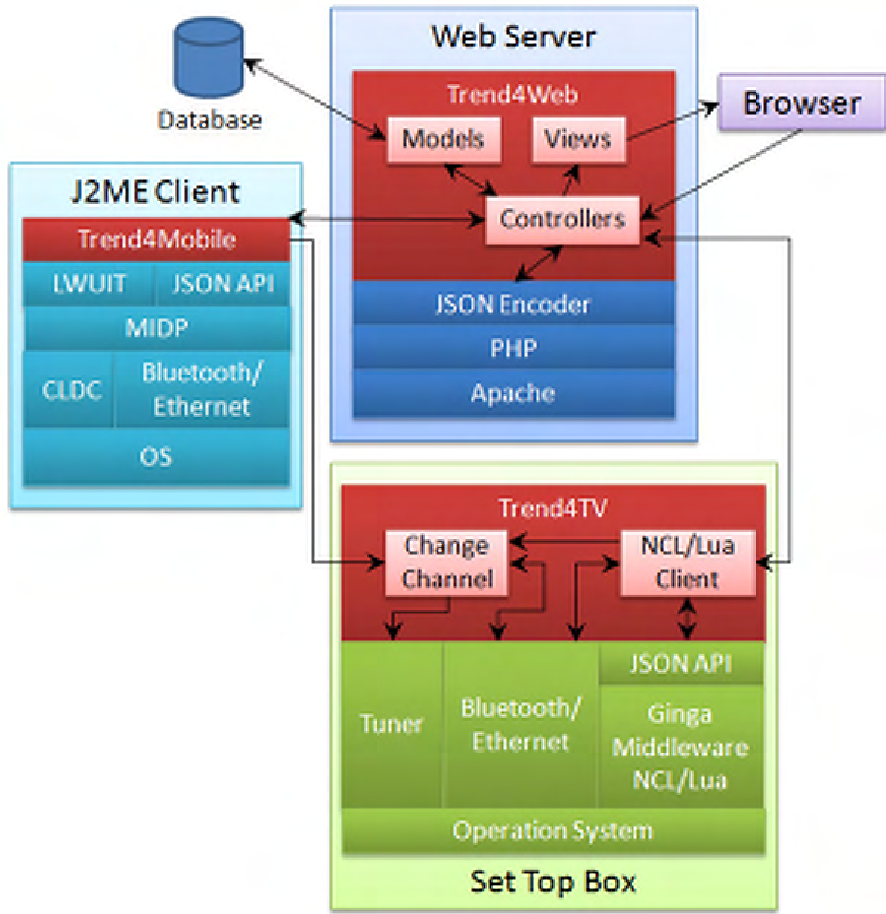
- Trend4Web (The Brain): Built on the MVC pattern, it manages the central repository of user data, chat logs, and program metadata. It serves as the JSON API provider for all other modules.
- Trend4Mobile (The Controller): Acting as a bridge, this mobile application retrieves social scores via the web and communicates with the Set-Top-Box (STB) via Bluetooth or Ethernet.
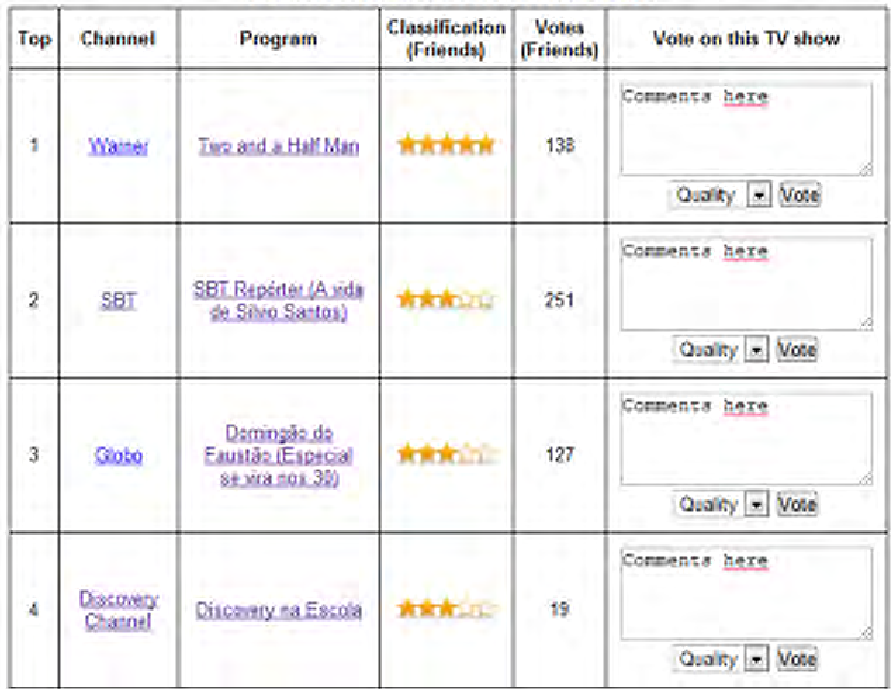
- Trend4TV (The Interface): Developed using NCL/Lua for the Ginga middleware, it displays the "best qualifications" grid directly on the viewer's screen.
2. The Weighted Trust Algorithm
Unlike binary "thumps up" systems, TrendTV uses a sophisticated weighting formula. A user's total score for a program () is calculated by summing notes () multiplied by a confidence factor ().
- Strong Confidence: 1.6x weight
- Medium Confidence: 1.3x weight
- Weak Confidence: 1.1x weight
This mathematical approach ensures that your "best friend's" recommendation significantly outweighs that of a casual acquaintance, mirroring real-world human behavior.
Automatic Channel Hopping
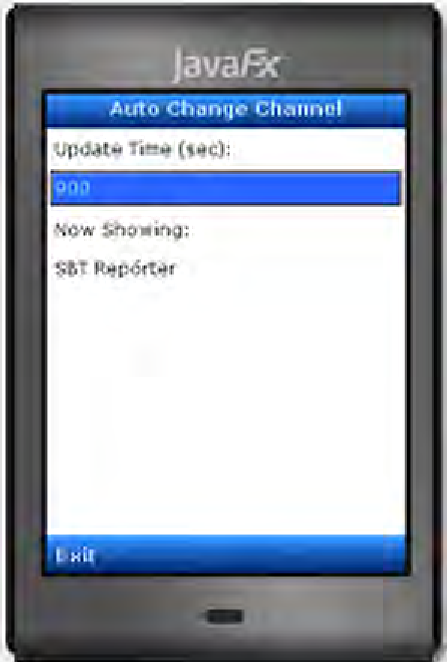
The crown jewel of the system is the Auto Change Channel scenario. Because the Ginga middleware standard often prevents applications from directly managing channel tuners for security reasons, the authors developed a workaround.
The Trend4Mobile app receives real-time rankings and sends a command via Bluetooth to a resident application inside the Set-Top-Box OS. This allows for "hands-free" channel surfing where the TV always seeks the "best" available content as defined by the user's social network.
Experimental Results & Insights
The implementation was validated against the Brazilian Ginga Standard. The results showed:
- Cross-Platform Synergy: The JSON-based communication allowed seamless data flow between a JavaME mobile app and a Lua-based TV environment.
- User Empowerment: The "Confidence Level" setting (ranging from 10% to 60% influence) gave users granular control over their social filtering.
- Interface Flexibility: Using the LWUIT API for mobile ensured a consistent UI across different device types.
Critical Analysis & Conclusion
TrendTV moves the needle from "Social TV" (just chatting about shows) to "Interactive Social TV" (where the social graph controls the hardware).
Limitations: The current version relies on manual "Confidence Level" settings. In a more advanced iteration, these trust levels could be calculated automatically based on interaction frequency. Additionally, the system's reliance on a return channel (Internet) for the STB might limit its use in regions with one-way broadcast infrastructure only.
Future Outlook: The integration of major social networks like X (formerly Twitter) or Facebook is the logical next step. Imagine your TV switching to a sports channel the moment your local community starts cheering—TrendTV provides the architectural blueprint for that future.