
PRDA: Why Your "Top Influencer" Might Be Ueless for Your Brand
Identifying effective influencers based on trust for electronic word-of-mouth marketing: A domain-aware approach
This paper introduces the Product Review Domain-Aware (PRDA) approach, a research framework designed to identify effective influencers in Online Social Networks (OSNs) by integrating user trust, domain specificity, and temporal dynamics. Utilizing a time-varying hypergraph to model evolving multi-type relationships, the method significantly outperforms traditional social network-based and "popular author" approaches on the Epinions dataset.
TL;DR
Not all "Big Vs" are created equal. A tech guru's recommendation on a kitchen appliance is often ignored by their audience. This paper introduces the Product Review Domain-Aware (PRDA) approach, which proves that influence is highly specialized and ephemeral. By using time-varying hypergraphs, the authors identify who is actually moving the needle in specific categories like "Books" or "Electronics" and whether their influence is rising, steady, or dying.
Background: The Illusion of Universal Influence
In the world of electronic word-of-mouth (eWOM), corporations chase influencers to boost sales. However, traditional metrics like follower counts or global network centrality are misleading. The authors argue that influence is rooted in Social Identity Theory: we trust "ingroup" members who share our specific interests. A static snapshot of a trust network tells you who was important, but not who is important for a specific product today.
The Core Innovation: Time-Varying Hypergraphs
Existing models use simple graphs (nodes and edges). This paper elevates the architecture to a Time-varying Hypergraph.
- Hyperedges as Domains: Instead of just connecting two people, a hyperedge groups all users who have reviewed products in a specific domain (e.g., "Kids & Family").
- Temporal Snapshots: The network is treated as a series of moments (), allowing the model to track how users enter (add_node) or leave (delete_node) a community.
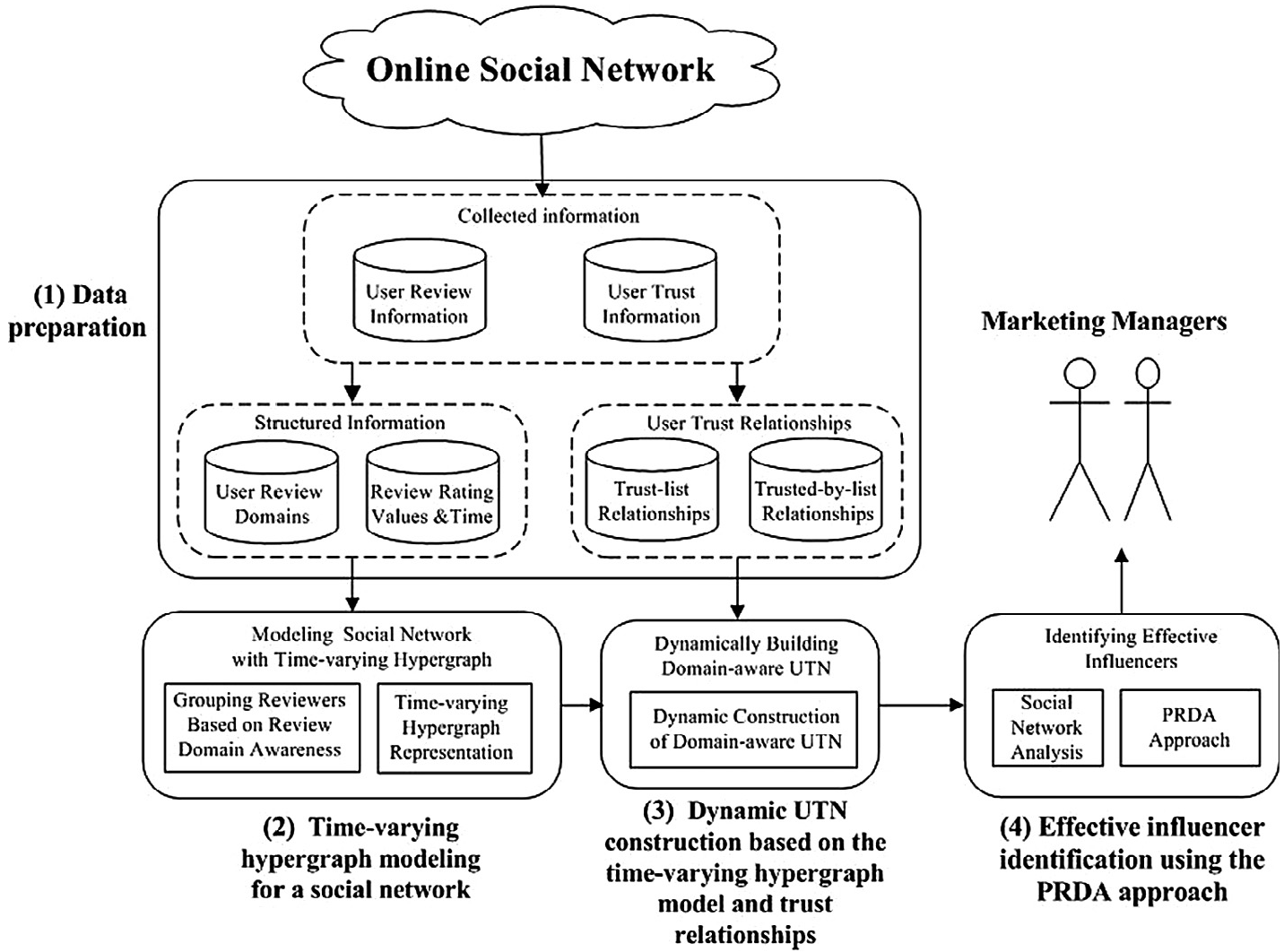 Figure 1: The Four-Stage PRDA Framework—from raw data to categorized influencer sets.
Methodology: Identifying the Lifecycle of Influence
The authors don't just find "influencers"; they categorize them based on their trajectory:
- Emerging Influencers (EI): Rising stars who recently gained trust in a niche.
- Holding Influencers (HI): The reliable authorities who maintain high status across time periods.
- Vanishing Influencers (VI): Former experts whose influence is fading—often because they stopped posting or were "out-competed."
Logic Check: Domain-Aware UTN
The algorithm filters the global trust network to look only at trust relationships within a domain. This ensures that an influencer has earned their "indegree" (trust from others) specifically for relevant expertise.
Proven Results: The "Million Follower Fallacy"
The empirical study using Epinions data is eye-opening. The authors compared PRDA against the "Social Network-based Influence-Evaluating" (SNIE) approach and the "Popular Author" approach.
- The Overlap Gap: They found that about 65% of influencers identified by traditional methods for a specific domain (like "Books") had never actually written a review in that domain.
- The Stability of HI: Higher validation was found for "Holding Influencers," who proved to be the most viable targets for long-term marketing partnerships.
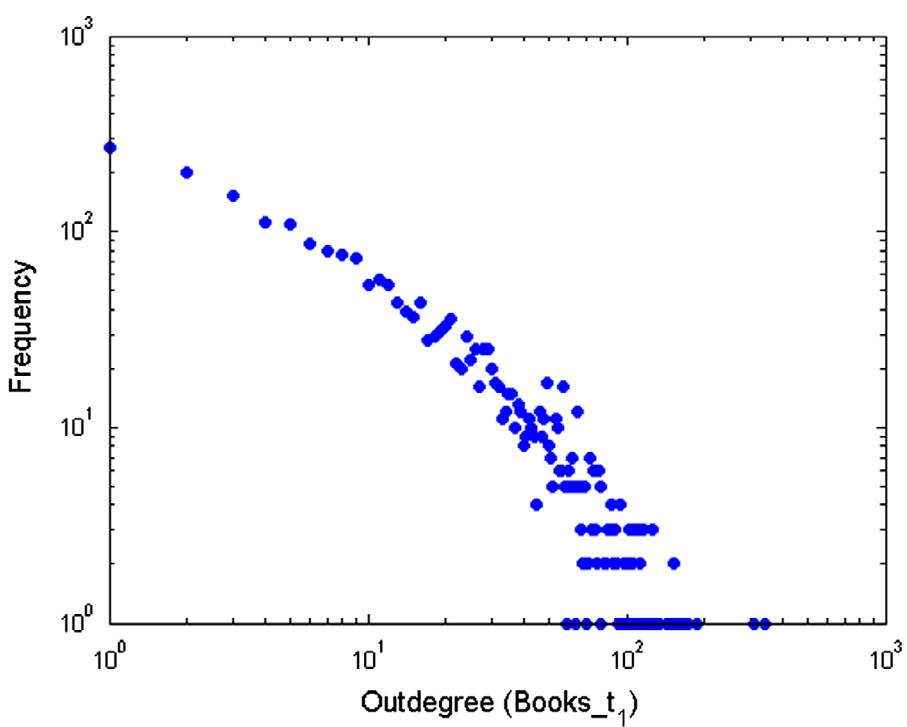 Figure 2: Power-law distributions showing that even within specific domains, a few "hubs" dominate trust relationships.
Critical Insight: Who Should You Hire?
The paper's most practical takeaway for marketers is the ranking of influencer value: HI > EI > VI.
- HI (Holding) are the gold standard for brand stability.
- EI (Emerging) are the best value-for-money, often undervalued by traditional metrics but gaining rapid trust.
- VI (Vanishing) are "toxic" assets—highly ranked by old data, but offering zero current conversion power.
Conclusion & Future Outlook
This work shifts the paradigm from "how many followers" to "where and when is this trust valid?" While the paper successfully addresses domain and time, the authors acknowledge a remaining frontier: Distrust. Future models will likely need to account for "negative influence" to avoid PR disasters. For now, the PRDA approach provides a robust mathematical foundation for identifying true subject-matter experts in a sea of social noise.
Key Takeaway: Don't buy a list of influencers. Build a domain-aware trust map.