
The Rationality of Altruism: How Trust and Time-Discounting Drive Social Fitness
Trust-Based Inter-temporal Decision Making: Emergence of Altruism in a Simulated Society
This paper presents a computational model of trust-based inter-temporal decision making to explain the emergence of altruism. Using the LEADSTO and NetLogo simulation environments, it demonstrates that agents equipped with cognitive systems for time discounting and dynamic trust outperform purely egoistic agents in terms of long-term fitness and social networking.
TL;DR
Why would an agent help another at a personal cost? This paper argues that altruism isn't a "bug" in evolution but a "feature" of advanced cognitive systems. By simulating a society where agents use Dynamic Trust and Inter-temporal Choice, the authors show that "altruistic" investment leads to larger social networks and higher long-term health (fitness) compared to short-sighted egoism.
Problem & Motivation: The Evolutionary Paradox
In classical evolutionary biology, altruism is a paradox: An organism serves its interests by behavior which is against its interests.
The authors solve this by introducing a temporal dimension. Altruism today is an investment for revenue tomorrow. However, for this to work, an agent needs more than just a "cooperate" button; it needs a way to deal with environmental complexity—specifically, the risk that a favor won't be returned. Prior work often ignored how an agent's internal model of the environment (trust) evolves based on real-time experiences.
Methodology: Trust as a Cognitive Filter
The core engine of this study is a two-part cognitive model:
-
Inter-temporal Decision Function: Instead of a simple choice between rewards, agents use a discount formula: This formula essentially says: "I will help you if the value of your future help, adjusted for how much I trust you () and my patience (), is greater than my current cost ()."
-
Trust Adaptation: Trust is not static. It is updated using a scaling factor (): Where is the experience (1 for help received, -1 for refusal).
System Architecture
The researchers utilized a multi-stage simulation pipeline:
- LEADSTO: For rapid prototyping of high-level declarative logic.
- NetLogo: For large-scale multi-agent simulations (up to 200 agents).
- TTL (Temporal Trace Language): To formally verify that properties like "Altruists eventually get fitter" hold true across all simulation traces.
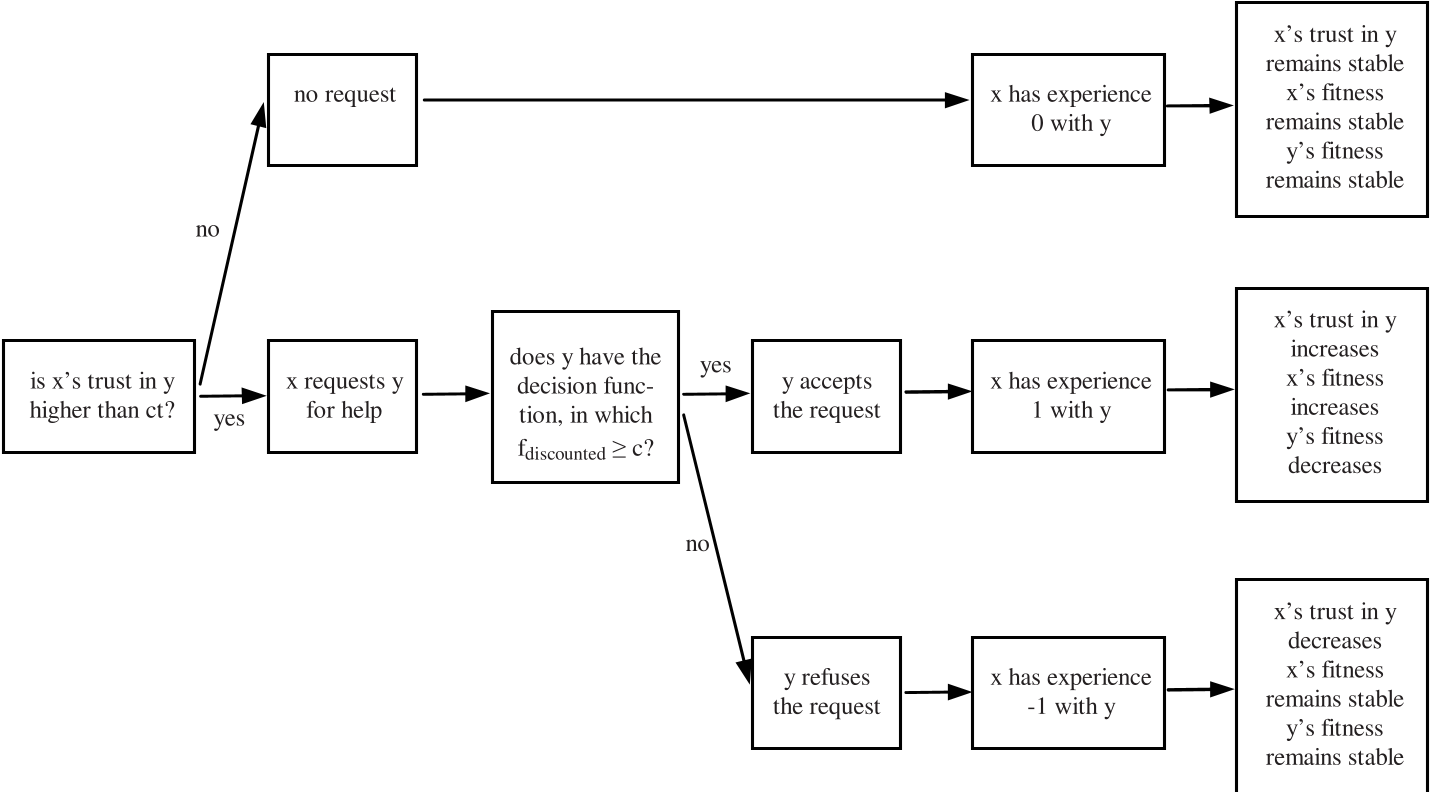 Figure 1: Conceptual model of request and cooperation cycles.
Experiments & Results: The "Turning Point"
The simulations revealed a fascinating social dynamic:
- Initial Exploitation: Early on, egoists (short-termers) thrive by taking favors from altruists (long-termers) and giving nothing back.
- Trust Decay: Altruists quickly realize (via their trust model) that egoists are unreliable. Trust scores for egoists plummet below the cooperation threshold.
- The Great Isolation: Altruists stop helping egoists but continue helping each other.
- Fitness Crossover: As shown in the NetLogo results, the fitness of egoists eventually craters as they become socially isolated, while the altruists' fitness swings upward due to a robust internal network of reciprocity.
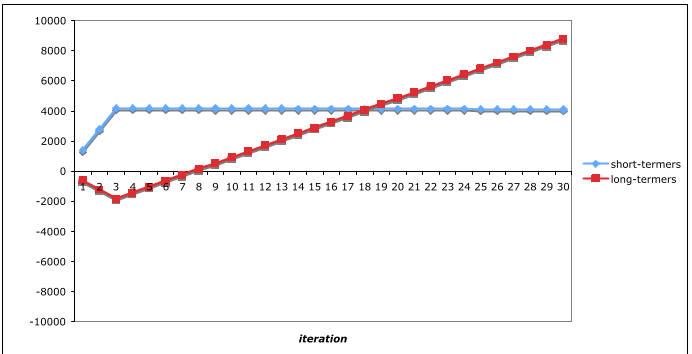 Figure 2: Performance metrics showing the fitness crossover and trust divergence.
The authors also visualized the social network, showing a "core" of high-trusting altruistic agents and a "periphery" of isolated egoists who have exhausted their social capital.
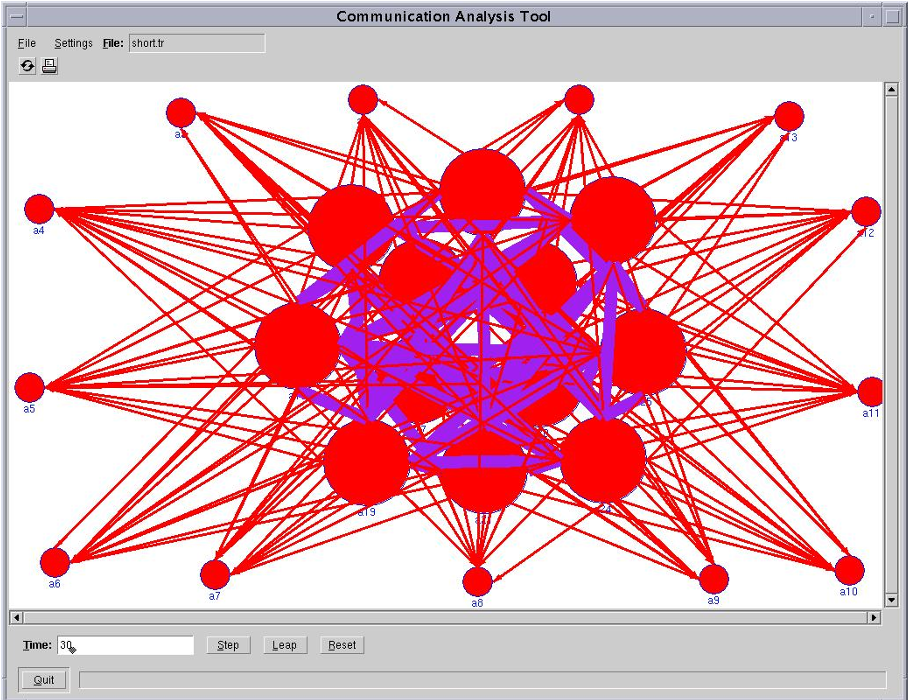 Figure 3: Visualization of established cooperation networks (large nodes = high fitness altruists).
Critical Analysis & Conclusion
The value of this work lies in its Inductive Bias: it assumes that cognition's primary function is to manage environmental complexity. By moving beyond the symmetric "Prisoner's Dilemma" and adding a realistic trust-decay mechanism, the study proves that altruism is a stable, high-fitness strategy for complex agents.
Takeaway
For AI researchers, this highlights a critical design principle: Cooperative behavior emerges naturally when agents are given the capacity to model the future and evaluate the reliability of their peers.
Limitations & Future Work
- Scalability: The trust list is , which is computationally expensive for massive populations.
- Evolution: The study observes a single lifetime; true evolutionary offspring based on fitness was not simulated here.
- Sophisticated Cheating: Future research could investigate "intelligent cheaters" who cooperate just enough to keep trust levels above the threshold.
This paper successfully bridges the gap between evolutionary biology and cognitive AI, providing a rigorous logical foundation for the "Golden Rule" of social interaction.