Transforming eLearning: Leveraging Social Media for Trust and Reputation in the Workplace
Trust and Reputation in eLearning at the Workplace: The Role of Social Media
This paper explores the strategic integration of social media into corporate eLearning to enhance trust and reputation. By surveying 150 HRD managers, it proposes a dual-perspective framework: managing learning via social communication and designing learning environments rooted in a participatory culture.
TL;DR
Social media is no longer just a marketing tool; it is a critical infrastructure for corporate learning. This paper explores how Human Resource Development (HRD) can use social platforms to build trust and reputation, shifting the focus from top-down training to a self-regulated, participatory learning culture.
Background Positioning
In the landscape of Corporate Training, this work serves as an architectural bridge between Web 2.0 technologies and Strategic Human Resource Development. It moves beyond the "what" of technology to the "how" of cultural transformation, positioning the HRD function as a facilitator rather than a gatekeeper.
The Problem: The Gap in HRD Innovation
While marketing departments have mastered viral engagement, HRD has historically lagged in adopting social technologies. The core issue is that traditional eLearning environments often feel isolated and artificial. They fail to capture the "Water Cooler" effect—the informal, trust-based knowledge exchange that happens naturally between colleagues. Without social proof and reputation mechanisms, digital learning lacks the credibility needed to drive a true learning culture.
Methodology: The HRD Value Chain
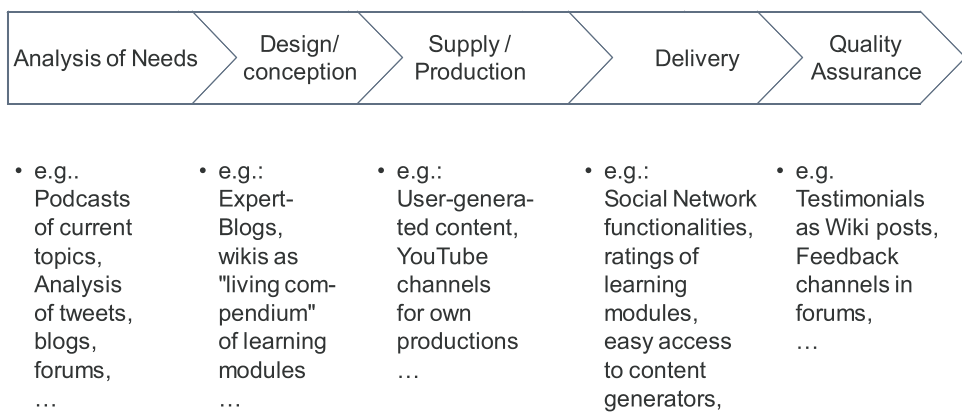
The study analyzes the potential of social media across the entire HRD value chain—from identifying needs to evaluating results.
The Dual-Perspective Framework
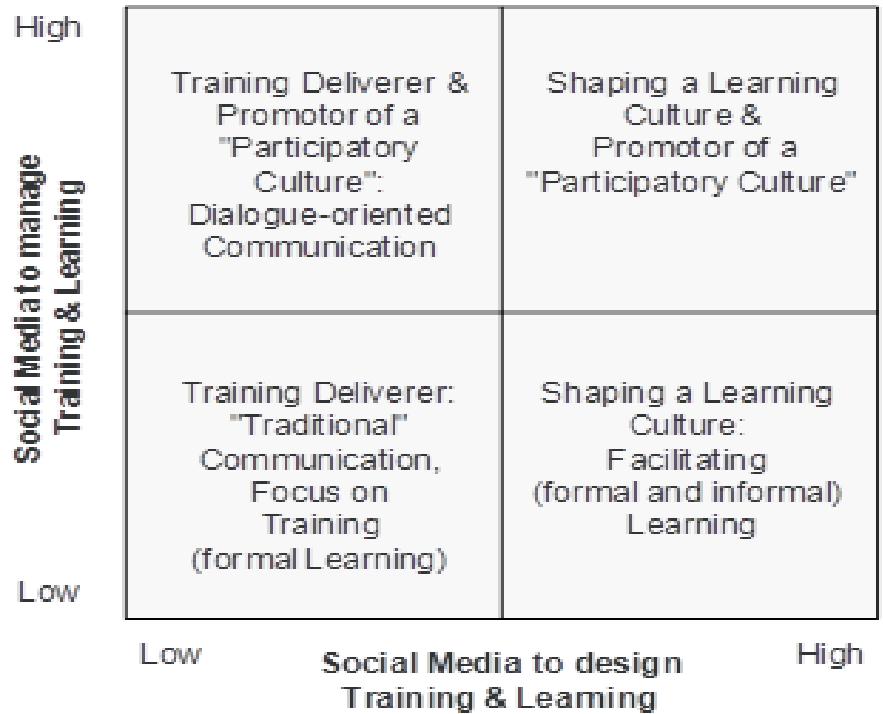
The author identifies two primary avenues for implementation:
- Management Perspective: Using social media to organize and market learning offerings (e.g., using wikis for training catalogs).
- Learning Design Perspective: Designing environments that foster informal learning and peer-to-peer interaction.
A key insight from the paper is the shift from "we-centric" (traditional community-focused) to "me-centric" participation. In systems like Hewlett Packard’s "Water Cooler," an individual's contributions across wikis and blogs are aggregated into a single profile. This transparency builds a personal reputation, which serves as a more powerful incentive than old-school metrics like "number of posts."
Experimental Insights: Trust and Reputation
The survey of 150 HRD managers confirms that social media is viewed as highly relevant for building trust among stakeholders. By allowing for open feedback, ratings, and testimonials (as seen in the Adidas and BT examples), organizations can provide "Social Proof" for their training modules.
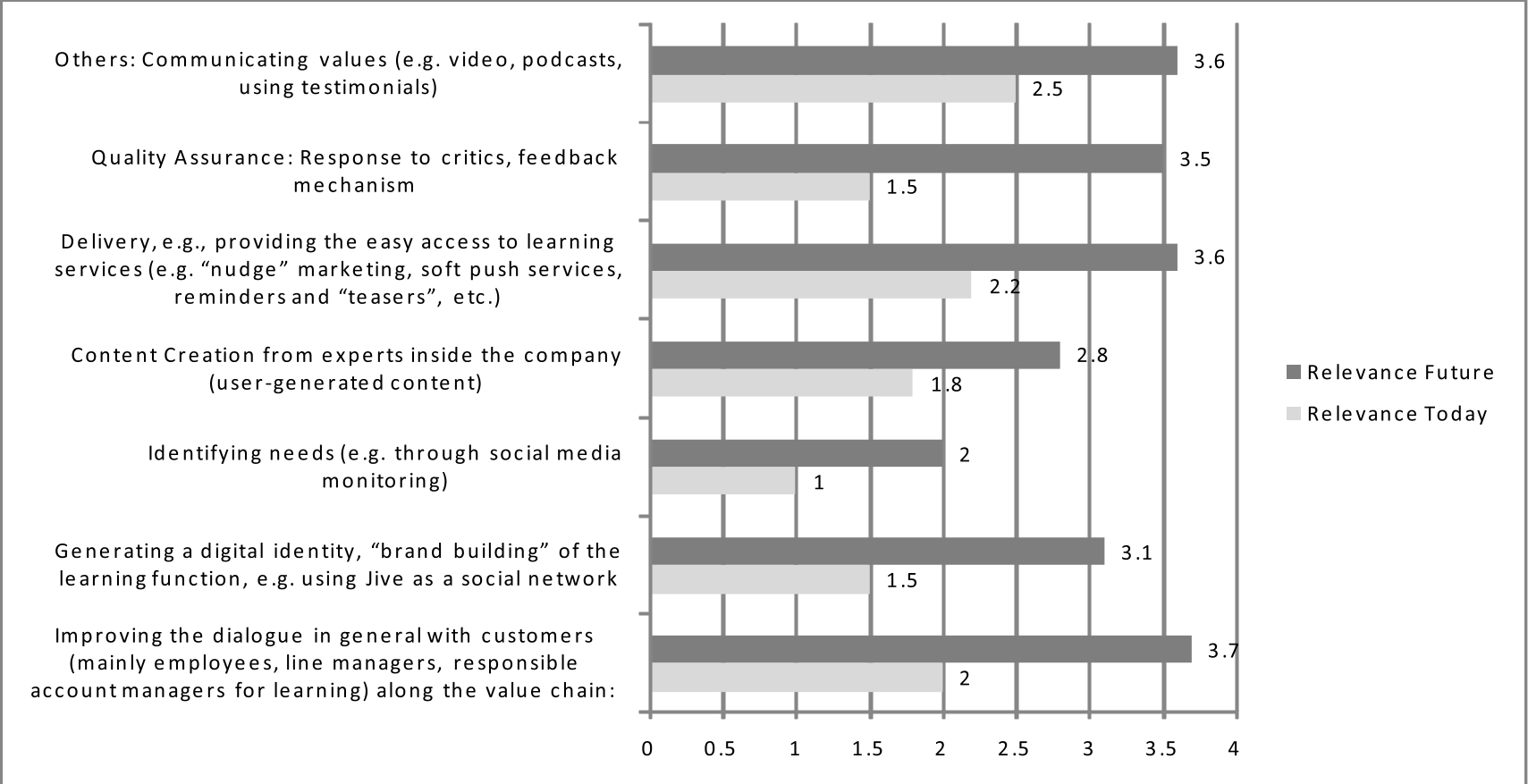
The results show that the professional use of social media effectively:
- Intensifies Dialogue: Direct communication between HRD and employees.
- Ensures Quality: Peer ratings (e.g., BT's Dare2share) provide immediate quality assurance.
- Communicates Values: Social platforms act as a mirror of the corporate culture.
Critical Analysis & Conclusion
The paper concludes that HRD must adopt a new identity: the Designer of Learning Cultures.
Takeaway
The greatest benefit is realized when HRD professionals experiment with these tools themselves. You cannot design a participatory culture if you are not a participant.
Limitations
The study primarily focuses on the management and design aspects but provides less empirical data on the actual learning outcomes (e.g., skill acquisition rates) compared to traditional methods. Furthermore, the "me-centric" approach, while motivating, risks information silos if not balanced with strong organizational goals.
Future Outlook
As we look toward the future, the integration of AI with these social repositories will likely be the next frontier—automatically surface the most "reputable" internal experts based on the social footprints identified in this paper.