
Establishing Social Trust in the Machine World: A Context-Aware Inference Framework for SIoT
Trustworthiness Inference Framework in the Social Internet of Things: A Context-Aware Approach
This paper proposes a context-aware trustworthiness inference framework for the Social Internet of Things (SIoT). It introduces a novel core module based on a Kernel-based Nonlinear Multivariate Grey Prediction Model (KGM(1, n)) and utilizes fuzzy logic to synthesize familiarity and similarity trust elements.
TL;DR
As the Internet of Things evolves into the Social Internet of Things (SIoT), smart objects must autonomously decide whom to trust. This paper presents a sophisticated framework that mimics human social psychology, using a Kernel-based Nonlinear Multivariate Grey Prediction Model (KGM) and Fuzzy Logic to predict and synthesize trust. It achieves a 3x reduction in prediction error compared to linear models and maintains high security against complex malicious attacks.
The Core Problem: Why Trusting a "Smart Thing" is Hard
In a decentralized SIoT environment, objects collaborate to provide services. However, malicious nodes can launch "Bad-mouthing" attacks (lying about others) or "Cheating" attacks (building a good reputation and then turning malicious).
Previous metrics often relied on simple linear averages or Markov chains, which fail for two reasons:
- Data Sparsity: Objects may not have enough interaction history for deep learning.
- Nonlinearity: Trust is not a straight line; it fluctuates based on context (time, frequency, and social ties).
Methodology: The "Familiarity-Similarity" Duality
The authors propose that trust should be modeled after human sociology, split into two pillars:
- Familiarity Trust (FT): Based on what you know (Direct Trust) and what others tell you (Recommendation Trust).
- Similarity Trust (ST): Based on common ground—External Similarity (shared friends) and Internal Similarity (shared interests).
The Secret Sauce: KGM(1, n) Prediction
To solve the "Direct Trust" prediction problem, the authors moved beyond linear Grey Models. They utilized a Gaussian Kernel Function to map interaction data into a high-dimensional space where nonlinear patterns become separable and predictable.
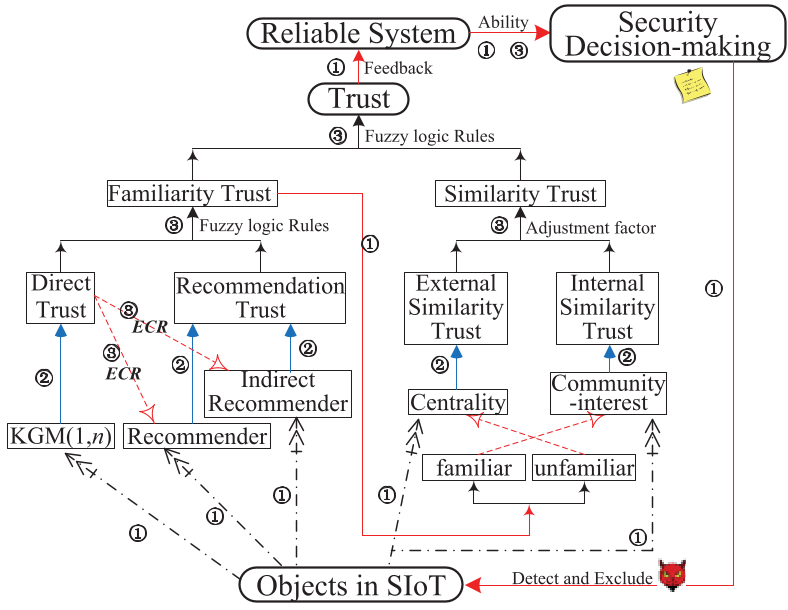 Figure 1: The hierarchical structure of the Trustworthiness Inference Framework.
Fuzzy Logic Synthesis
Because "trust" is inherently a "fuzzy" human concept (e.g., what does a trust score of 0.75 actually mean?), the framework uses Fuzzy Logic Rules. It converts numerical trust values into linguistic levels (Low, Medium, High, Very High), processes them through social control rules, and then "defuzzifies" them back into a final actionable score.
Experimental Results & SOTA Comparison
Using the NetLogo simulator with 400 objects, the researchers compared their model against standard Grey Models (GM) and Markov Chain methods (SCGM).
1. Prediction Accuracy
The KGM(1, n) model proved exceptionally stable. While other models could only follow general trends, KGM stayed tight to the actual interaction behavior data.
| Model | Applicability ME (%) | Predictability ME (%) |
|---|---|---|
| GM (1, 3) | 7.1550 | 5.4231 |
| SCGM (1, 1) | 8.3169 | 4.2173 |
| KGM (1, 3) (Ours) | 0.7367 | 1.7123 |
2. Resistance to Attacks
The framework was tested against Cheating Attacks. In competitive models (STM, ATM), a sudden malicious turn causes a massive lag in trust updates. The proposed model utilizes interactive feedback to rapidly detect status changes, as seen in the "smoothness" of its response curve during attacks.
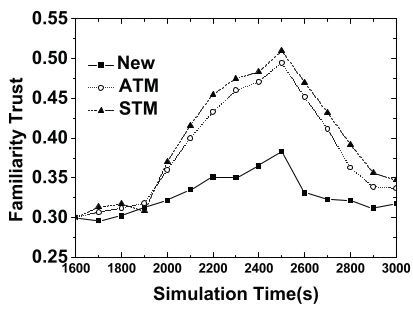 Figure 2: Superiority of the new model in resisting cheating attacks compared to baseline STM and ATM models.
Critical Insight & Conclusion
The true value of this work lies in its hybrid nature. It combines the mathematical rigor of Nonlinear Grey Prediction with the flexibility of Fuzzy Logic. Most trust models are either purely statistical or purely rule-based; by bridging these, the authors have created a system that is both accurate in its numbers and "human-like" in its reasoning.
Limitations: The computational overhead of the Lagrangian multiplier method in the kernel function might be challenging for extremely resource-constrained "dumb" sensors, though the authors suggest hash functions for privacy to mitigate some costs.
Takeaway: Future IoT ecosystems will not just be about connectivity, but about "Social Intelligence." This framework provides the "social compass" needed for objects to navigate a world filled with both helpful neighbors and malicious actors.