
TSE: Decentralizing Trust in Mobile Social Networks via Cryptographic Cooperation
Enabling Trustworthy Service Evaluation in Service-Oriented Mobile Social Networks
The paper introduces a Trustworthy Service Evaluation (TSE) system designed for Service-Oriented Mobile Social Networks (S-MSNs). It leverages hierarchical and aggregate signatures to enable secure, distributed review sharing among mobile users without a central authority, achieving SOTA performance in review submission rates under adversarial conditions.
TL;DR
Mobile Social Networks (S-MSNs) often lack a central authority to verify service reviews, allowing vendors to delete "bad" ratings and users to spam "fake" ones. This paper introduces the Trustworthy Service Evaluation (TSE) system. By forcing reviews into a cryptographic chain and using a "trapdoor" pseudonymity, it ensures that vendors cannot hide criticism and Sybil attackers risk exposing their real identities.
The Problem: The "Wild West" of Local Service Reviews
In an S-MSN, a local restaurant or store might run its own review server. This creates a massive conflict of interest:
- The Rejection/Modification Attack: A vendor can simply drop a negative review or modify the text to look positive.
- The Sybil Attack: An attacker uses ten different digital "masks" (pseudonyms) to post ten fake reviews, unfairly tanking or boosting a reputation.
- The Linkability Dilemma: We want privacy (pseudonyms), but we need accountability (linking multiple aliases to one person if they cheat).
Existing systems like eBay or Yelp solve this with a central "Judge" (Trust Authority). In decentralized mobile networks, that judge doesn't exist.
Methodology: Chains and Shaming
The authors propose two versions: bTSE (Basic) and SrTSE (Sybil-Resisted).
1. The Power of the Chain (bTSE)
Instead of reviews being independent dots, bTSE forces them into a Chain Structure.
- Synchronization Tokens: A vendor issues tokens that circulate among users. You can only post a review if you have a token.
- Cooperative Submission: If a vendor tries to reject your negative review, you pass your review + token to the NEXT user. They submit both together.
- Cryptographic Integrity: Using Hierarchical and Aggregate Signatures, any attempt by the vendor to "snipe" a review out of the chain breaks the cryptographic hash, alerting everyone that the vendor is cheating.
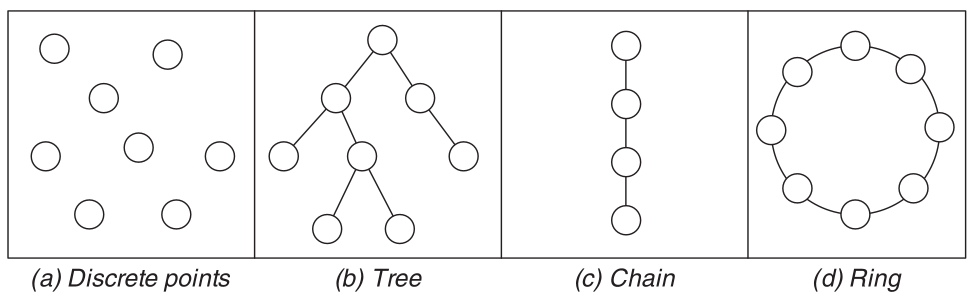 Figure 1: The evolution from discrete reviews (vulnerable) to Ring/Chain structures (highly secure).
2. The Identity Trapdoor (SrTSE)
How do we stop one person from using five pseudonyms? SrTSE embeds a secret "trapdoor" into the pseudonym generation.
- If User A uses Pseudonym 1, their identity stays hidden.
- If User A uses Pseudonym 1 AND Pseudonym 2 in the same time slot, any observer can perform a mathematical operation (pairing-based cryptography) to extract the user's real ID.
Experimental Performance
The researchers tested the system using real-world mobility traces from pedestrian runners.
Key Findings:
- Resilience: Under "Rejection Attacks," the standard non-cooperative system saw its success rate plummet. The bTSE system maintained 100% higher submission rates because users helped each other bypass the vendor's block.
- Efficiency: Even with the complex crypto, the Aggregate Signature technique kept communication overhead low, ensuring smartphone batteries aren't drained.
 Figure 2: bTSE (Cooperative) vs. NCP (Non-Cooperative) performance across varying transmission ranges.
Critical Analysis & Conclusion
The Takeaway: TSE proves that "Trust" doesn't have to be a person or a company; it can be a mathematical constraint. By turning review submission into a cooperative relay race, the system protects the minority (the negative reviewer) against the powerful (the vendor).
Limitations:
- Network Density: The cooperative "relay" relies on users being physically close to each other. In sparse rural areas, the tokens might "get stuck."
- Collusion: While SrTSE catches single-user Sybils, it still struggles with a "Collusion Attack" where many unique registered users are bribed to post fake reviews.
Future Outlook: This framework is a precursor to modern decentralized identity (DID) systems. The idea of "punishable pseudonymity"—where you are private until you break the rules—is now a cornerstone of Web3 and privacy-preserving protocol design.