
Beyond the Tape: The Shift from Turing Machines to Collective Intelligence
From turing machine intelligence to collective intelligence
This paper explores the transition from Turing Machine Intelligence to Collective Intelligence, proposing that the Internet and Web 2.0 have surpassed the limitations of sequential von Neumann architectures. It introduces a paradigm where intelligence emerges from large-scale human-machine interaction and social collaboration, moving beyond traditional algorithmic boundaries.
TL;DR
For decades, we have tried to "force-feed" human intelligence into computers using rigid algorithms and symbols. This paper argues that the Turing Machine model has reached its cognitive ceiling. Instead, a new form of Collective Intelligence is emerging from the Internet—one that doesn't need explicit programming but arises from the "chaos" of human interaction, social tagging, and collaborative platforms like Wikipedia.
The "Turing Trap": Why Traditional AI Struggles
The von Neumann architecture and the Turing model treat reasoning as a mapping in a space of certainty. However, human intelligence is fundamentally uncertain and context-dependent. The paper identifies three critical failures of the classical model:
- Lack of Interaction: Turing machines are closed systems; they don't account for dynamic inputs from an external environment not under their control.
- The Common Sense Bottleneck: Trying to represent every "obvious" human fact in a database is an impossible task (the "Cyc" problem).
- Sequential Constraints: Real-world intelligence is concurrent and body-situated, something a sequential state machine cannot fully replicate.
Methodology: The Power of the Crowd
The authors propose that the Internet is not just a tool for data transfer, but a medium for emergent cognition.
1. Interaction Models
Moving beyond the finite input tape of a Turing machine, the authors point toward Sequential Interaction Machines. Unlike their predecessors, these machines process input streams that are unpredictable and dynamic, where the state transition is influenced by real-time human feedback.
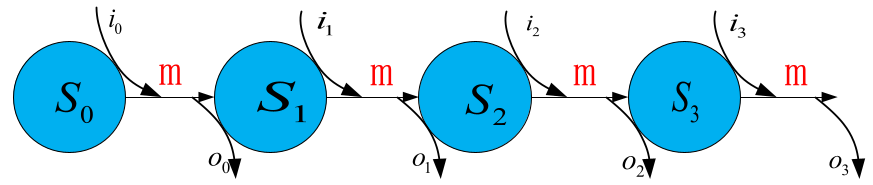 Figure 1: The shift from closed computation to dynamic interaction.
2. Community Clustering & Default Common Sense
Instead of trying to code "Common Sense," the authors argue it exists as a default environment within virtual communities. By using Topological Potential, researchers can identify community boundaries. Within these clusters, common sense is assumed rather than expressed, solving the representation difficulty.
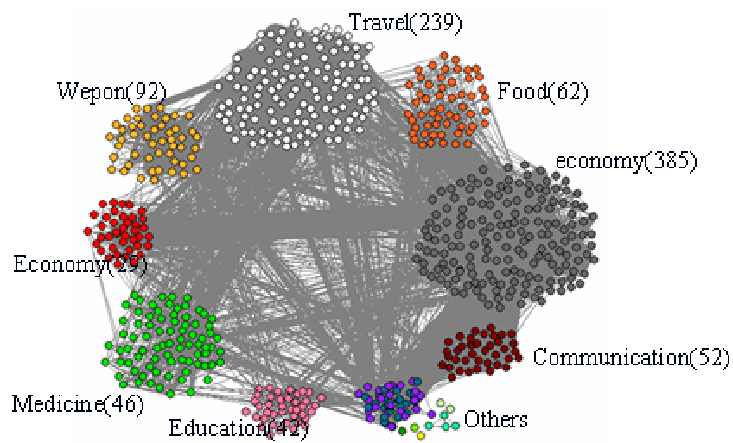 Figure 2: Clustering words from Web Services to identify domain-specific communities.
Experimental Evidence: Success in Synthesis
The paper validates this shift through two primary examples:
- Social Annotation: Systems like Flickr and YouTube leverage "folksonomies." By analyzing the tag networks (which follow a power-law distribution), the authors developed a personalized retrieval method that significantly beats standard content-based models.
- Wikipedia's Convergence: By tracking the "Cloud Computing" entry, the authors show how "order from chaos" works. Initial unilateral edits evolve through collective interaction into a precise, high-quality consensus.
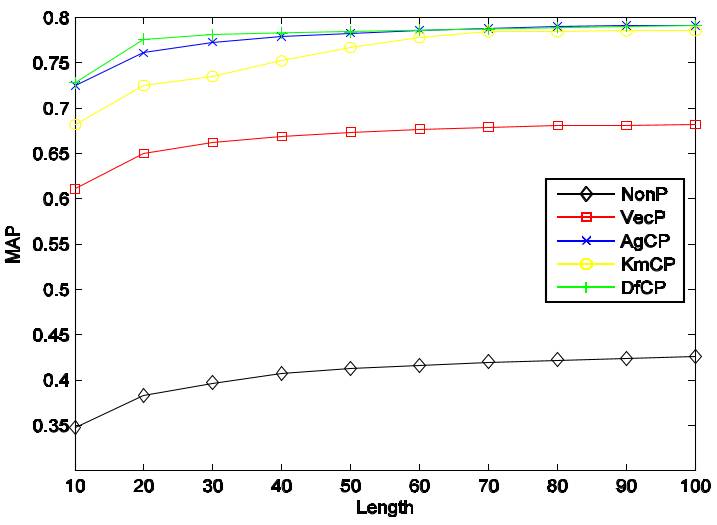 Figure 3: Performance comparison showing that community-aware (topological potential) methods achieve the highest MAP (Mean Average Precision).
Critical Insight: The "Order from Chaos" Statistical View
The core takeaway is that while a single user's input might be noisy or subjective, the statistical aggregation of millions of users creates a stable, intelligent signal. This "preferential attachment" (where the most relevant ideas attract the most attention) acts as a natural filtering mechanism that Turing's original model never anticipated.
Conclusion & Perspectives
Turing machines excel at speed and precision, but humans excel at association and inspiration. Collective Intelligence represents the synthesis of both. This work suggests that we should stop trying to build a "brain in a box" and instead focus on building better interfaces that allow human intuition to flow into the machine's statistical processing.
Limitations: The paper emphasizes evolution and emergence but acknowledges that controlling this "chaos" remains a challenge. Statistical regularities do not always guarantee truth, especially in the age of misinformation.
Future Work: The integration of Cloud Computing and "Web 2.0" factors into a unified "Collective Intelligence" protocol could bridge the last gap between silicon logic and biological insight.